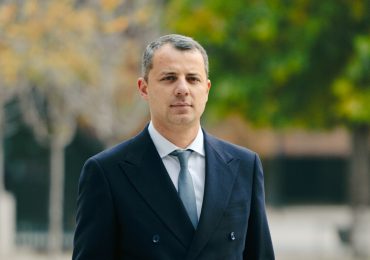

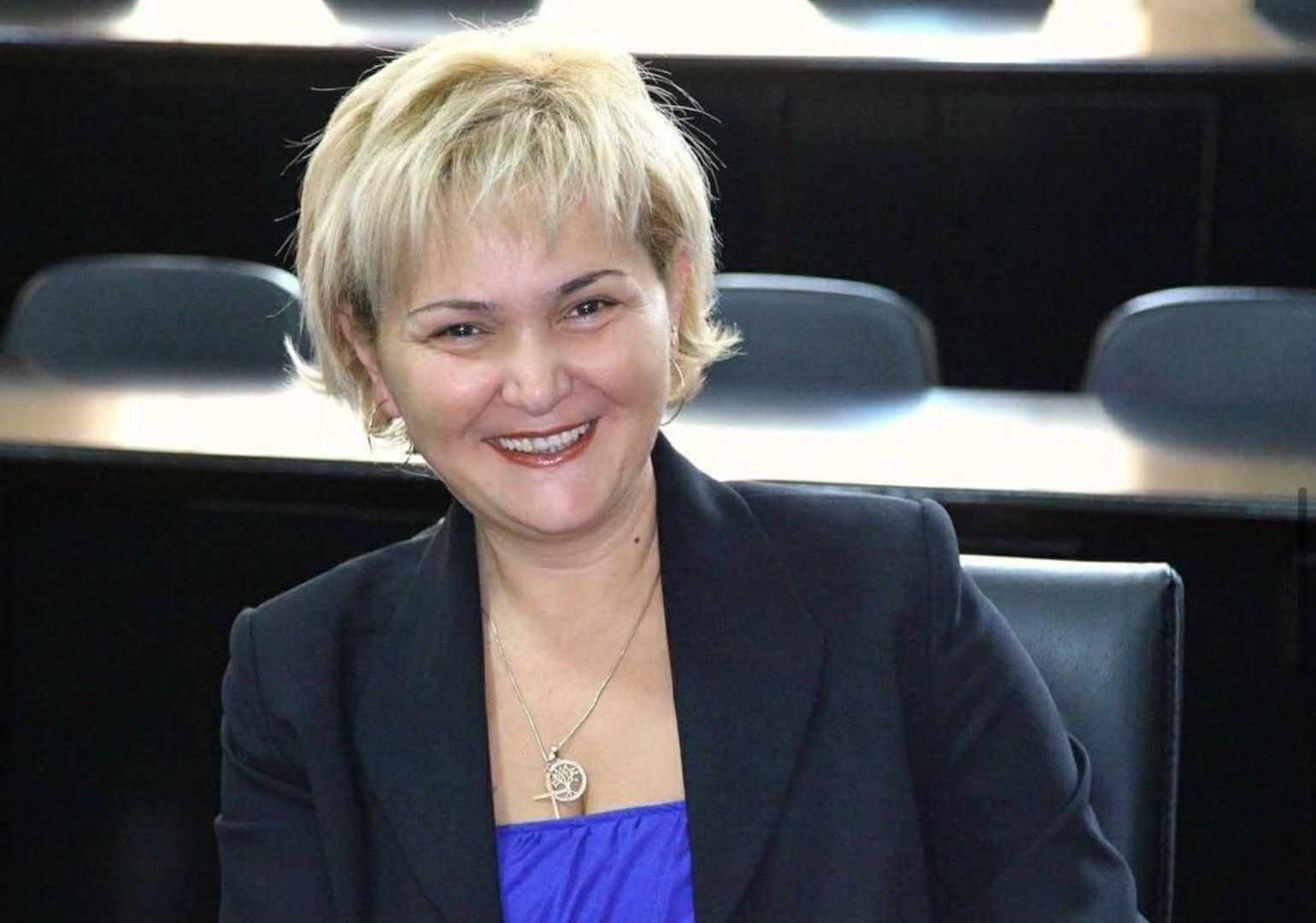
For more than three decades, Nino Avaliani has been closely involved in Georgia’s responses to humanitarian emergencies, crises arising from armed conflict, and long-term social and economic development challenges. Her career spans humanitarian leadership within the Red Cross, national emergency coordination, and executive roles in the private sector. Across these fields, she has contributed to nationally recognized social programs and resilient regional models. In this interview, Forbes Georgia speaks with Nino Avaliani about leadership under pressure, sustainable development, and the human-centered principles that guide her work.
You have built a rare career that spans economics, humanitarian work, crisis management, and business leadership. How do you define the core mission that connects all these roles?
All directions of my career in economics, humanitarian work, crisis management, and private-sector leadership serve the shared purpose of strengthening people’s well-being and driving systemic progress.
In every role, I strive to create sustainable processes that deliver long-term impact, empower local communities, introduce high standards of service quality, and help people build dignified living conditions.
As Program Coordinator of the Red Cross in the Imereti region and a member of the Emergency Situations Headquarters, you have worked through some of Georgia’s most challenging crises. Which crisis tested your leadership the most, and why?
Nearly every crisis or emergency I have faced carried an exceptional level of responsibility, as each was different in both complexity and consequences. From the civil unrest of 1989 to the present day, I have been actively involved in all major crisis processes.
While I consider the post-2008 war period one of the most difficult experiences, the strongest psychological burden came from my daily communication with wounded fighters who were trapped during the Battle of Shindisi. They required urgent medical assistance and evacuation from the conflict zone to a safe location. This operation became possible thanks to the mandate and support of the International Committee of the Red Cross, which ensured their safe extraction.
Subsequent crises only intensified. The COVID-19 pandemic, in particular, created unprecedented challenges worldwide. Still, from an emotional standpoint, the Shovi tragedy remains the most painful experience for me.
Which achievements from your diverse career do you personally consider the most meaningful, and why?
I consider the establishment of social day centers for the elderly and the emergency bracelet project in mountainous regions to be my most meaningful achievements. Today, these initiatives are recognized nationwide as successful models.
The project significantly improved the lives of thousands of elderly people while also establishing a state funding mechanism to ensure program sustainability and access to social services.
At present, 27 social day centers operate across 25 municipalities. These initiatives are especially valuable to me because they clearly demonstrated that innovative practices launched in a single city can be scaled nationally and become the foundation for systemic change.
What inspired your pilot initiatives, and how did you bring them to life?
Many years of hands-on experience and close communication with older people allowed me to fully understand their daily lives and the challenges they face simply to survive. This reality formed the basis for social research conducted in Kutaisi in 2004 by the British Red Cross. The findings revealed numerous difficulties, most notably severe social isolation and exclusion.
In 2005, with financial support from the British Red Cross, a pilot project to support elderly people was launched in Kutaisi. Three years later, following monitoring and evaluation by international experts, the project began scaling nationwide.
As for the emergency bracelet initiative, it was implemented by the National Assistance Foundation (NAF), which I co-founded with friends. The project aimed to ensure the safety of elderly people living alone in mountainous villages.
The inspiration came directly from practice. One particularly tragic case involved a beneficiary who failed to arrive at the center one morning. When the manager checked on her, she was found deceased at home, holding her phone – evidence that she had likely tried to call for emergency help.
This tragedy once again highlighted the urgent need for rapid-response mechanisms. That is why we created the emergency bracelet, which is a device that sends an alert with a single press of a button to a nearby neighbor trained in first aid. The system’s purpose is to protect the most valuable thing of all: human life, through timely response.
You have worked with leading donor organizations such as UNDP, the EU, USAID, ASB, BRCS, World Vision, MAC Georgia and more. What are the essential qualities local organizations must demonstrate to earn trust and long-term support from international partners?
For international donors – whether institutional, business, or private-sector partners – several key criteria are decisive:
- Professionalism and a strong organizational reputation;
- Responsibility and high standards of accountability;
- Transparent, standards-compliant financial management;
- Evidence-based strategic planning;
- Team stability, competence, and continuous development;
- A clear vision for sustainable, long-term results.
Adherence to these standards has earned us years of trust and support from both international donors and beneficiaries, which is essential for sustainability and success.
You are actively involved in women’s leadership networks in the regions. How would you assess the current landscape for women leaders outside Tbilisi?
Although women’s leadership in the regions is growing, several barriers still exist, particularly regarding economic independence, access to education, and participation in local decision-making processes.
At the same time, positive trends are visible: women are actively establishing associations and businesses, significantly increasing their role in regional development.
I strongly believe that strengthening women’s participation in peacebuilding and especially in conflict resolution is critically important.
From your experience, what practical interventions make the biggest difference in empowering women and vulnerable groups in regional communities?
When women and vulnerable groups are given real resources, they become drivers of change in their own communities. The most effective interventions, in my experience, combine the following:
- Education and skills development– vocational training and leadership and management capacity-building;
- Social support and safety– such as social day centers for the elderly, designed through participatory recommendations and co-creation with seniors themselves (based on the UN’s five principles), as well as emergency bracelets for elderly people living alone, ensuring safety in emergencies and potential criminal situations;
- Women’s associations and networks– which increase women’s participation in decision-making and strengthen their influence in society.
This combination has proven most effective, as it ensures independence, security, and active engagement at the local level.
How did your experience as General Director of the “King David” hotel complex between 2017 and 2023 influence your approach to social development and humanitarian work?
Business was an unexpected challenge for me because I never imagined I would be interested in this field. Five years of experience and tangible results convinced me that business is fascinating as well as being a sphere of great responsibility.
The foundation of success relies on the same principles we follow in humanitarian work and donor cooperation: a professional team and strong corporate image; responsibility and high-quality service; sound financial and legal systems; constant market analysis and process monitoring; team stability and continuous development; and, importantly, corporate social responsibility.
Following these principles allowed me to increase customer satisfaction, which in turn positively impacted financial performance.
What is your long-term vision for sustainable regional development in Georgia – and which three priorities should the country focus on over the next decade?
In my view, state social programs must be designed around the principles of citizen well-being and economic stability. Program development should actively involve service recipients in decision-making, ensuring that initiatives empower people and foster development rather than merely providing care.
Special attention must be given to ensuring dignified living conditions for the elderly, which can be achieved through full implementation of the Madrid International Plan of Action on Ageing (MIPAA). This strategy improves safety and access to services in addition to promoting active participation and balanced regional development.
Three key priorities for the next decade:
- Strengthening social protection systems, especially for elderly people living alone and vulnerable families;
- Diversifying regional economies through integrated development of local businesses, tourism, and agriculture;
- Modernizing crisis-response mechanisms by training rapid-response teams and improving technical preparedness.
After decades of working through war, natural disasters, and public-health crises, what keeps you resilient, and what message would you share with the next generation entering the humanitarian field?
I draw resilience from people’s gratitude and the knowledge that my work genuinely changes lives.
To the next generation, I would say: preserve solidarity and humanity in all circumstances; learn to make fast decisions and respond effectively; work as a team; and never lose faith that even small actions can create meaningful impact.
Humanitarian work is not just a profession – it is a calling to serve people.