

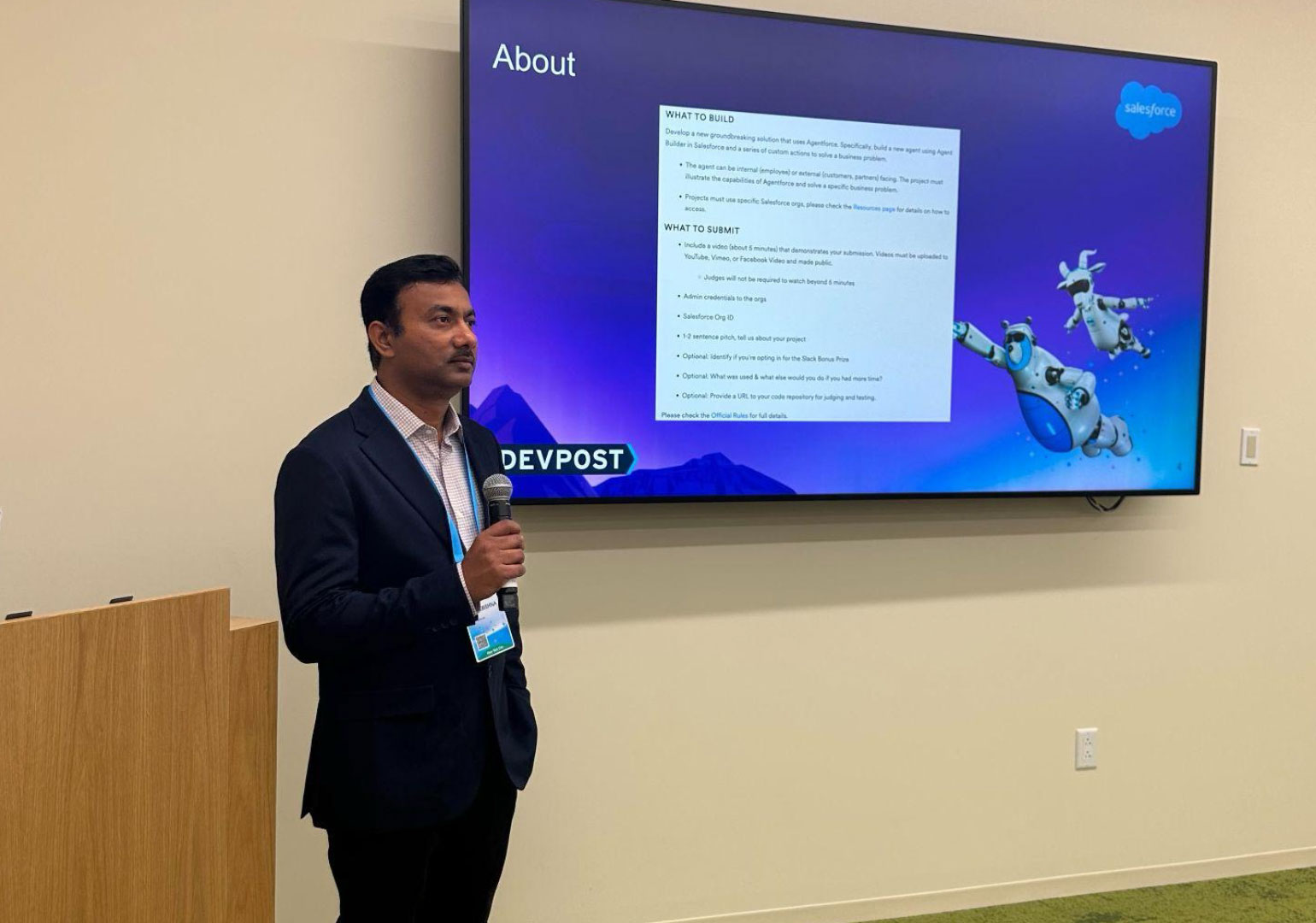
Photo Courtesy of Hari Krishna Kapa
Twenty years of building software that affects millions of patients creates a unique perspective regarding what healthcare technology truly needs. Hari Krishna Kapa has spent his career bridging the gap between complex medical requirements and practical digital solutions, transforming how hospitals manage their most critical operations across multiple continents and time zones. Working with over 30 hospitals across eight states, Kapa has witnessed firsthand how the right technology can reduce the immense administrative burdens that contribute to clinician burnout and divert focus from patient care; a critical intervention at a time of unprecedented workforce challenges in healthcare.
Automating the Revenue Cycle Revolution
Healthcare’s financial backbone often creaks under manual processes that drain resources from patient care. Hari Krishna Kapa recognized this challenge early and developed automated variance workflows that fundamentally changed how hospitals handle billing disputes and write-offs. His system compares hospital charges against payor contract terms automatically, following pre-established rules and approval processes to write off non-recoverable balances.
The impact extends far beyond simple automation. Manual billing adjustments traditionally consumed hours of staff time while creating opportunities for human error. Kapa’s solution eliminates these inefficiencies while maintaining the accuracy that healthcare finance demands. His automated appeal letter generation system further streamlines operations by creating correspondence using predefined templates, freeing staff to focus on more complex cases requiring human judgment.
“I’ve created applications that reduce clinicians’ administrative burdens, including scheduling personnel slots in the emergency room, thereby enhancing healthcare efficiency,” Kapa explains. His work directly addresses one of healthcare’s most persistent problems: the tension between providing excellent patient care and managing the complex business operations that make care possible.
Cloud Computing for Clinical Concerns
Modern healthcare demands technology that can scale rapidly while maintaining strict security and compliance standards. Hari Krishna Kapa’s expertise in Azure cloud computing has enabled him to deploy generative AI tools within clinical practice applications, creating possibilities that seemed impossible just years ago. His work with Azure Data Factory pipelines, virtual machines, and load balancers supports critical healthcare applications that cannot afford downtime.
The technical complexity of healthcare IT requires someone who understands both the regulatory environment and the practical needs of medical professionals. Kapa’s implementation of Azure Monitor and Log Analytics across multiple applications decreased mean time to identify and resolve issues by 20 percent, resulting in $1 million in cost savings. These improvements translate directly into better patient experiences and more reliable healthcare delivery.
His global perspective, gained from working with diverse teams across five time zones and twenty different cultures, brings a unique dimension to problem-solving. Healthcare challenges vary significantly across different regions and populations, and Kapa’s international experience allows him to design solutions that work across diverse healthcare environments.
The Much-Needed Efficiency in Healthcare
Beyond his day-to-day engineering work, Kapa actively shapes the broader healthcare technology concerns by actively seeking out areas where efficiency is needed. “My approach to software development is grounded in established processes, ensuring efficiency and quality in everything I do,” Kapa notes. His methodology balances innovation with the reliability that healthcare demands. This work carries a profound responsibility. Unlike in many other industries, a system failure in healthcare can directly impact patient safety. This reality demands an architectural approach grounded in reliability, security, and trust, principles that have guided two decades of development.
This 20-year journey from software developer to cloud architect illustrates a fundamental truth: in healthcare, the most impactful technology is born from a deep understanding of human needs. Lasting change is not created by technology alone, but by technical expertise guided by industry knowledge and a global perspective. The ultimate metric of success is not a cleaner balance sheet, but a less burdened clinician who has more time for their patient. The legacy of this work is not in the code, but in its contribution to a more sustainable, efficient, and compassionate healthcare system for the millions of patients it serves.
After two decades spent architecting the future of healthcare, Hari Krishna Kapa understands a fundamental truth: the most advanced technology is worthless if it doesn’t serve humanity. His work is a testament to the idea that we can build systems that are both intelligent and compassionate. The ultimate goal is not a perfect algorithm, but a healed caregiver, a supported patient, and a system that remembers its primary mission: to care. This is not just engineering excellence; it is technology with a soul.