
His path didn’t start on a runway, but in a lab. He was educated at the National Technical University of Ukraine “Igor Sikorsky Kyiv Polytechnic Institute” – one of the premier technical universities in Eastern Europe, which produced top engineers such as Igor Sikorsky, creator of the world’s first practical helicopter, Serhiy Korolev, chief designer of the Soviet space program, Borys Paton, long-serving president of the National Academy of Sciences of Ukraine, among others.
Dmytro Magonia enrolled in the Faculty of Mechanical Engineering and studied properties of metal, coating processes, and the mechanical durability of materials. This foundation formed the basis for the whole strategy of his company.
When he was a student in 2012, Dmytro Magonia opened his first retail outlet, which sold jewelry. Driven by a systematic mindset, he expanded the network to nine locations in just two years. However, as it grew, a systemic problem became apparent – what the manufacturer promised in terms of coating quality could not withstand real use. The items darkened, peeled, and lost their appearance. “It wasn’t a commercial issue, it was an engineering problem: The material wasn’t suited for the function,” Dmytro Magonia remembers.
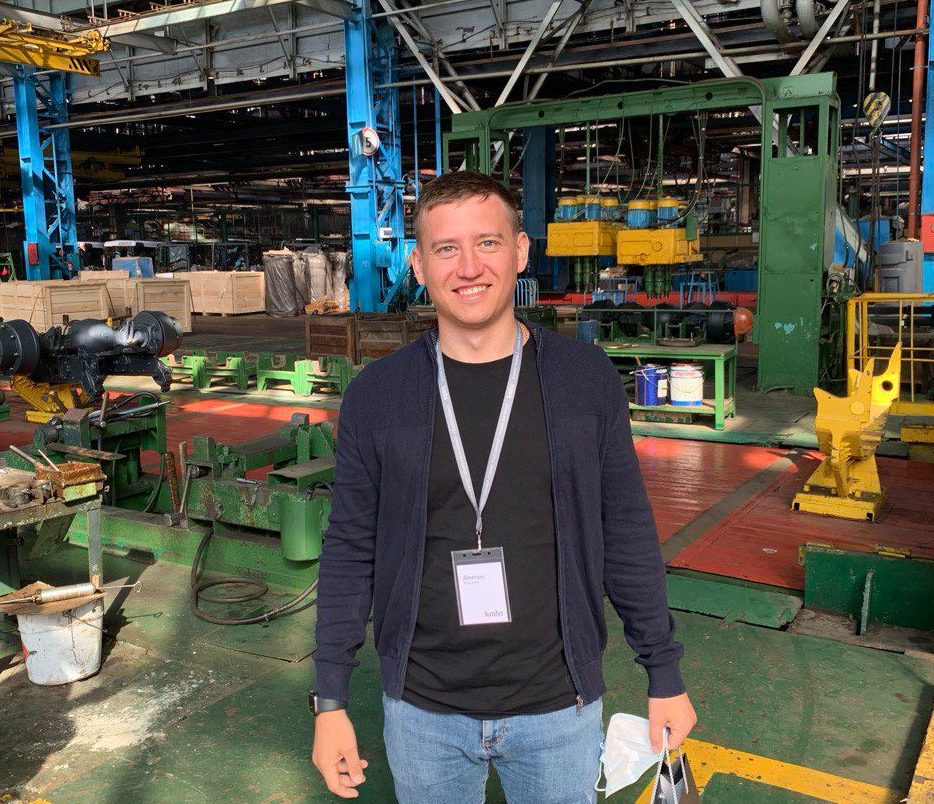
He began his first independent coating experiments in 2014. Rather than switch suppliers, he worked on his own technology: analyzing alloy chemistry, the density of underlayers and the electrical parameters of coating application. The engineering approach paid off – in 2015, the first test batch of jewelry that featured his own coating delivered durability that simply didn’t exist. The experiment proved a turning point.
Dmytro Magonia focused entirely on product development and wholesale. “It seemed obvious at the time: the technology can be better, the whole category can be expanded. It wasn’t retail any longer, it was an engineering project,” the entrepreneur says.
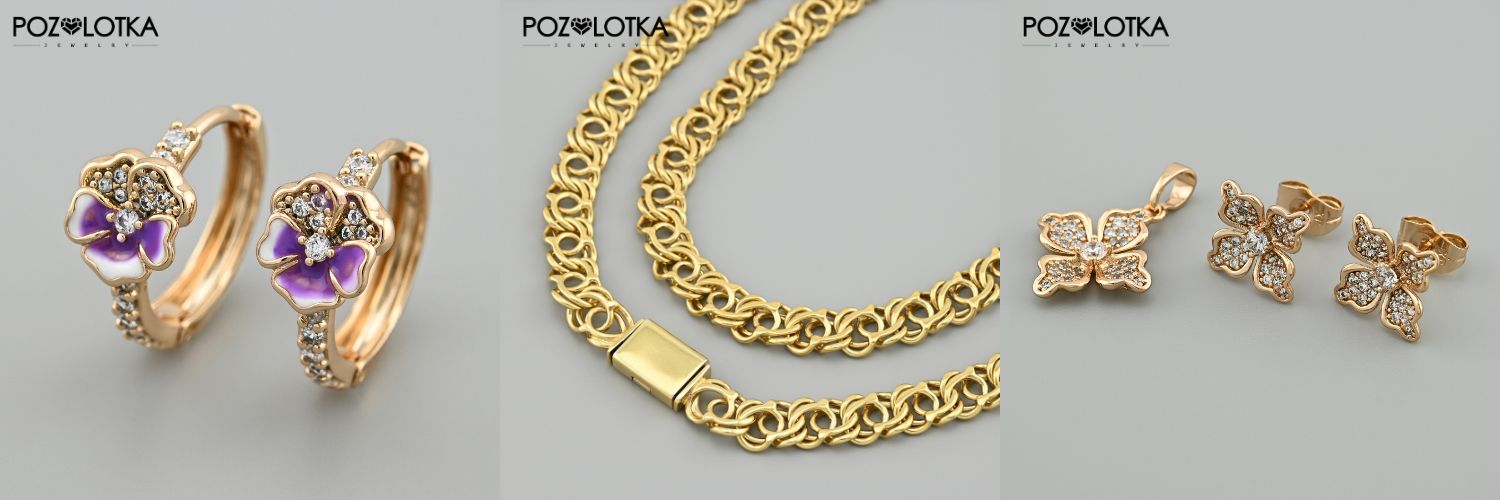
To mark this new engineering-driven approach, Dmytro Magonia chose a name that perfectly encapsulated the business’s essence: Pozolotka. In Ukrainian, the word is an affectionate diminutive for “gilding”. It was a deliberate choice – a name that sounded gentle and approachable to the customer, yet was rooted strictly in the company’s primary technical process.
The strategic bet was made on a three-layer hypoallergenic coating: a nickel-free base, a reinforced technical underlayer, and a durable 18K gold top coat. The technology wasn’t a marketing gimmick, but a solution for daily wear – and that proved a competitive advantage in the durable luxury space.
The strategy worked instantly. By 2016, the network had grown to nearly 2,000 wholesale partners across the country. The company created a system that minimized barriers, allowing partners to launch new retail points with maximum efficiency. This choice set a precedent for what would become the Pozolotka brand.
The brand expanded in 2017 to become national. Pozolotka had been added to the broadcast lineups of the country’s biggest TV shopping channels – TUSO, Bijouland, Krasa TV, etc. At first, the brand was given ten-minute slots, but sales soared so quickly that the jewelry soon occupied more than half the airtime on the channels. The product instantly hooked the audience. Customers would return each month because the collections were constantly refreshed. As television became successful, new doors opened and the brand gained wide popularity.
The brand’s success on Ukrainian TV soon caught the eye of HSE, one of Germany’s largest TV shopping networks. A subsequent contract was signed, and the samples passed the quality selection process, resulting in the company’s first order. This constituted the start of the international chapter of the business. The company began doing business with European clients, reaching for new standards on quality and logistics. This allowed for the company to compete on a global level.
Meanwhile, the team really honed in on the online direction. The strong product, combined with the smart digital strategy, meant that the brand started to receive orders from overseas rapidly. Soon, the company’s customer geography expanded to twenty countries around the world – from European countries to places as remote as Iceland.
The Business Faced Its First Major Test in 2020
Stores, warehouses, and logistics closed under quarantine. The company had about 60 employees and no state support, unlike in the U.S., where companies were compensated. “We understood that our first priority was our employees. It was crucial to keep them,” Dmytro Magonia says. The company paid salaries, relied on reserves, and waited for stabilization for several months. Then there was an expected-but-unexpected shock: a dramatic increase in online sales. Customers who had shopped offline for years turned overwhelmingly to the internet – and they liked it. Once the quarantine ended, sales not only rebounded – they expanded. An entirely new consumer behavior was taking root. Pozolotka was, of course, among the few brands to easily respond. Over the course of all this online growth, the company found a new direction – creative partnerships. Pozolotka started to partner with Ukrainian fashion designers, including Sasha Kanevski, Ruslan Baginskiy, and others, producing accessories for runway collections and capsule collections in limited editions. The brand’s jewelry also appeared in fashion shoots, shows, and creative projects. Partnerships were formed with Dovzhenko Film Studio as well as independent studio production companies for TV series, music videos, and feature films. It reinforced the brand’s positioning, highlighted its contemporary look, and positioned it as a brand collaborating anywhere from the mass market to creative industries.
2022 Brought the Next Major Challenge
The first weeks of the war were jarring: the company was closed indefinitely, and workers were sent home with their salaries preserved – similar to what happened during COVID-19. They shut down for two weeks. But with fear there arose another feeling, the need to go back to normal. “A person cannot live without work. When work vanishes, fear grows,” Dmytro Magonia says. The company declared that whoever was ready to return to work could do so. About ten people returned in the first week. People were exhausted from reading news stories, and they wanted to come to work even though life seemed so uncertain. Then there was unexpected news: the brand announced it had resumed operations, and a wave of orders began immediately. Messages of support poured in. Customers bought jewelry to show support and gratitude for the company’s continued work.
This paradoxical but valuable point came about: People want to feel beautiful, cared for, and put together, even in times when their emotions are the hardest to bear. Jewelry was not a luxury item but rather the means to restore a sense of normal life. Knowing international operations would face potential issues, including martial law in Ukraine, Dmytro Magonia personally reached out to each of his key partners and explained that the team is working, production is running, deliveries are ongoing.
This built trust among partners and helped the company retain all foreign contracts. It was during that period that the next giant decision took shape: moving into the world’s biggest jewelry market – the United States. “If a company has withstood these challenges, it means it is ready to move forward.” Today, Dmytro Magonia’s jewelry is worn in Poland, Germany, the United Kingdom, Italy, and dozens of other countries. The company also strengthens the engineering underpinning of its products – from long-lasting coatings to the world’s next generation of laboratory-created stones. As Dmytro Magonia puts it at the heart of the journey:
“I corrected the market’s engineering mistake – and continued on while others halted.”