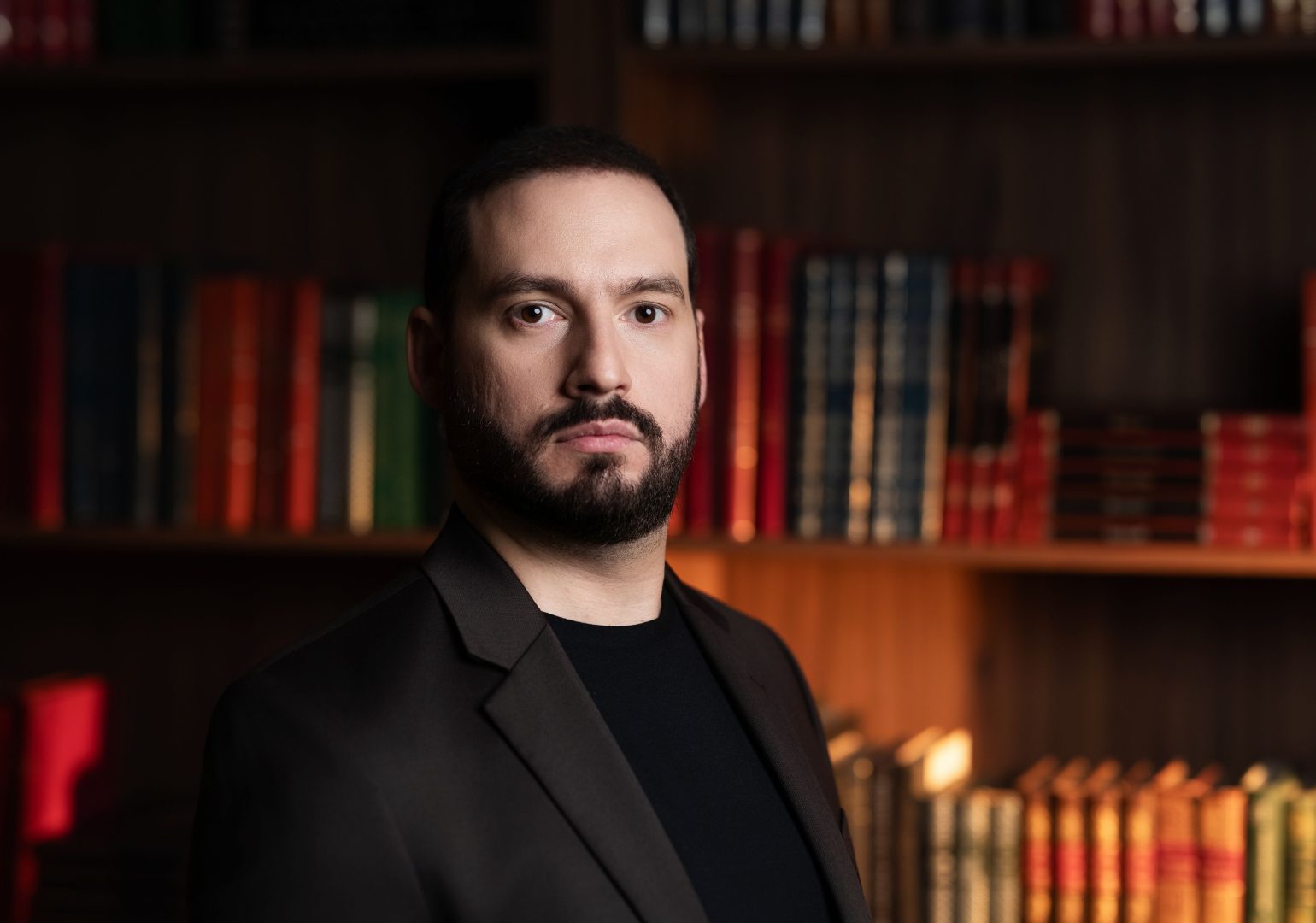
Today, private disputes in Latin America, Europe and the U.S. have become deeply multilayered systems, involving psychological pressure, structural asymmetry, legal deadlocks and reputational risks that demand strategic, multidisciplinary intervention. Counterintelligence specialist JL Soares (José Lemes Soares) — founder of Perseu Counterintelligence and known for resolving high-complexity disputes — spoke about how modern conflicts have evolved and why his firm is expanding across Europe.
For many readers, “counterintelligence” sounds like something connected to governments. What does it mean in the private sector, and how does Perseu operate?
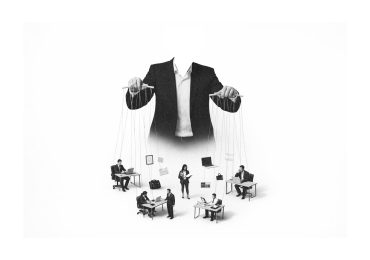
Private counterintelligence is the ability to map and dismantle the structural forces that sustain a conflict — the invisible elements that legal tools cannot fully access. It is not espionage. It is strategic synchronisation. We coordinate legal vectors, emotional dynamics, reputational risks, operational fronts and structural behaviours in a single architecture. This involves deploying advanced counterintelligence methodologies often applied at the government level and scenario reading for conflict forecasting. Perseu steps in where traditional structures fail — deadlocks, hidden power asymmetry, internal sabotage, collapsed negotiations or conflicts with multi-jurisdictional impact.
Your background is unusually global: you studied at Gordonstoun in Scotland (the same school attended by King Charles III) and come from a traditional entrepreneurial family, whose legacy includes the founding of Viação Andorinha — one of Brazil’s largest transport companies. Today, you also lead Smith & Lemes, an executive mobility company. How do these diverse operational and academic environments influence your strategic perspective on complex conflicts?
The greatest influence of that operational and academic background is the recognition of systemic limits. Even in the largest business conflicts, you learn one fundamental truth: nobody wins alone. Our strength is that we assume human limitation from the beginning. From there, we build structures based on the best specialists: ethical hackers, counterintelligence professionals, legal strategists, behavioural analysts and operational experts.
Fewer people know that the seeds of Perseu were planted during a deeply personal conflict: your mother’s interdiction case, involving lawyers, doctors, the justice system and even a protective measure filed against you. What was the biggest challenge in that period, and how did it shape your methodology?
That case was the origin of everything. Only much later — when I watched the documentary — did I fully understand how many layers we were coordinating simultaneously. That experience forced me to recognise my own limitations, and this became the intellectual foundation of Perseu. That early case taught me that solving complex conflicts requires multidisciplinary precision.
How does someone hire Perseu?
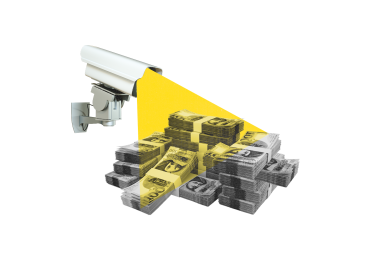
You don’t hire Perseu simply because something unpleasant happened. We don’t operate based on volume — we operate based on structure and motivation. Money alone cannot motivate us. Even a truckload of money cannot make the team take a case without structural or ethical coherence. But if you are facing a serious injustice, a deeply complex conflict, or an asymmetric power structure, then it might align with what Perseu does.
Another public case involved the Unoeste/APEC transaction — a negotiation stalemate that lasted months. What happened, and why was Perseu called?
This is one of the few cases we can discuss publicly because no NDA applied — I had a family member involved. We monitored the entire transaction. We helped define the purchase value for the minority shares. We acted as the bridge between the university owners and other interest groups, always aligned with legal teams. Suddenly, the deal froze.
Everyone said: “A minority shareholder refuses to sign.” But no one could explain why. In our first meeting with him, we diagnosed a gatekeeper — someone whose real power came from internal family influence and reputation, not from the shares. We acted where gatekeepers are structurally fragile: their self-image and the power micro-structure they construct around themselves.
We orchestrated a plan involving communication pressure from specific individuals, behavioural anticipation and mapping of escalation patterns. Even after the existing legal framework had reached a strategic impasse and the signature was deemed impossible by conventional methods, he signed exactly within our predicted window, and the transaction concluded.
That is the essence of counterintelligence: structural intervention with precision.
You were also involved in a case that went viral in Brazil — a car dealership attempting to scam you. How was that resolved?
It was simpler in structure but required decisive action. We rapidly identified the real owners behind the dealership. Their reputational structure was weak. Exposure would collapse it immediately. Through national television, we applied calibrated pressure. They reversed the damage instantly. The dealership later shut down permanently. The methodology scales anywhere in the world.
Beyond Perseu, your family is known for its transportation legacy. What is the strategic vision behind Smith & Lemes, your premium executive mobility company?
Smith & Lemes is a natural extension of our background in high-stakes environments. It applies the same principles of operational precision, structural integrity, and discretion to executive mobility. We understand that for our clientele—who are often dealing with complex issues or high-profile visits—mobility is a key point of vulnerability. Smith & Lemes is structured to eliminate that vulnerability. ( www.smithlemes.com )
Perseu specializes in high-stakes strategic defense. We understand that your firm is currently involved in coordinating the defense of a senior executive at the American multinational, Coca-Cola. While respecting client confidentiality, can you confirm the nature of this involvement?
Yes, we can confirm the existence of this case as we received explicit authorization from the client to acknowledge it, although we are strictly bound by confidentiality regarding the details. This case is a perfect example of what we call structural defense — coordinating legal alignment, reputational containment, and counterintelligence-grade structural mapping for high-profile executives facing complex disputes. Our role is to ensure the strategic architecture is sound across all fronts.
You mention methodology is built in the field. Can you briefly cite a complex cross-border operation that helped forge your current protocols for digital-risk containment?
The Blaze investigation, conducted from the Netherlands and Brazil, was a project commissioned by contractors. My motivation was simple: seeing many workers losing substantial sums on the platform. We strategically analyzed its operational architecture and digital footprint to understand its mechanisms. All resulting structural information was transmitted to the contractors under strict Non-Disclosure Agreements (NDAs), thus we cannot detail the case.
Does Perseu operate internationally?
Yes.
We operate in Europe, the United States and Brazil, working with lawyers, analysts, digital specialists and technical partners across multiple jurisdictions. Our network is structured to deploy hyper-specialized expertise across those jurisdictions, which allows us to manage complexity that often involves cross-border legal and operational factors.
Complex disputes rarely stay within a single country.
What is the most complex case Perseu has ever managed? And in your opinion — do “impossible cases” exist?
There are no impossible cases — only unstructured ones.
If the motivation is legitimate and the scenario is mapped correctly, any conflict can be resolved. The hardest conflicts aren’t the ones with the biggest companies or the largest financial stakes. The hardest ones are those with multiple invisible structures overlapping at once: family power, legal asymmetry, reputational exposure, emotional escalation and internal sabotage.
But with accurate reading and the right strategy, even the most complex disputes become solvable.
As Perseu Counterintelligence expands its operations across Latin America, Europe and the United States, the firm has become an emerging reference for resolving high-stakes conflicts where traditional tools fail.
At the centre of these operations is JL Soares (José Lemes Soares) — a counterintelligence specialist dedicated to understanding human systems, dismantling hidden structures and resolving conflicts with strategic precision.
S