

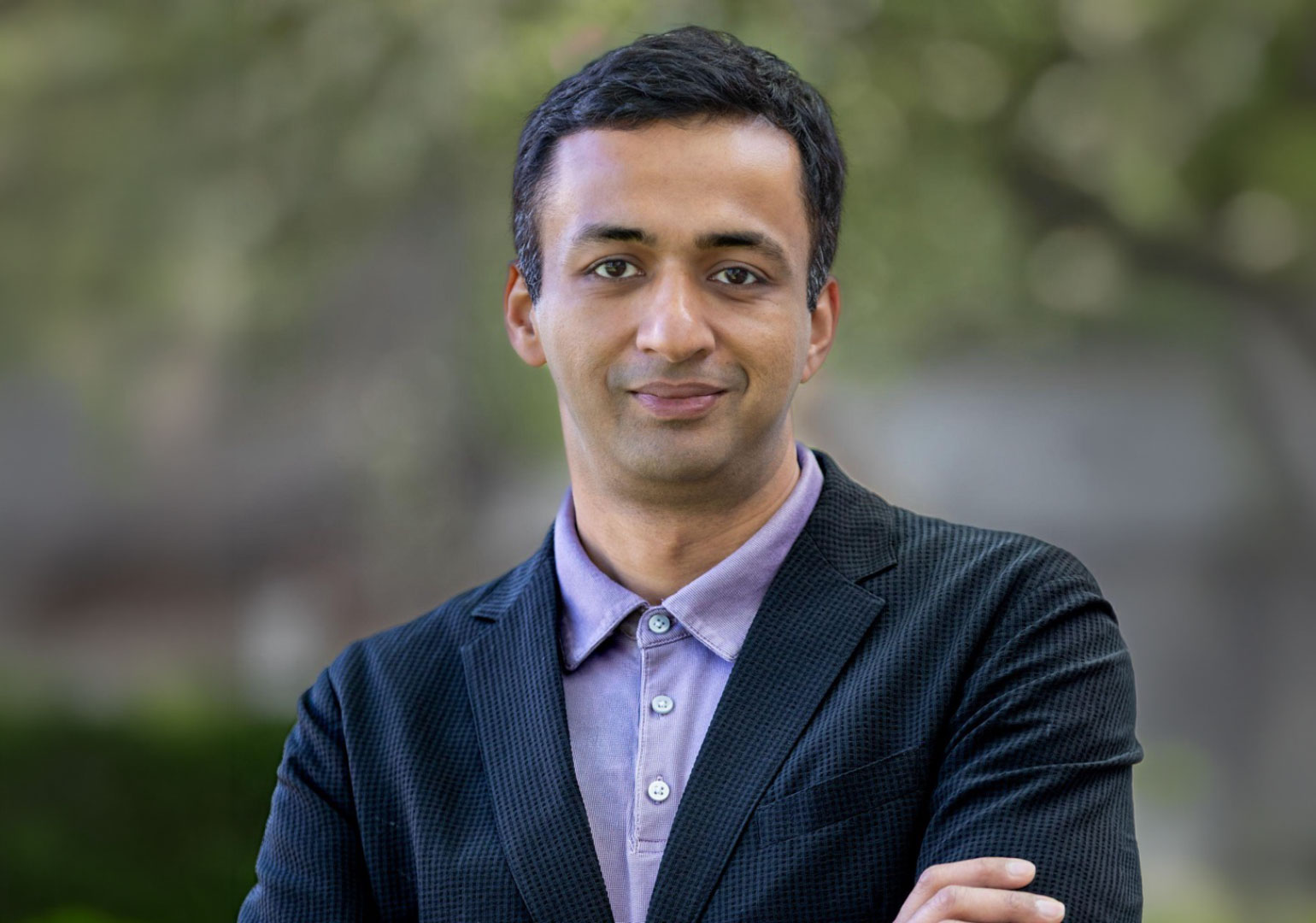
Photo courtesy of Harsh Singhal
On a Tuesday morning in late 2022, a content moderation queue at Koo, India’s then-fastest-growing social platform, flagged something its systems hadn’t ever really handled before: a post written in three languages simultaneously. The user had typed in Hindi, switched mid-sentence to English, and signed off in Tamil, all within 40 words. Standard classifiers, trained on monolingual corpora, returned no usable signal. The post sat in review limbo.
Harsh Singhal, then Senior Director and Head of Machine Learning at Koo, had by that point spent more than a year architecting systems specifically for this problem. The challenge was technical, organizational, linguistic, and in the most direct sense, social. Getting it wrong meant harmful content reaching tens of millions of users in languages that most AI safety systems in the world had been built to ignore.
“Every assumption baked into standard NLP pipelines had to be re-examined,” Singhal said, speaking from Glean’s offices in the Bay Area, where he now works on enterprise AI governance. “Code-switching, transliteration, script variation. These were the default for our users, and the systems we inherited were built around something entirely different.”
An Engineer’s Engineer
Singhal came to machine learning through Industrial and Systems Engineering, a master’s from Rutgers and an undergraduate degree from Visvesvaraya Technological University in India. Systems engineering trains practitioners to analyze how components interact across an entire architecture, where failure originates, and how a flaw in one subsystem propagates through the others. That orientation, applied to AI, produces a practitioner focused on what the whole system does rather than what any single model achieves on a benchmark.
His career began at LinkedIn, where he worked on large-scale ML systems in a consumer environment where personalization and reliability were inseparable. Netflix followed, then Adobe, where his focus shifted explicitly toward trust and safety, the high-stakes work of keeping large digital systems honest. Work from this period on bot detection and chat categorization shows where his interests were consolidating: platform authenticity, system-level enforcement, and the practical distance between written policy and deployed systems.
Two patents from this period, one covering bot detection methodologies (US10491697B2) and another on chat categorization and agent performance modeling (US20120130771A1), show where his interests were consolidating. Platform authenticity. System-level enforcement. The practical distance between a written policy and a deployed system capable of enforcing it.
“I kept finding myself in the same situation,” Singhal said. “An organization would have a clear policy about what should or should not happen, and then a system that had no reliable mechanism to enforce it. That gap was everywhere.“
Koo and the Multilingual Safety Problem
In 2021, Singhal joined Koo at a vital moment. The platform had recently surged to national prominence in India following a public standoff between the Indian government and Twitter, gaining millions of users in weeks. It was positioned as the homegrown alternative, multilingual by design, serving speakers of Hindi, Tamil, Telugu, Kannada, Bengali, Marathi, and several others. The growth was rapid enough that the content safety infrastructure, such as it was, could not keep pace.
Mayank Bidawatka, who co-founded Koo and served as Head of Product, supervised Singhal directly through his entire tenure. “He came in and immediately understood that we were going to need something built from scratch,” Bidawatka said. “The multilingual moderation problem at Koo was genuinely hard in ways that most platforms had never tried to address.”
What Singhal built over the following two years has since become one of the more cited examples of applied multilingual AI in the Indian technology sector. He scaled the machine learning team from three engineers to twenty, drawing specialists across data science, MLOps, and NLP. He led the development of KooBERT, an open-source multilingual transformer model trained on real social media content, code-mixed, transliterated, script-variable, across more than 20 languages. He also directed the adoption of Meta’s LLaMA models, fine-tuned for multilingual toxicity detection, at a point when the broader industry had yet to reach consensus on whether deploying LLMs for real-time safety was operationally viable.
“Fine-tuned LLMs for real-time content moderation was well ahead of where the industry consensus was at that point,” Singhal said. “The inference latency requirements were tight, the operational overhead was significant, and a lot of smart people thought the complexity outweighed the benefit. We looked at what the alternatives could actually do in our language environment and concluded we needed something better.“
Bidawatka described the outcome plainly. “Under his leadership, Koo built one of the most sophisticated multilingual AI ecosystems in the global social media landscape. The systems he built served over 60 million users at peak and powered virtually every personalization and safety feature on the platform.”
The work earned public recognition at the time. When Koo launched its Topics feature across 10 Indian languages, a multilingual personalization capability built on Singhal’s infrastructure, press coverage cited him by name as the technical lead, an unusual degree of visibility for an engineer at that level. A Business World report on the same launch described the feature as evidence that AI-powered multilingual personalization could be built to work in production for vernacular audiences at real scale.
The Enterprise Problem Is the Same Problem, Harder
Koo shut down in July 2024. Singhal had left the year before, joining Glean, the enterprise AI search company used by major organizations globally to unify internal knowledge and make it accessible through AI.
His role at Glean sits at what the industry has come to call the last mile of enterprise AI governance: building the systems that make AI governable after it has been deployed. The challenge is real and growing. A 2025 Trustmarque report found that fewer than 7 percent of organizations have fully embedded AI governance into their development pipelines, even as the vast majority have deployed AI across business functions. IBM’s 2025 Cost of a Data Breach report found that 97 percent of organizations involved in AI-related security incidents lacked adequate access controls at the time of the breach.
At Glean, Singhal has contributed to sensitive content detection capabilities that go well beyond the keyword matching and file-type classification that have characterized traditional data loss prevention. The system combines infotype classifiers with document context, organizational permissions data, user activity patterns, and enterprise graph signals to assess whether a given piece of content represents genuine risk in its specific organizational context, for this user, in this workflow, against this policy. Glean’s publicly documented accuracy rates on unstructured enterprise data exceed 80 percent, a benchmark that most legacy data loss prevention tools have never approached on the same data types.
This work has since expanded into enterprise security problems such as contextual access intelligence, adaptive enterprise reasoning, and security assurance for AI agents interacting with external tools and data, the latter a direct engineering response to the emerging problem of governing autonomous AI agents inside organizational systems, a challenge that most governance frameworks address in language but have yet to address in code.
“Every organization I talk to has a governance document,” Singhal said. “What very few have is a system that can read a document, understand who accessed it, understand what it means in context, and flag it reliably. Building that is considerably harder than most people realize until they actually try.”
What the Next Five Years Look Like
The regulatory environment is accelerating. The EU AI Act has begun phased enforcement. The US federal government has issued executive guidance on AI risk management. Equivalent frameworks are advancing across the UK, Singapore, and India. For organizations that built governance as a documentation exercise, the shift toward enforceable technical requirements presents a structural challenge that documentation alone cannot meet.
Singhal’s career has been pointed at this moment for eighteen years, by consistent orientation toward the hardest version of whatever safety or governance problem was in front of him. The multilingual AI work at Koo demonstrated that responsible AI systems could be built for linguistic environments the industry had largely overlooked. The enterprise governance work at Glean is building the infrastructure organizations need to operate AI responsibly in environments where the stakes are financial, legal, and reputational simultaneously.
Bidawatka, who has observed Singhal’s work closely across several years, put it simply. “He is operating in the top one percent of engineers working on AI governance and security. What he builds works in production. That is rarer than it sounds.”