
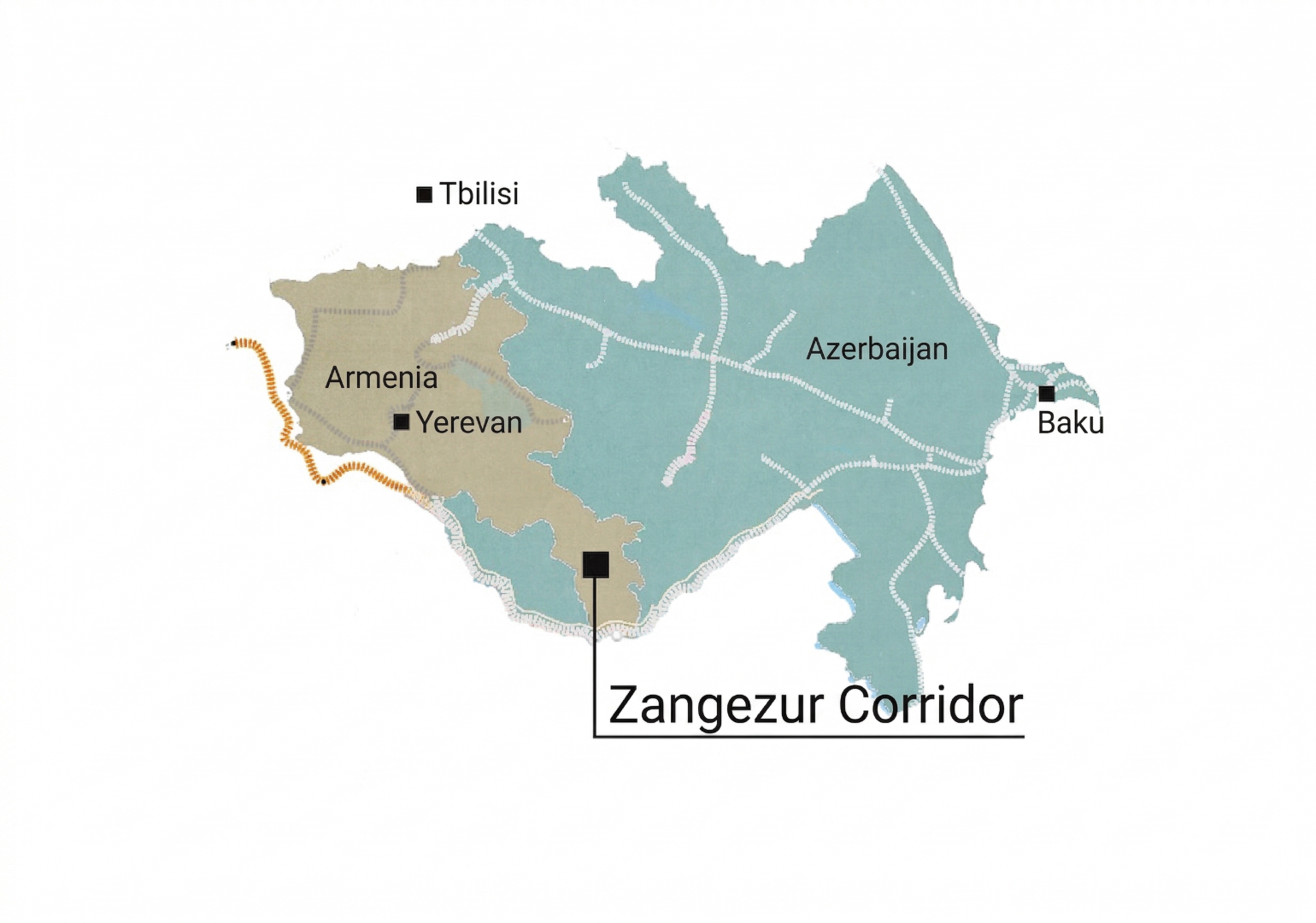
Wedged between the Armenian-Iranian border and Azerbaijan’s exclave, the Nakhchivan Autonomous Republic, the Zangezur corridor is the South Caucasus’s newest flashpoint. During the Soviet era it served an important transport function for the region’s countries — until the political upheavals of the 1990s changed that too.
In 1921, the Bolshevik authorities divided Zangezur in two: the western part went to Armenia, the eastern to Azerbaijan. Armenians call their portion of the region Syunik and have their own version of its history. Azerbaijanis, meanwhile, argue that Stalin’s redrawing of borders cut their country off from Nakhchivan.
The Zangezur question is not merely an ethnic or historical dispute. It is central to the geopolitical, economic, and energy agenda of the region — and beyond — and is attracting growing attention. In reality, it is yet another Soviet-era landmine buried in the South Caucasus, one that could go off at any moment.
Zangezur in the Azerbaijani Narrative
In 1989, as the Nagorno-Karabakh conflict was reigniting, Armenia imposed a blockade on Azerbaijan’s Nakhchivan region. Azerbaijan responded with an embargo against Armenia, on whose economy it had considerable leverage. Nakhchivan fell into economic isolation.
During the Soviet period, the region was connected to Azerbaijan by rail. The 2020 peace agreement that ended the Second Nagorno-Karabakh War lifted the 21-year blockade and required Armenia to participate in restoring transport links between Nakhchivan and Azerbaijan.
Discussions about restoring the old railway line quickly expanded into a far more ambitious concept — the Zangezur corridor — closely associated with Ilham Aliyev’s name. In 2021, the presidents of Turkey and Azerbaijan signed the Shusha Declaration, which covered military cooperation and new transport routes, including the opening of the Zangezur corridor. Aliyev described it as a historic event that would “unite the entire Turkic world.”
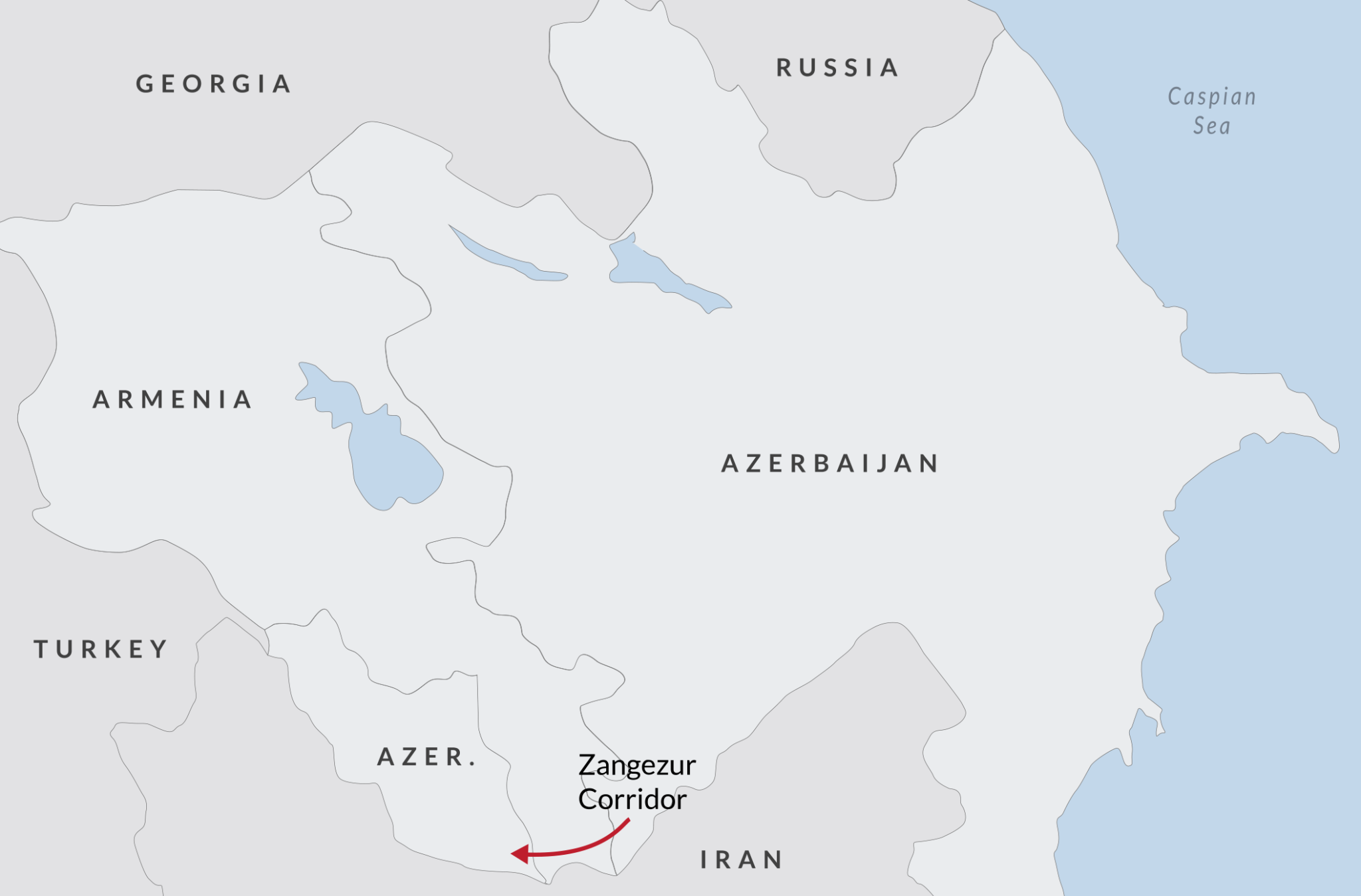
Clearly, Turkey wants a direct land connection to Azerbaijan, while Iran would lose its physical link to Armenia. In Azerbaijan, the corridor is also seen as an important component of the Middle Corridor.
“We are implementing the Zangezur corridor plan whether Armenia wants it or not. If it does, we will resolve this easily; if it doesn’t, we will resolve it by force” — that was Aliyev’s position two years ago. By 2023, however, particularly as the Third Nagorno-Karabakh War drew to a close and a peace treaty came into view, Azerbaijan softened its rhetoric, stepped back from the maximalist position, and shifted its focus to an alternative route through Iran.
For a long time, Azerbaijan accused Iran of supporting Armenia in the Nagorno-Karabakh conflict — supplying oil, weapons, and other goods. The emergence of a new route that could work for Iran as well appeared, at first glance, to open the door to normalization between the two countries.
Even so, both Iran and Armenia continue to approach the Zangezur corridor with caution, particularly given Russia’s growing interest in the project.
Iran’s Fear of Isolation
Iran fears that if the Zangezur corridor is realized, it will lose access not only to Armenia but to the broader north as well. Another source of concern is Baku’s warm relationship with Israel.
In the words of Iranian President Ebrahim Raisi, “the Zangezur corridor will be a NATO foothold, a threat to the national security of regional countries, and Iran therefore firmly opposes it.”
In 2022, Iran deployed 50,000 troops to the border zone — a signal to both NATO member Turkey and Azerbaijan that Armenia’s territorial integrity must be preserved and that Iran would not tolerate any changes to internationally recognized borders in the region.
Routing the transport corridor through Iran would effectively shelve the Zangezur idea, but Azerbaijan and Turkey continue to raise it, emphasizing that it would bring significant economic benefits even for Armenia — which has always firmly opposed the project — and usher in a new era of peace in the Caucasus.
The main reason for Armenia’s resistance is the neo-imperialist vision and rhetoric coming from Azerbaijan and Turkey.
An alternative concept — the “Crossroads of Peace” project, aimed at restoring peace across the South Caucasus — was also presented by Nikol Pashinyan at the Tbilisi Silk Road Forum.
According to Pashinyan, the project would ensure connectivity between Armenia, Azerbaijan, Turkey, Iran, and other countries in the region, covering road and oil infrastructure construction and the modernization of electricity transmission systems. The Prime Minister argues that developing road infrastructure running through Armenia is the best way to connect East and West, the Caspian and the Mediterranean — with Georgia’s ports playing a supporting role.
The war between Hamas and Israel has sharpened an already complex geopolitical picture further. Armenian politicians argue that given the close ties between Azerbaijan and Israel — on the Nagorno-Karabakh conflict and on containing Iran — realizing the Zangezur corridor would cut Iran off from military and economic resources at precisely the moment it might face a potential conflict with Israel.
Georgia’s Place on the Geopolitical Map
The Director General of Turkish State Railways (TCDD), Ufuk Yalçın, does not see the Zangezur corridor as an alternative to the Baku-Tbilisi-Kars (BTK) railway.
At the same time, the Azerbaijani side discusses the Zangezur corridor alongside investment opportunities in Georgian ports. According to Aliyev, activating the transport corridor alongside the Baku-Tbilisi-Kars rail route would create additional opportunities for increasing freight traffic.
“The transportation of goods through Azerbaijan will take place via Georgia’s seaports, and we are looking with great interest at investment opportunities in this area,” Aliyev stated this year.
While increased cargo throughput at Georgian ports — especially if the Anaklia port project is completed — would be beneficial for Georgia, the Zangezur corridor also carries significant risks and would substantially redraw the region’s transit map.
If the project is realized, Georgia’s role as a transit country would be weakened and called into question first and foremost — Armenia would gain a rail connection to Russia via Azerbaijan, which in turn would be linked to Turkey and Iran through Azerbaijan.
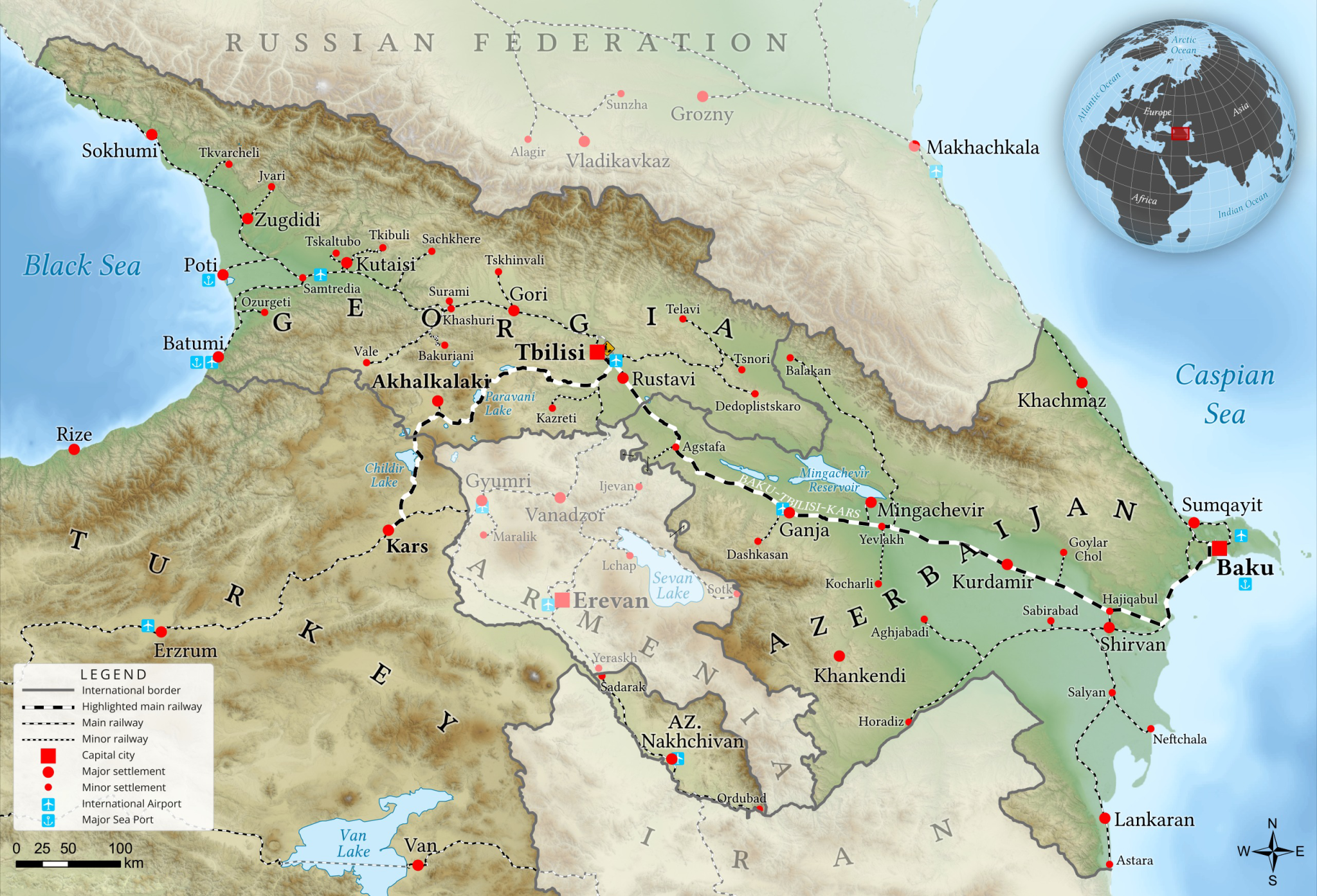
Iran wants to deepen its trade and military ties with Russia and has already begun negotiations on rail and road projects to connect Tehran with Moscow.
The upshot is that the Zangezur corridor would benefit not only Azerbaijan but Russia as well, both commercially and geopolitically. Given that Russian Railways owns the railway line in Armenia, its interest lies in routing freight through Armenia rather than via Baku-Tbilisi-Kars.
At the same time, Azerbaijan sees the Zangezur corridor as an add-on to the Silk Road — the development of which includes the contentious “strategic partnership” between Georgia and one of its largest trading partners, China.
Increasing freight flows toward the West also serves China’s interests, and its role in this space is growing. For Georgia, the question of an alternative route is one to handle carefully.
Azerbaijan is becoming one of the region’s key energy players. Since Western sanctions were imposed on Russia, demand for Azerbaijani gas has been rising — the country is expected to double its natural gas exports to Europe by 2027.
Turkey and Azerbaijan have already agreed on a pipeline connecting Turkey’s gas network to Nakhchivan, supplying the exclave with Azerbaijani gas.
It is not out of the question that Azerbaijan may also want to route a pipeline to Nakhchivan directly through Armenia — though even the smaller pipeline already under construction gives it the capacity to increase gas exports to Europe via Turkish territory. It is worth noting that Turkey has set its sights on becoming a major transport hub.
The bottom line is that the interests of many countries converge in the South Caucasus and around the Zangezur corridor specifically. Now, with active discussion underway about energy exports from Asia and Azerbaijan to Europe, Georgia — which has the opportunity to benefit significantly from the growing potential of the Middle Corridor running through its territory — needs to watch these developments closely and make the right political moves.

Editor, Forbes Georgia.