
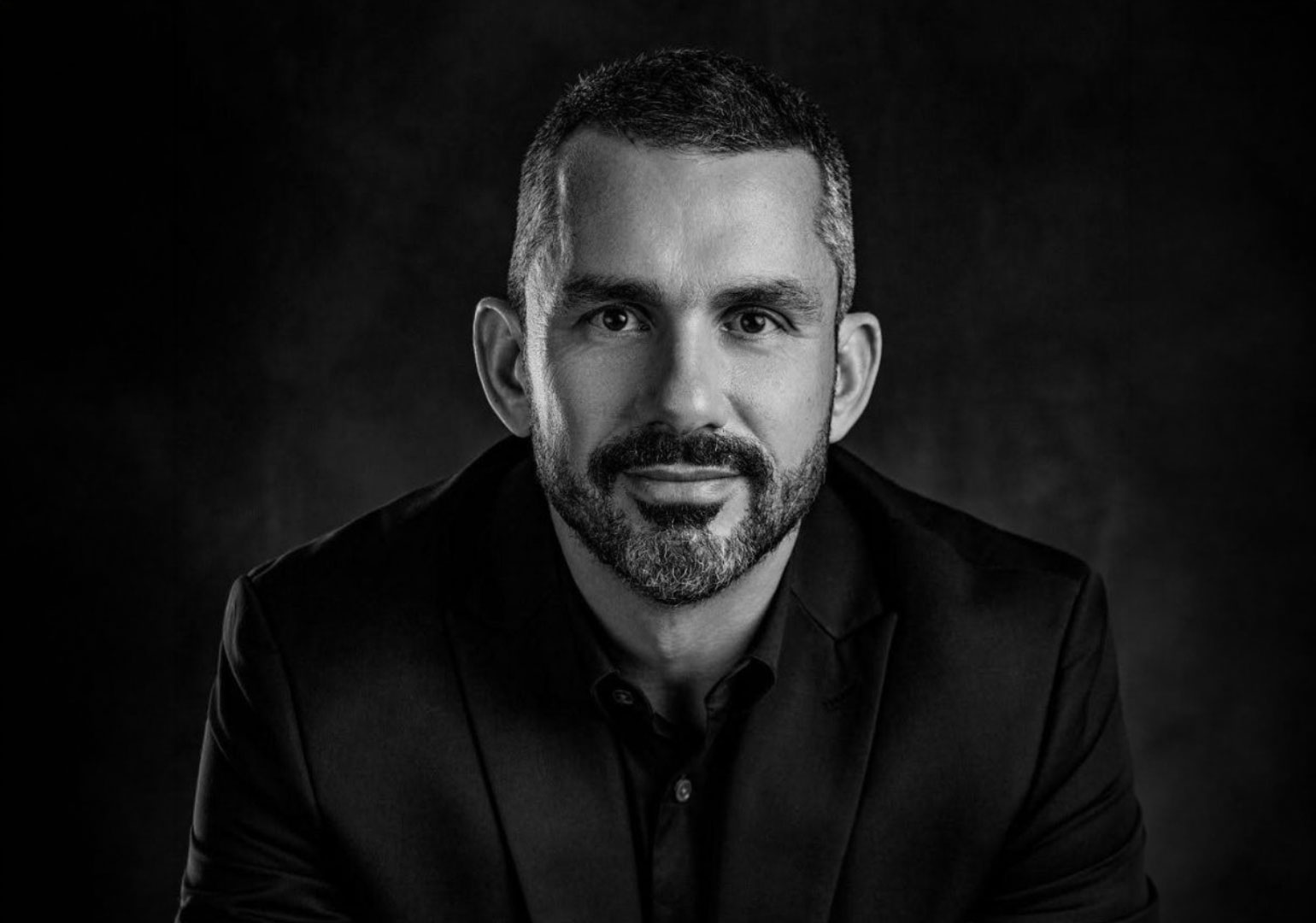
Photo Courtesy of Daniel Martinelli
Daniel Martinelli built something rare. Over two decades working in the global ingredients sector, one of the most demanding industries in the world, he turned a Food Engineering degree into an executive career that bridged science and business strategy with ease. That journey reached a major milestone with Bring Solutions Ltda., the company he co-founded in Brazil in 2013. From the ground up, he and his partners grew it into a trusted name in technical ingredient solutions, known not for its size but for its expertise. When Caldic B.V., one of the world’s top ingredient distribution companies, acquired the business, it was a recognition the industry had long seen coming.
Science as a Commercial Weapon
Most ingredient distributors choose a lane early. They become either technically sharp or commercially aggressive, rarely both. Martinelli built his career refusing that choice.
His Food Engineering training gave him fluency in formulation science, raw material behavior, and regulatory requirements. That knowledge became the engine behind a commercial style that was consultative rather than transactional. Where competitors leaned on catalog sales, Martinelli’s model centered on solving technical problems, helping food, beverage, and dietary supplement manufacturers find the right ingredient, validate the formulation, and build the supply chain to sustain it.
This matters more than it might seem. Manufacturers, particularly mid-sized producers without large in-house R&D teams, frequently hit walls when trying to develop new products. Accessing differentiated, high-value ingredients is one challenge. Getting reliable technical guidance on how to use them is another. The gap between those two needs is where Martinelli spent two decades planting his flag.
“Most professionals in this sector tend to be either technically driven or commercially focused. I have consistently operated at the intersection of both, translating applied science into business growth, scalable operations, and long-term strategic value.”
The results were measurable. Operations he led or contributed to delivered above-industry margins, driven by longer client relationships and stronger value-per-transaction figures. The consultative model, it turns out, is also a more profitable one.
Building Bring Solutions
When Martinelli co-founded Bring Solutions in Brazil in 2013, the company entered a market already crowded with large multinational distributors. Scale was their advantage. Speed and technical depth would be his.
Bring Solutions grew into a nationally recognized reference in technically differentiated ingredient distribution, a company that connected manufacturers with premium, high-value-added ingredients backed by formulation guidance, global sourcing strategy, and regulatory support. The portfolio was built around function, not volume. That distinction attracted a specific kind of customer: producers who needed more than a supplier, who needed a technical partner.
Brazil’s food and nutraceutical market provided fertile ground. The functional food and supplement category has grown steadily across Latin America, driven by consumer demand for health-positioned products and a manufacturing base eager to move up the value chain. By 2023, the global nutraceuticals market was valued at over $400 billion, with Latin America among its fastest-growing regions. Bring Solutions was well-positioned within that momentum.
The acquisition by Caldic B.V. was the clearest possible signal of what had been built. Caldic operates across Europe, the Americas, and Asia-Pacific, with a portfolio spanning food, personal care, and pharmaceutical ingredients. Acquiring Bring Solutions was a strategic move into a market Caldic wanted to deepen, and a recognition that Bring Solutions’s operation had the margin profile, the client relationships, and the sourcing infrastructure worth absorbing into a global group.
“The businesses I have been involved with experienced significant multi-year growth driven by strategic positioning, technical differentiation, and operational execution, ultimately attracting acquisition interest from a global multinational group.”
The Sourcing Edge in a Fractured Global Market
The final years before the acquisition were also a stress test for supply chains worldwide. Ingredient sourcing, already complex given the multi-origin nature of specialty raw materials, became dramatically harder after global logistics networks were disrupted. Companies with shallow supplier relationships felt every rupture. Those with diversified, well-qualified sourcing networks weathered it with far less damage.
Martinelli’s career had been built on exactly that kind of depth. His sourcing work spanned Latin America, Europe, Asia, and North America, developing supplier relationships that gave his operations flexibility when single-origin supply chains cracked. That geographic breadth was never just strategic hedging. It was the foundation of a differentiated portfolio, pulling specialty ingredients from international producers who would otherwise have had no direct path to regional manufacturers.
The model also produced a supply chain dynamic that benefited both sides of the transaction. International producers gained market access and commercial relationships in complex local markets. Manufacturers gained access to ingredients they could not source independently, supported by the technical knowledge to deploy them effectively. Margin improved for everyone who participated.
Post-acquisition, Martinelli contributed to the integration process alongside his partners, a period requiring careful alignment between the operational culture of a founder-led business and the systems of a global acquiring group. Integration following M&A in the ingredients sector is notoriously difficult. Ingredient portfolios, supplier contracts, and customer relationships are deeply relational assets. Post-acquisition performance at Bring Solutions significantly stood out as a success by any measure, a result that speaks to both the quality of what was built and the discipline of how it was handed over.
Twenty years in an industry that rewards neither shortcuts nor sentimentality, and Daniel Martinelli’s most durable contribution may be the simplest one: proving that understanding the science behind manufacturers through prior practical testing is still the most powerful commercial tool in the room.