

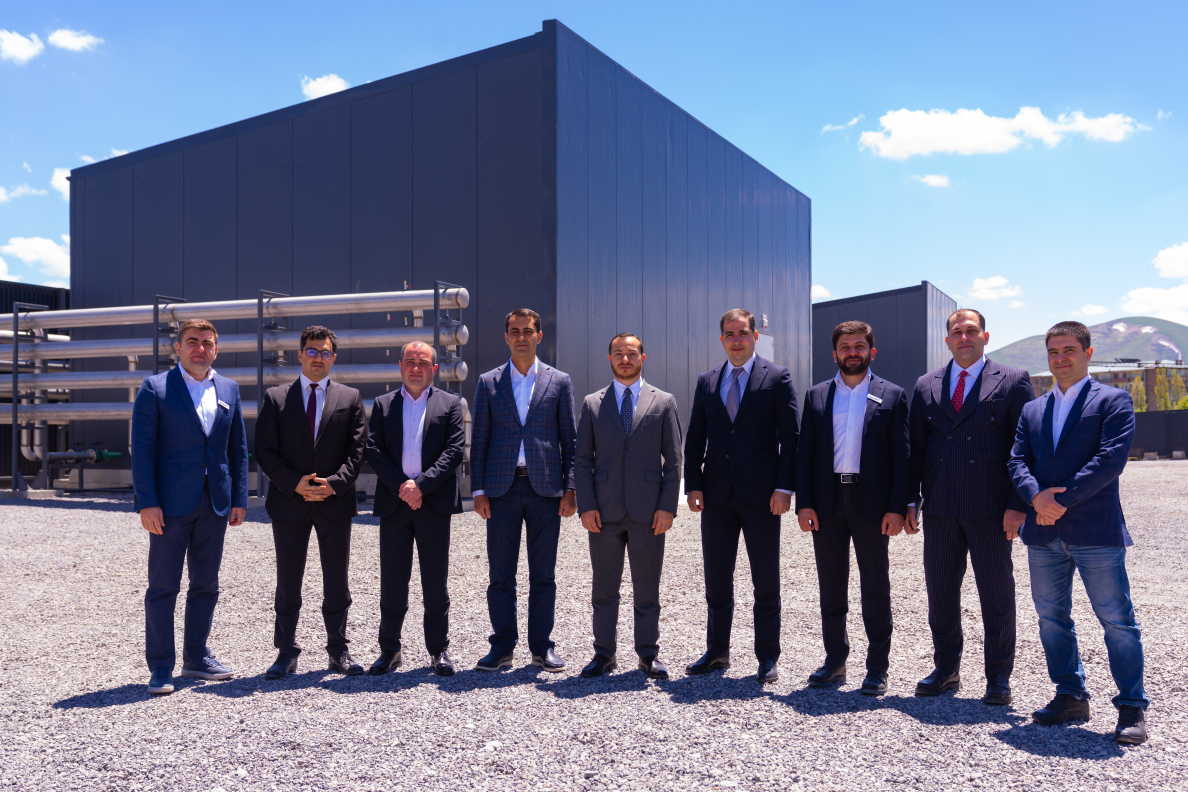
Inside Eleveight AI’s new NVIDIA Blackwell-powered factory in Gagarin, Armenia is attempting to turn electricity, engineering talent and frontier computing infrastructure into a new kind of export, with Georgia already part of the company’s regional vision.
At the centre of Eleveight AI’s new facility in Gagarin, the future is kept behind a controlled door.
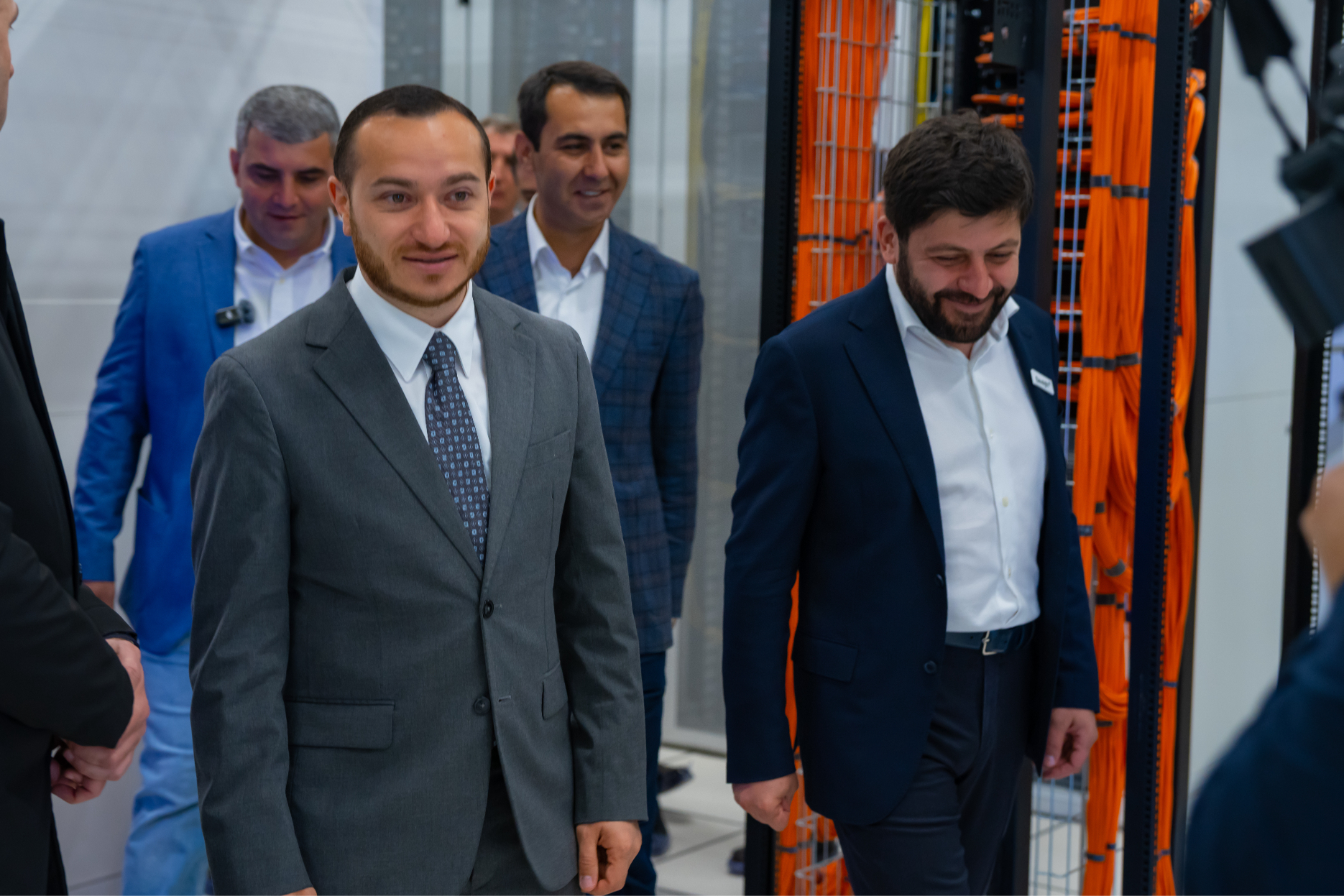
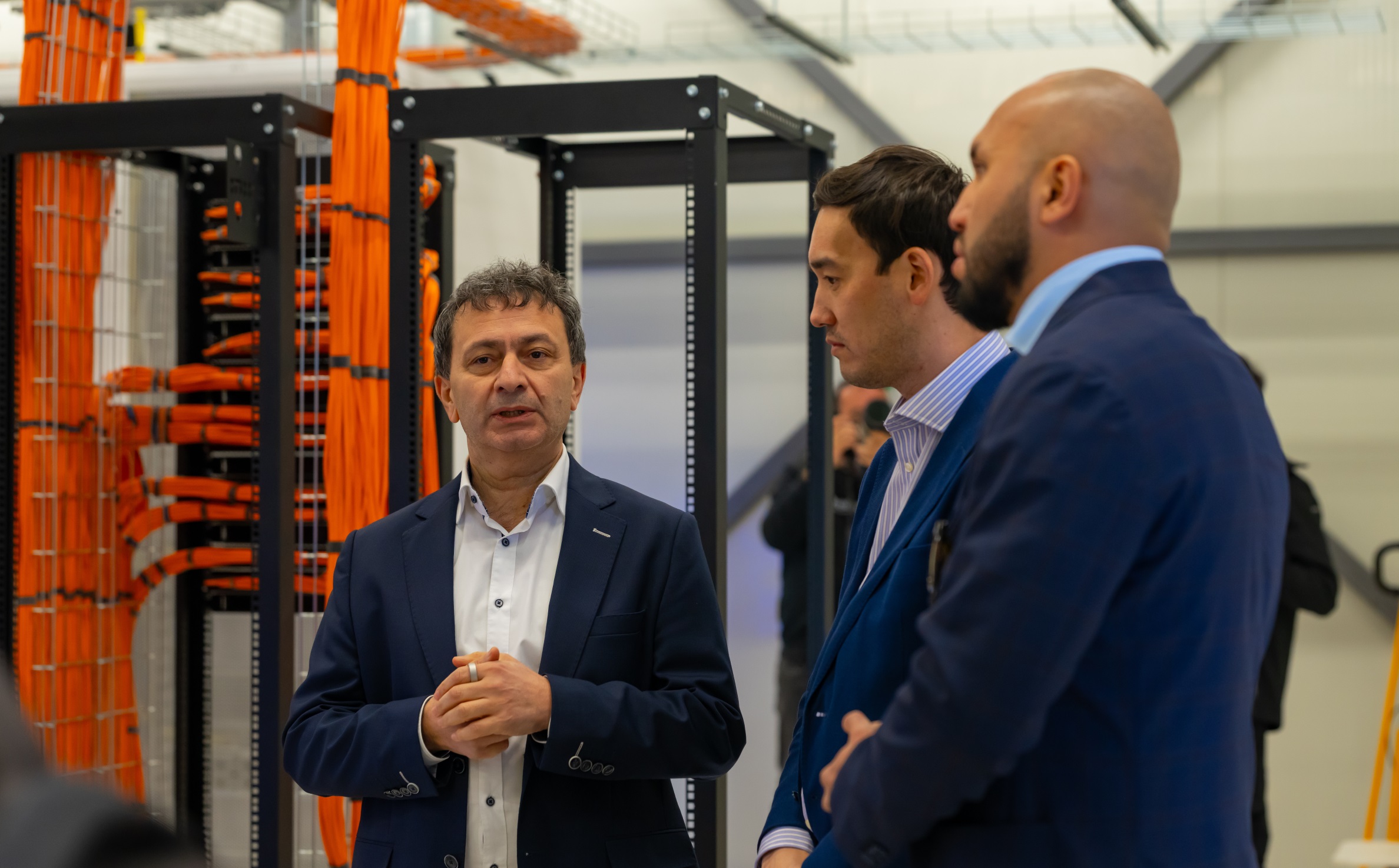
Inside, rows of server racks house 512 NVIDIA Blackwell B300 processors, some of the most advanced artificial intelligence hardware currently available. During a private presentation for Forbes Georgia, the room offered an unusually close view of the physical machinery behind a technology usually encountered as something almost weightless: a prompt, an answer, an image generated in seconds.
Here, there was nothing abstract about it. Artificial intelligence may be delivered through software, but its foundations are unmistakably industrial: processors, cables, cooling systems, electricity and the engineering required to keep everything operating without interruption.
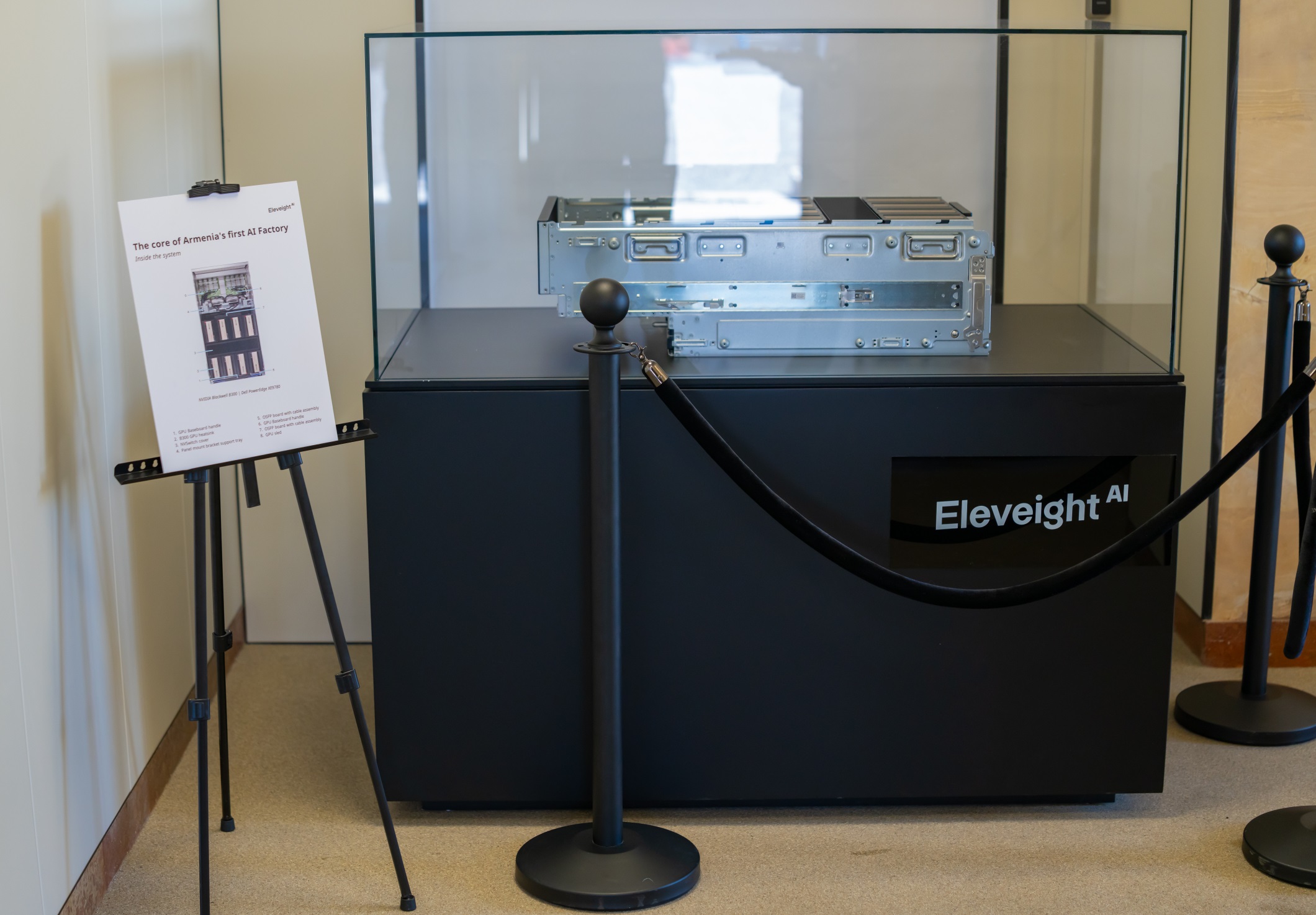
That is why Eleveight calls the site an “AI factory.” The company is not simply building applications on infrastructure located elsewhere. It is bringing the infrastructure itself to Armenia and attempting to turn computing capacity into a new kind of export.
Located at an altitude of almost 1900 metres, the facility is the first operational NVIDIA Blackwell B300 deployment of its kind in the South Caucasus. The first phase represents up to $120 million in investment and up to 5MW of electrical capacity, with expansion of up to 35MW planned for the next phase.
The 512 B300 accelerators at the heart of the system are designed for the intensive workloads required by generative AI, advanced reasoning, model training and inference. The infrastructure can support large-language models, scientific computing, engineering simulations and private AI environments for businesses and governments.
But the project’s larger proposition is not about how many processors are installed in Gagarin. It is about what they can produce.
“We see ourselves as a regional partner, a factory that produces AI tokens and sells that computing capacity across borders,” Eleveight AI board member Davit Abovyan told Forbes Georgia. “Our ambition is also to transfer knowledge to neighbouring countries and deepen our technological ties with them, including, of course, with our friends in Georgia.”
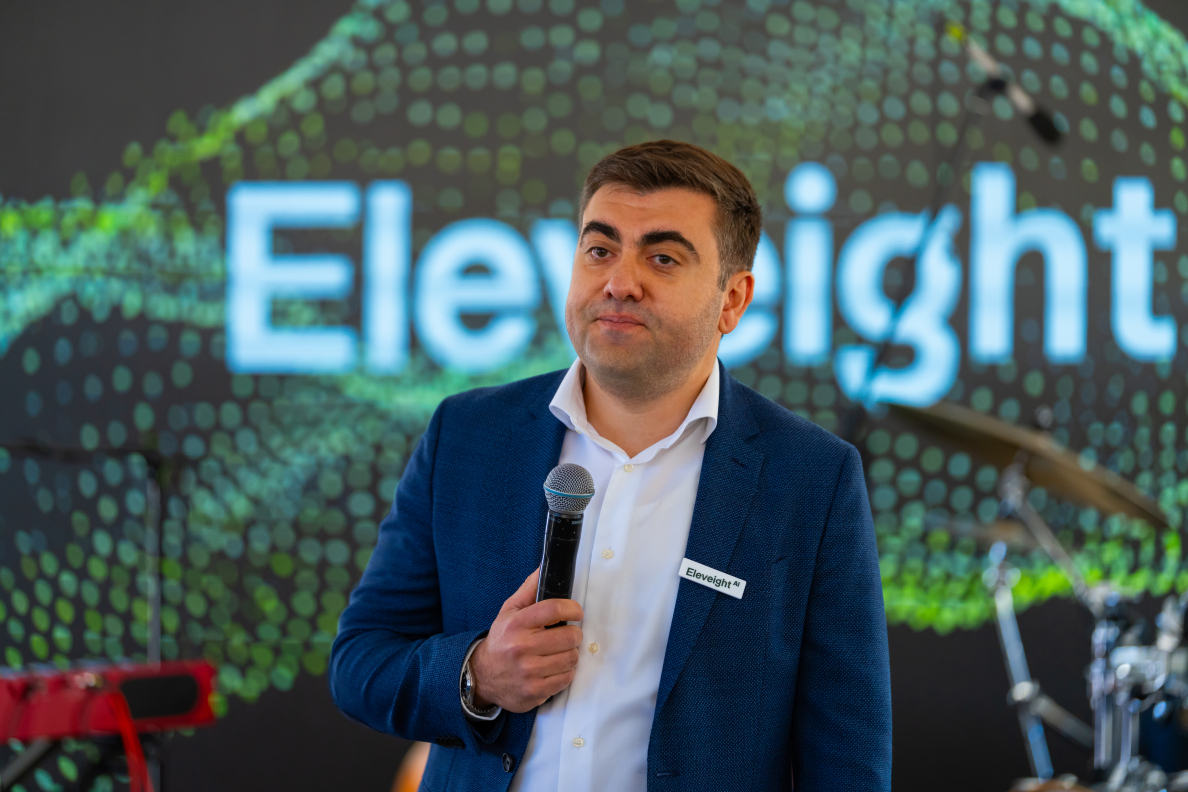
Tokens are the basic units processed by AI systems when they generate text, analyse information or create images and video. At sufficient scale, the ability to process those tokens becomes a commercial product. Eleveight’s model is therefore to convert electricity, advanced hardware and specialised engineering into computing output that can be sold internationally.
For Armenia, this represents a significant evolution. The country is already known for its engineers, software companies and globally successful technology founders. Eleveight is now pursuing something more capital-intensive: ownership of part of the physical infrastructure on which the next generation of AI products will be built.
The company has committed up to 20% of its computing capacity to Armenian universities, research institutions and non-commercial initiatives. The objective is not only to attract foreign customers, but also to give local researchers and startups access to infrastructure that would otherwise be difficult or prohibitively expensive to secure.
Armenia’s Minister of High-Tech Industry, Mkhitar Hayrapetyan, argues that the project should not be understood as a sudden breakthrough.
“This did not begin ten months ago, or only after the bilateral memorandum signed on August 8,” he told Forbes Georgia. “Armenia has been building toward this moment for years.”
Hayrapetyan points to Prime Minister Nikol Pashinyan’s engagement with NVIDIA CEO Jensen Huang, beginning with a meeting in Silicon Valley in 2019 and followed by Huang’s visit to Armenia in 2023. Those discussions, he said, focused not only on artificial intelligence, but on the infrastructure and capabilities required to support it.
The 2025 memorandum between Armenia and the United States on artificial intelligence and semiconductor innovation gave that effort a broader diplomatic and commercial framework. Yet Hayrapetyan describes the current moment as the product of a longer process of experimentation, institutional learning and persistence.
“We reached this point step by step, through failures, mistakes and continued effort,” he said. “The fact that we were not afraid to fail was one of the conditions that made today’s success possible.”
The timing is important. As artificial intelligence becomes embedded across business, science and government, computing capacity is becoming a strategic resource in its own right. Talent and software are no longer sufficient. AI development also depends on access to advanced processors, reliable electricity, cooling, connectivity and secure locations where sensitive workloads can operate.
Eleveight AI co-founder and CEO Arman Aleksanian frames this emerging landscape as a new era of “chip diplomacy.” The strategic question, in his view, is no longer only who manufactures the world’s most advanced semiconductors. It is also where those chips are installed, who operates them and which countries and companies can access the computing power they produce.
Armenia is unlikely to become a major semiconductor manufacturer. It does not need to. Its opportunity is to become a trusted location where advanced hardware can be deployed, operated and transformed into services for global customers.
The country brings several advantages to that effort: a deep mathematical and engineering tradition, an internationally connected diaspora, a growing technology sector, supportive government policy and climatic conditions suited to efficient cooling. Its small domestic market also reinforces the export logic. A facility of Eleveight’s scale must serve customers beyond Armenia from the outset.
Hayrapetyan believes the country now has a limited but meaningful opportunity to establish that position.
“A window has opened for Armenia and for our technology ecosystem,” he said. “The challenge is to move quickly and use it fully.”
That speed, he added, has depended on unusually close cooperation between the public and private sectors.
“What may once have seemed surprising has become a working reality,” Hayrapetyan said. “Government and business are moving together, and that has allowed ambitious projects to become operational much faster.”
Eleveight is also being positioned as part of a wider national strategy sometimes described as a “Garden of AI Factories.” Yerevan State University has deployed its own NVIDIA-powered research system, while the Firebird AI initiative is developing a separate large-scale computing project. The government’s wider ambition is to connect infrastructure, education, research and commercial AI development into a single ecosystem.
The aim is not merely to rent processors to foreign companies. It is to allow Armenian researchers, startups and enterprises to build more advanced products of their own, moving the country further up the technology value chain, from exporting technical labour to operating the infrastructure on which global AI products depend.
The regional dimension is equally important. Abovyan sees Eleveight not as an isolated Armenian facility, but as the foundation of a broader computing network.
“We want to serve the region, share expertise and build lasting technological partnerships with neighbouring countries,” he said. “Georgia is naturally part of that vision.”
For Georgian startups, universities, financial institutions and public agencies, access to advanced computing capacity in neighbouring Armenia could create opportunities to develop and operate sophisticated AI systems closer to home. For Eleveight, Georgia could become a customer, a technology partner and a bridge toward wider markets across Europe, Central Asia and the Middle East.
Asked whether the company intended to expand beyond Armenia, Abovyan was unequivocal.
“Of course. Regional expansion is part of the plan.”
The significance of the Gagarin facility is therefore not simply that Armenia has acquired some of the world’s most advanced processors. It is that the country is attempting to build an industry around what those processors can produce: research, products, partnerships and billions of AI tokens delivered beyond its borders.
In a settlement named after the first human to travel into space, Armenia is making its own bid for the next technological frontier. It may not manufacture the chips at the centre of the AI revolution. But it intends to become one of the places where they are put to work.