
Pontus is trying to rewrite Georgia’s development standards, having already delivered a landmark project in Batumi and now planning the same in Gudauri. For company founder Irakli Varshalomidze, quality and long-term value creation matter most, with the ultimate goal of developing strong hotel, resort, and investment projects across the country.
Pontus Capital operates across several directions in Georgia. What was the idea behind its creation, and what’s its strategic vision?
The idea behind Pontus Capital came from my own experience and the belief that Georgia could attract large-scale investment and develop projects at an international level. Trust, a strong team, and Georgia’s stable economic growth gave us the chance to bring in foreign capital and contribute to sectors like hospitality, agriculture, and biotechnology.
I’ve been working in this field since 2014. Years of accumulated experience showed us the need for a single investment and development platform that would bring together capital, international partners, and local opportunities.
That’s exactly why Pontus Capital was formed, not as a single-project company, but as a long-term investment platform. Its strategic vision rests on building projects that add real value to the country’s tourism, real estate market, infrastructure, and investment climate.
What matters to us isn’t just construction, but assets that work over the long term: creating jobs, attracting international investors, and making Georgia a more competitive destination in the region.
When and why did you decide to establish Pontus’s development arm?
We made the decision to create Pontus once we saw that our projects had reached a scale where an investment vision alone wasn’t enough. We needed a dedicated development arm fully focused on project planning, development, construction management, and quality control.
Developing real estate and hotel infrastructure is a complex process, and what matters isn’t just a good location or architecture, but the right financial model, operator, brand, sales strategy, and long-term project management.
Pontus was built to meet exactly that need. We wanted to establish a professional development structure within Pontus Capital capable of delivering large, complex projects. Our goal is to work in Georgia using international approaches and to create not just square meters, but a complete investment product.
How did the partnership with Rotana begin, and why does partnering with an international brand like this matter to you?
The partnership with Rotana began because our visions aligned. We had the ambition to build high-level hotel and resort projects in Georgia, and Rotana is a brand with strong regional experience, operational standards, and a long track record working with international guests.
The first major step was Pontus Rotana Resort & Spa Gonio, a five-star resort complex in Gonio, near Batumi. For us, partnering with Rotana isn’t just about using a brand name. It’s about bringing quality, a management culture, operational experience, and international trust into the project.
A partner like this matters especially to investors. They see that the project has a professional management system, sales channels, service standards, and a long-term operating model. Today, our partnership with Rotana isn’t tied to just one project anymore. It’s a strategic partnership aimed at developing five strong projects across the country, along the coast, in the city, and in the mountains.
What makes your first joint project, Pontus Rotana Resort & Spa in Gonio, Batumi, stand out? What do you offer that’s different?
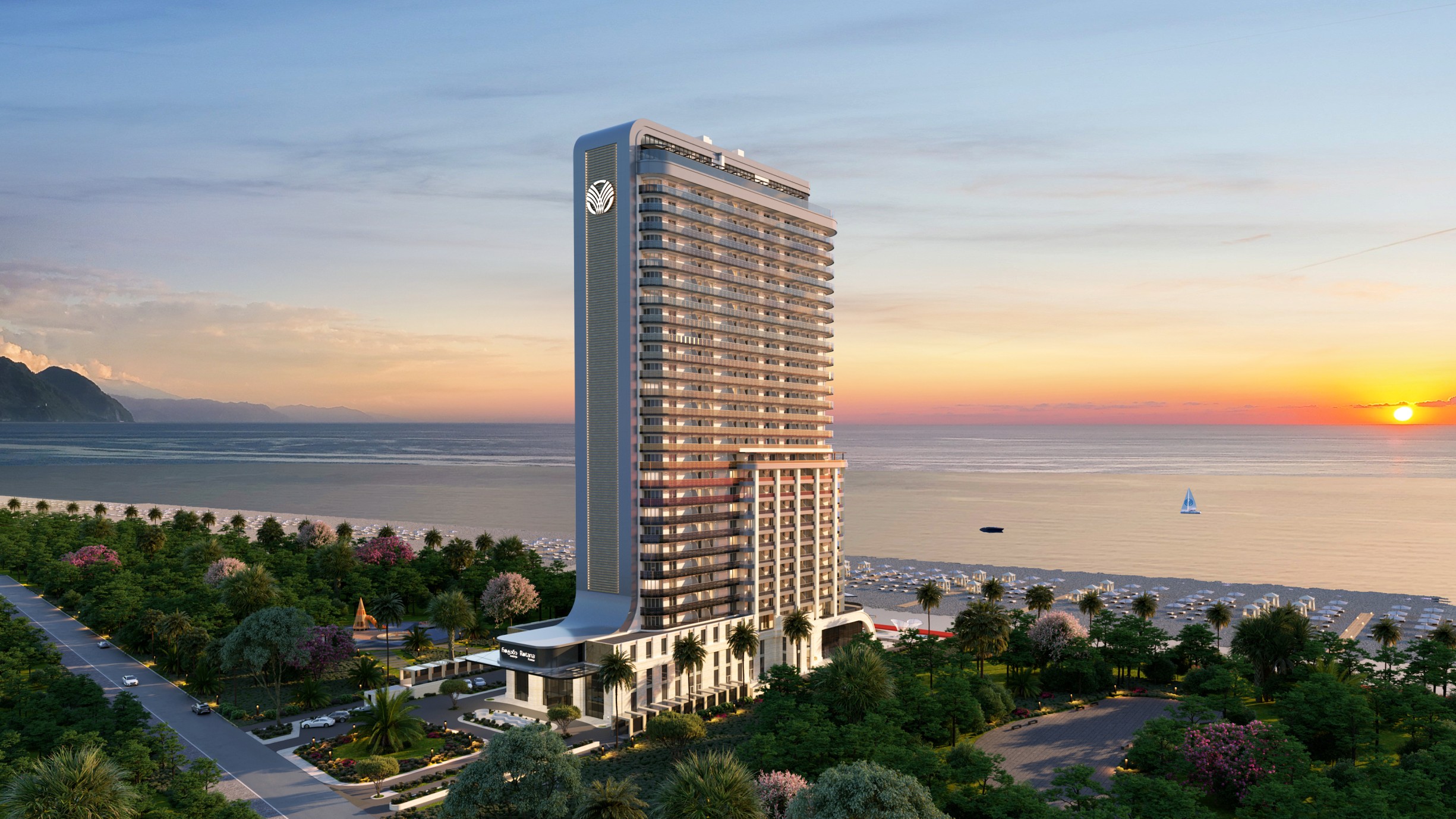
Pontus Rotana Resort & Spa Gonio is a special project for us, first of all because of its scale. It comprises 546 rooms, and the investment budget exceeds $120 million. This is our first joint project with this partnership and a significant step toward moving Georgia’s hospitality market into a new phase.
The project sits on Gonio’s beachfront, which is already a major advantage. But location isn’t the only thing that matters. Our goal is to create not just a residential or hotel complex, but a full five-star resort product, built and managed to international standards.
Pontus Rotana Resort & Spa also stands out through its investment model. An investor can own commercial real estate, one or several hotel rooms. Each room carries a coefficient representing its share of the revenue generated from room rentals. Rotana’s management involvement ensures professional operations, high service quality, and proven experience in attracting guests.
The complex includes a spa, restaurants, pools, conference and leisure spaces, and every service a modern international resort needs. Our vision is for guests and investors alike to find the sea, comfort, brand, service, and quality management all in one place.
For an investor, this is a chance to take part in a five-star hotel project managed by an international brand. The value here isn’t just square meters, it’s the brand, the management, the revenue-distribution model, and its potential.
Is the market ready for a project like this? How do you earn investors’ trust?
I believe the market isn’t just ready for this kind of project, it already needs higher-standard products. In recent years, the growth of Georgia’s tourism, real estate, and investment markets has shown that demand is rising not only for residential space but for properly structured, professionally managed projects.
Gonio, and Batumi’s coastline in general, is entering a new stage of development. The region has natural advantages: the sea, its location, a growing tourist flow, and investment interest. Making full use of that potential requires projects that go beyond construction and offer both customers and investors long-term value.
For us, earning investors’ trust starts with transparency. It matters that an investor knows exactly what they’re investing in, how the project is structured, how revenue is distributed, and what the outlook is.
The second key factor in building trust is partnerships. Rotana’s involvement gives investors an added guarantee that the project isn’t just a development idea, it comes with professional operational management and brand standards. Trust is built through delivered commitments, quality, communication, and results.
You recently unveiled Rotana’s first mountain resort in the world. Why did you decide to focus on Gudauri after Batumi and Gonio?
Gudauri was a natural next step for us. Gonio represents the sea, resort life, and relaxation, while Gudauri is one of Georgia’s strongest locations for mountain and ski tourism. Our view is that the country shouldn’t depend on a single season or a single region, it has a unique opportunity to develop tourism in several directions at once.
Gudauri is already a well-known ski resort with a long winter season, growing international interest, and strong potential for development. At the same time, it still needs high-level hotel infrastructure, branded operators, and projects that can move the resort into a higher segment.
Introducing Rotana’s first mountain resort in Georgia is a major milestone for us. It shows that this location can be a strategic direction not just for regional hotel brands, but for international ones as well.
We want to build a new type of mountain resort, one that doesn’t rely solely on the winter season. Our goal is for the project to work across all four seasons: skiing in winter, and spa, wellness, active tourism, events, and family getaways for the rest of the year.
What sets this project apart from other high-end mountain hotels in the region? What’s its architectural concept?
I can say with full confidence that Caucasus Mandili will be one of the best mountain hotel complexes in our region. Given its location, access to ski slopes, architecture, design, technical solutions, infrastructure, entertainment spaces, and management model, we believe this project will set a new standard for the region.
The goal isn’t simply to build a high-end hotel. We want to create a complete mountain resort that offers guests not just accommodation, but a full experience: rest, entertainment, wellness, gastronomy, family spaces, and high-level service.
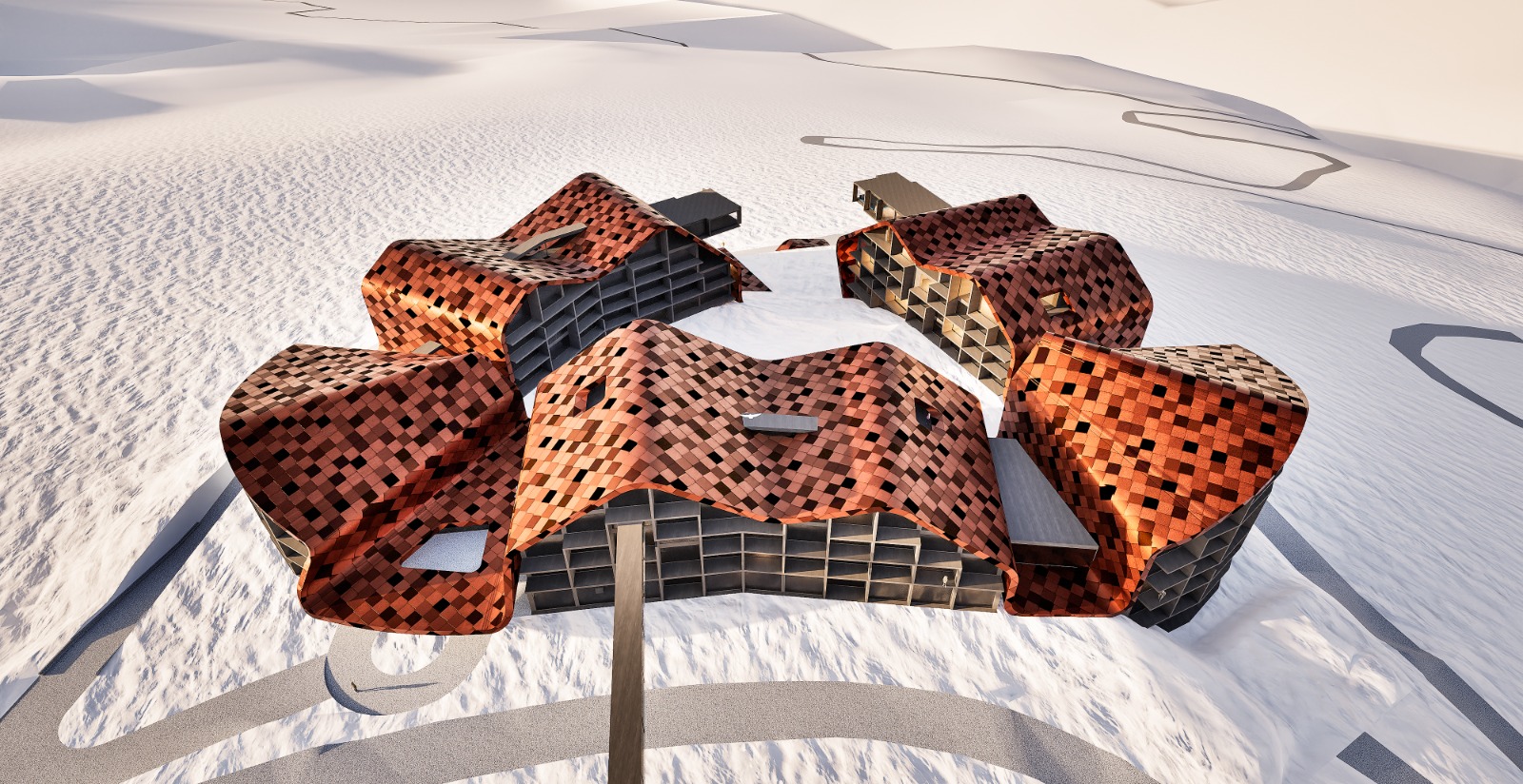
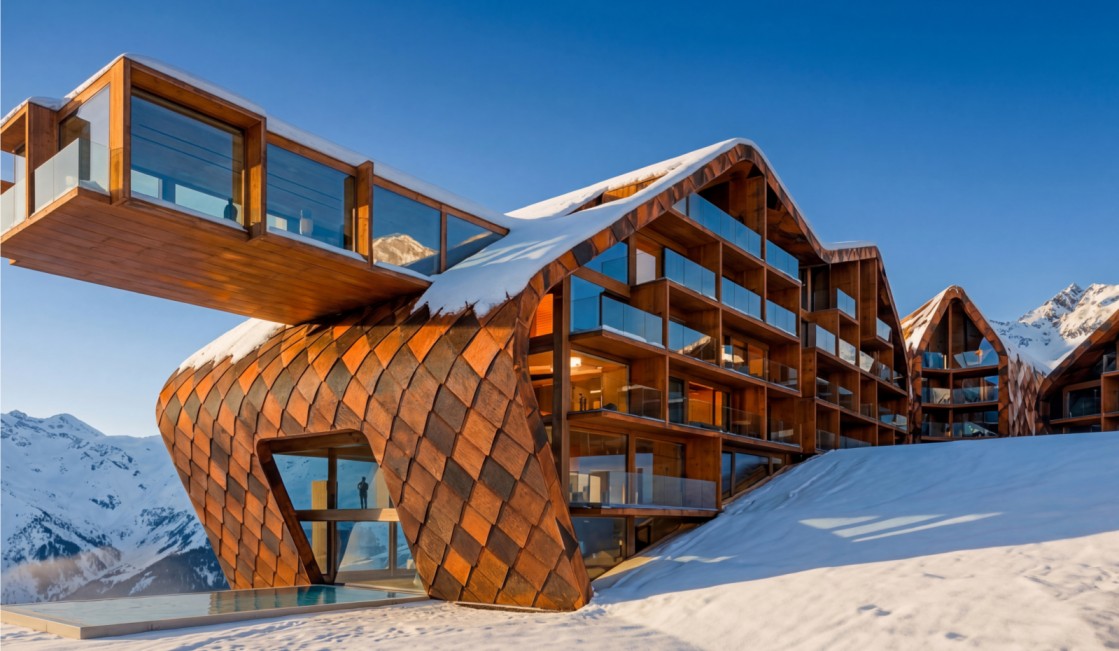
It was important that the architecture not just be a beautiful building in the mountains. It had to connect with Gudauri’s natural surroundings, be modern, functional, and at the same time emotional. The architectural concept is built on harmony with the mountains, maximizing views, using natural materials, and creating spaces where guests feel both international-level comfort and the unique character of the Caucasus.
What sets this project apart lies in the combination of details. A good location alone isn’t enough, it takes a strong brand, the right architecture, quality technical solutions, diverse infrastructure, and professional management. Caucasus Mandili brings all these elements together.
How important was the involvement of the Italian architecture studio NOA, and what did their experience add to the project?
Gudauri needed a building designed to modern standards, with fresh standards and tasteful architecture. That’s exactly what we got by bringing in NOA, and the result already speaks for itself.
NOA’s experience was essential for this project. Their team of strong architects brought an international perspective, well-planned spaces, and the quality a modern mountain resort requires.
NOA also has years of experience designing high-altitude resorts in Alpine regions, which means they know especially well how to create architecture that blends harmoniously with the natural landscape while still highlighting local identity.
Our project is a direct example of that approach, its architectural concept reflects a modern interpretation of the Georgian mandili (headscarf) symbol.
What economic and tourism benefits will the project bring, and what impact will it have on the resort’s development overall?
I believe Caucasus Mandili will be an important economic and tourism project for Gudauri. First, it will create new jobs, both during construction and later operations. The project will also support the development of local businesses in services, transport, food, tourism activities, and related fields.
From a tourism standpoint, the project will bring a new level of quality to Gudauri. Combining high-level infrastructure with a four-season concept will help the resort attract a higher-end segment of guests and reduce seasonality. When a new-quality hotel complex enters the market, it raises the bar for service and infrastructure and helps position the resort at a higher level overall.
We believe this project will be more than just a new hotel for Gudauri, it will be part of a new stage of development, supporting the resort’s economic activity, growing tourist flows, and strengthening Georgia’s position as an international mountain destination.
What are the main challenges in today’s development market, and are you managing to avoid these risks?
In a growing development market, the challenges come from several directions: rising construction costs, the cost of financial resources, a shortage of qualified staff, and maintaining quality standards. Challenges tied to regulation, timelines, and infrastructure matter too.
Our approach is that risks should be properly assessed from the very start, not only once a problem has already emerged. At the planning stage, we pay close attention to the financial model, technical solutions, partner selection, construction quality, and the future operating model.
Eliminating risk entirely is impossible, especially in development. But it can be reduced through a strong team, careful planning, international partners, transparent processes, and responsible management.
It’s especially important that projects aren’t built around short-term calculations. When you create a hotel or resort product, you have to think not only about the sale, but about how that asset will perform in five, ten, and more years. That long-term view is what helps us manage risk and build more sustainable projects.
How do you see Pontus Capital’s role in the country’s ecosystem over the next 5-10 years? What’s your mission?
Over the next 5-10 years, I see Pontus Capital as a long-term investment and development platform that builds quality projects in Georgia and helps realize the country’s economic potential.
Our mission is to bring capital, expertise, international partners, and brands to Georgia that elevate the country’s profile. We don’t want our projects to be just commercial real estate, they should create new jobs, strengthen tourism, build the country’s investment credibility, and prove that large-scale, quality, long-term projects are achievable here.
In the coming years, Pontus Capital’s goal is to develop strong hotel, resort, and investment projects along the coast, in the mountains, and in the city. We want Pontus to be associated with quality, responsibility, and projects that create real value for the country.