

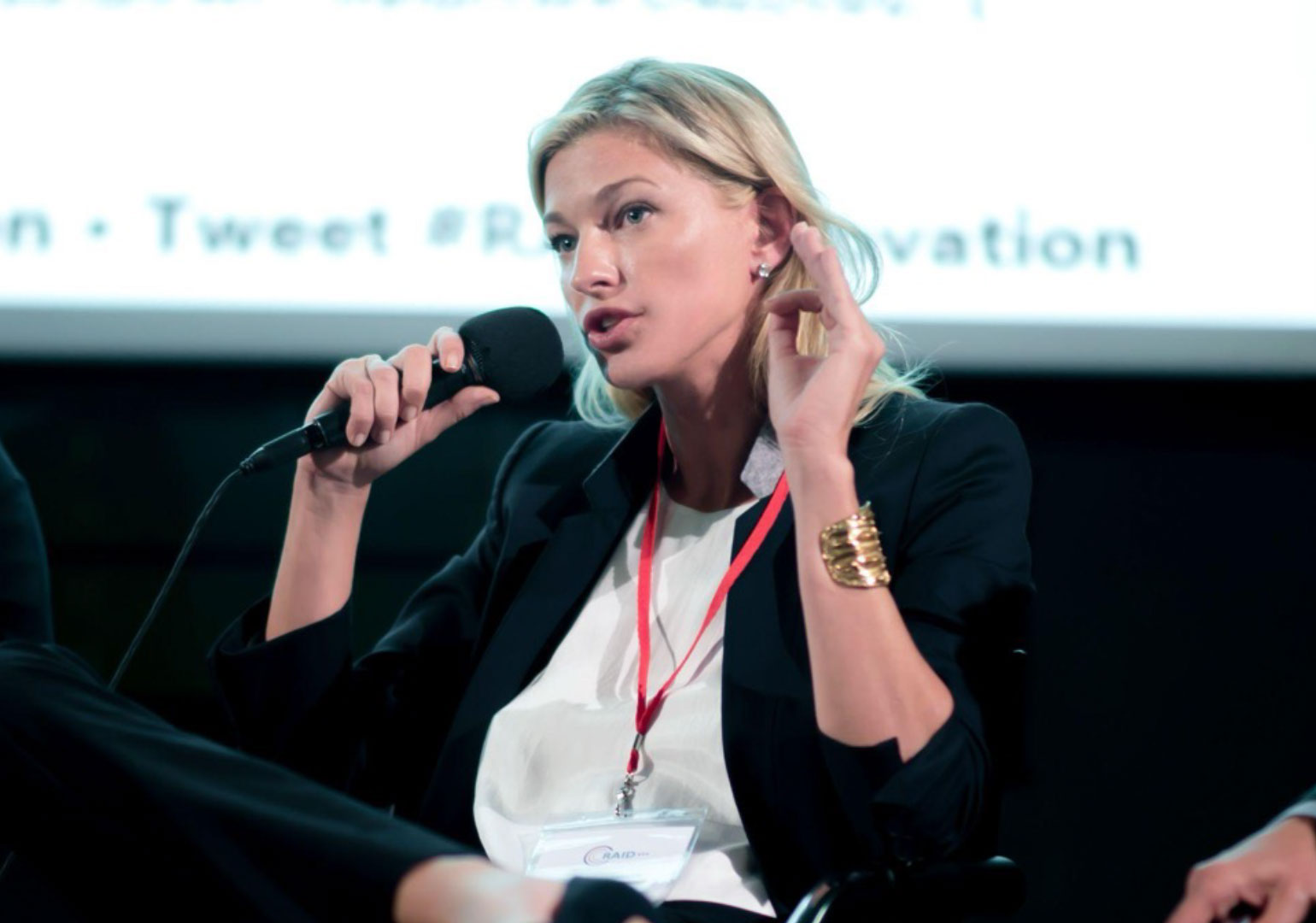
Photo Courtesy of RAID
Most investors chase speed. The fast pivot, the fast exit, the round that closes before the ink dries on the term sheet. Nicole Junkermann has built her career on the opposite instinct. Across two decades in venture capital, private equity, and real estate, the German-born founder of NJF Holdings has stuck to a simpler idea: back conviction over consensus, and give it years, not news cycles, to prove out.
That patience is now getting tested in two very different arenas: artificial intelligence and sport.
Three businesses, one instinct
NJF Holdings is Junkermann’s investment platform, built across venture capital, private equity, and real estate. Inside it sits NJF Capital, the venture arm that handles most of her technology and healthcare investments. She has described the whole structure less as a portfolio and more as a discipline: fund founders solving real problems, holding the position long enough for the thesis to play out, and skipping whatever is trending this quarter.
That discipline shows up clearly in her healthcare investing. Her stake in Owkin, which uses AI for drug discovery and diagnostics, reflects an argument she has made repeatedly in her own writing: that AI’s biggest risk isn’t what it can do, it’s the judgment, or lack of it, behind the people deploying it.
A code, not just compliance
Junkermann has become a fairly outspoken voice on what she calls AI’s moral architecture. Writing in TIME, she argued that regulation can’t keep pace with technology, and that the industry needs something closer to a working code of conduct rather than another compliance checklist. She often returns to a version of this argument: that ethical due diligence deserves the same rigor as financial due diligence, and that trust, more than compute power, may end up being the scarcest resource of this decade.
It’s an unusual thing for an investor to say out loud, and she seems to mean it as more than a talking point. Her argument is that the AI companies that last won’t just be the fastest movers. They’ll be the ones that build real trust with regulators and the public, and that shapes how NJF Capital evaluates the founders it backs.
Why sport is the one thing AI can’t touch
If AI takes up half of Junkermann’s public thinking, sport fills the other half, and the two aren’t as unrelated as they sound. Through Gameday, NJF Holdings’ sports investment platform, she has staked out a position that runs counter to the current AI-everything narrative: live sport, built on human performance that nobody can script, might be one of the few asset classes that automation genuinely can’t touch.
Her recent commentary has covered investing in women’s sport, the international growth of properties like LaLiga and the NBA, and the opportunities in leagues, as demonstrated by Gameday’s investment in the Lega Volley Femminile, the Italian women’s volleyball league. The logic underneath all of it is scarcity. As more of daily life gets mediated by algorithms and synthetic content, the moments that can’t be repeated become worth more, not less. In her framing, sport isn’t a hedge against AI. It’s a belief in the part of human life that AI can’t get to.
The long game
Put the AI writing and the sports thesis side by side, and one conviction runs through both: the most durable value, whether it’s in a boardroom or on a pitch, comes from human judgment applied consistently over time. It’s not the flashiest philosophy in a market that rewards speed and spectacle, and Junkermann doesn’t seem bothered by that. NJF Holdings, NJF Capital, and Gameday add up to what she’s described as a long game, one built on the idea that conviction, held long enough, tends to outlast whatever else is trending.