Global voice assistants had been on sale in the Middle East for years before Yasmina launched. Most saw limited use in the households that bought them. Owners defaulted to English when they had a choice. Households where the older generation spoke only Arabic often left the device unplugged.
Yango’s Yasmina reached number one on Amazon UAE within months of launch. It now sells across the GCC and is currently launching in Egypt. Yango built it differently. Maysam Azzam is one of the reasons.
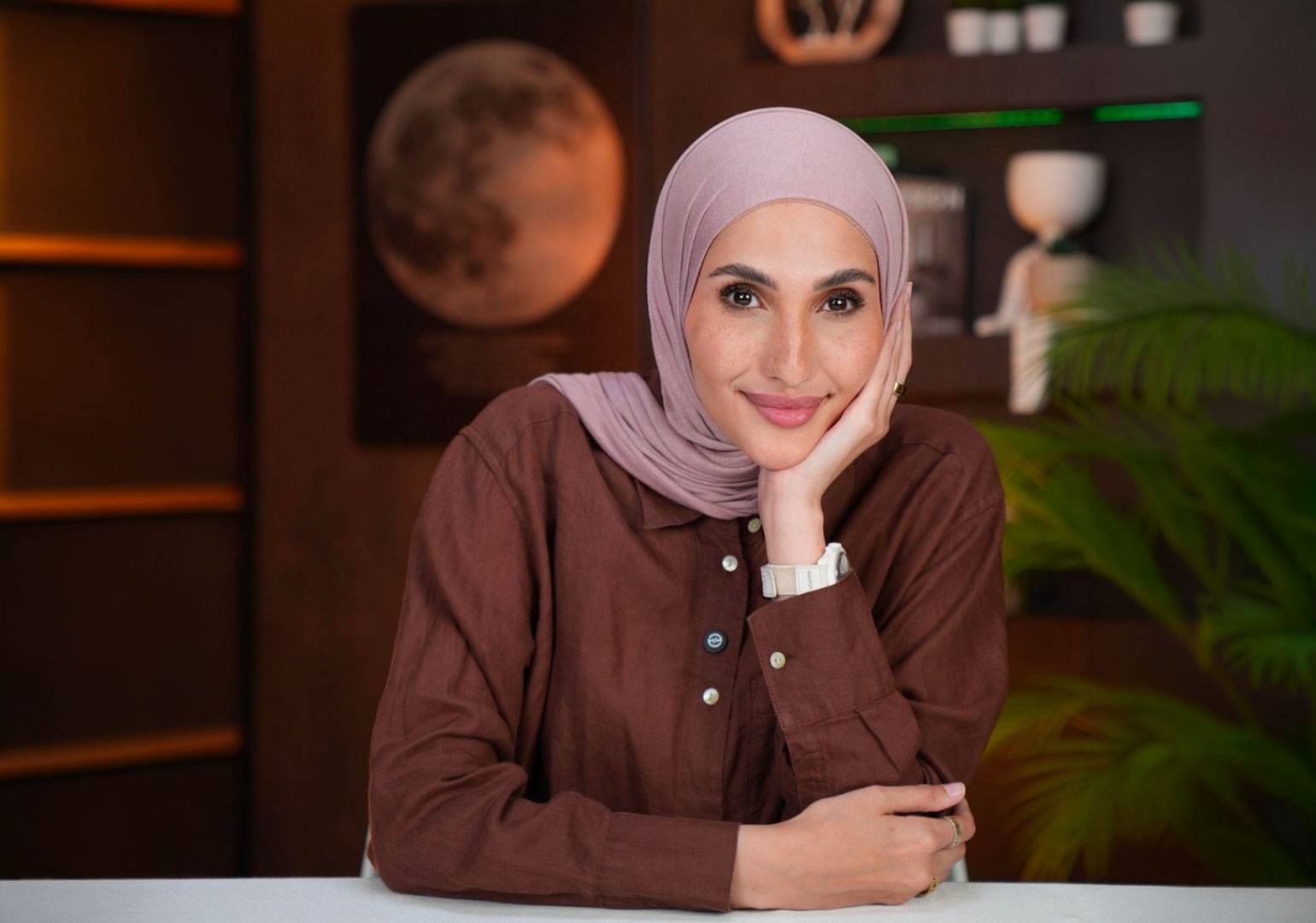
Azzam is Head of Integrated Communications at Yango, the Dubai-headquartered technology group behind Yasmina. She also spent the past two years on Yasmina’s cultural training team. Not many communications leads do both. “I didn’t build Yasmina’s engineering,” she said. “I helped build who Yasmina is.”
How She Got There
Azzam fell into the training work. Her background is in communications, storytelling and audience work across the Middle East. She had been obsessed with Arabic for years.
“I spend an unreasonable amount of my life thinking about language,” she said. “Why people respond to one word and not another, why something makes an Egyptian laugh but might fall completely flat in the UAE, or why a sentence can be technically perfect Arabic and still feel completely wrong.”
When Yasmina started coming together, that obsession became directly useful. “The engineers could build the intelligence,” Azzam said, “but we also needed people constantly asking, does she actually feel like us?”
What Her Job Looks Like
Azzam listens to Yasmina all week. When she hears a response that is grammatically correct Arabic but obviously translated, she flags it. “No one here would actually say this,” she tells the team. The engineers work backwards until the response matches something a family member would say at home. On the harder phrases, that cycle runs a dozen times before the phrase ships.
“That distinction sounds small, but it is huge,” Azzam said. “Arabic is incredibly contextual. You can have a response that is grammatically perfect and still immediately know it was translated from English. It might be too formal, too long, use a word nobody would naturally use at home, or simply have the wrong emotional tone.”
The training work covers categories most product engineers wouldn’t think to check. Family. Humor. Hospitality. Greetings. Everyday conversation across a household, from what a parent says to a child to what a grandmother says to a grandchild. Each has a specific rhythm and register a household would recognize.
Even a greeting is a full test. When someone says “السلام عليكم” to Yasmina, the response has to include the counter-greeting Arab speakers expect, in the register a family member would use. Getting that right is what Azzam and the training team spend most of their time on.
The Question
Azzam has one line she keeps returning to. “The question I keep coming back to is not whether it’s correct Arabic. It’s whether it feels like it belongs here.”
The teams behind the earlier voice assistants weren’t asking that question. Their Arabic was translated from English. Households responded by defaulting to English or leaving the device unplugged.
“Yasmina shouldn’t feel like a global AI product that was translated into Arabic,” Azzam said. “She should feel like she was born here. Because she was.”
What Adoption Looks Like
Yasmina’s sales are in retail data. Azzam watches how families actually talk about the product.
Yasmina sells across Carrefour, Noon, Sharaf DG, Virgin Megastore, Jumbo, and Amazon. Availability extends across the GCC and soon, Egypt. Yango tracks those channels. Azzam is watching the households.
“People aren’t only asking functional questions,” Azzam said. “Their children talk to her, ask endless ‘why’ questions, request stories and homework help. Those are deeply habitual interactions, and people only keep having them if the experience feels comfortable enough to return to.”
She listens for one specific shift. “The moment someone stops thinking, ‘I’m using an AI speaker,’ and simply says, ‘Ask Yasmina,’ is probably the best customer feedback we could receive,” Azzam said.
Egypt
Egypt is where Azzam’s approach is being tested most directly. Yasmina is about to start selling there, and the Yasmina in Egyptian households is not the same one Emirati households use. Getting to the Egyptian version required a full second round of cultural training.
“Yasmina was born in the UAE,” Azzam said. “That means the UAE isn’t just another market we’re localizing her for. It’s part of her original cultural identity. Egypt is different. Egyptian Arabic has such a strong identity. Its own rhythm, humor, expressions, and way of making even ordinary sentences feel distinctly Egyptian.”
Most AI teams treat a second language market as a translation problem. Take what works in the first market, swap a handful of words for their equivalents in the second, ship. Azzam’s team learned early that the approach produces a caricature.
“You cannot take something that works beautifully in the UAE, change a handful of words and call it Egyptian,” Azzam said. “People know immediately.”
The testing produced a rule.
“The biggest thing we’ve learned is that people don’t experience localization word by word. They experience it as personality,” Azzam said.
That changes what the technical work has to do. The team has to keep Yasmina’s identity while making her understand Egyptian users. That means picking up cultural context in what users say, and responding in a register a Cairo household would use.
“The hardest problem is knowing when language is technically right but culturally wrong,” Azzam said. “That’s where humans still matter enormously in building AI.”
What “Making” Yasmina Means
Azzam sees the dual role as necessary. Engineers build the intelligence. Someone else has to ask whether the assistant fits the households it’s meant for.
“I am one of Yasmina’s makers because I think ‘making’ an AI goes far beyond writing its code. You’re creating a personality that people are eventually going to invite into their homes,” Azzam said.
Azzam has been asking the same question for two years. Whether Yasmina belongs in the household she’s built for. In the UAE, she does. In Egypt, Azzam and the team are still testing phrases. In whatever market comes next, the process will start over.