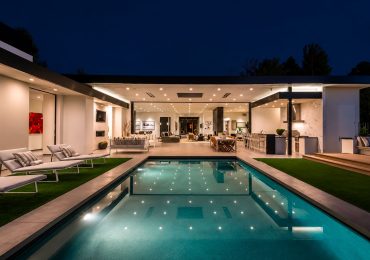

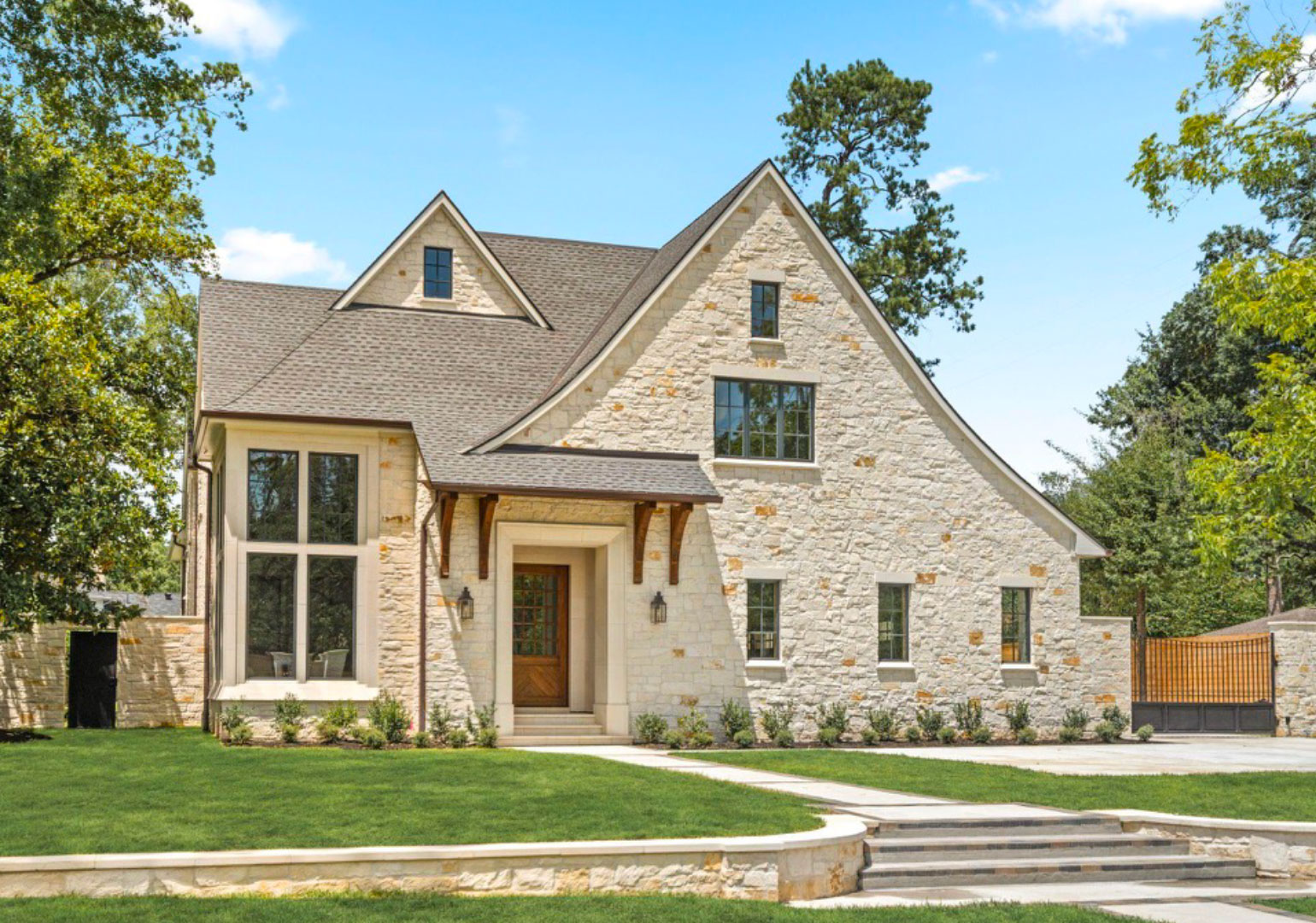
521 Trails End, Hunters Creek, Houston, TX. Photo Courtesy of Fifty Seventh & 7 th Luxury Homes
The Houston developer explains how years of building homes, working with architects and designers, and developing his own eye for interiors reshaped Fifty Seventh & 7th Luxury Homes from a speculative homebuilder into a design-led developer.
When Arpan Gupta entered residential construction in 2009, his role was straightforward: build the house well. Over time, that became too narrow. As homes grew larger, budgets rose, and buyers’ expectations changed, Gupta found himself making decisions that reached well beyond construction. Architecture, millwork, stone, lighting, hardware, and even the way one room reveals another became part of the same conversation. Today, the founder and CEO of Houston-based Fifty Seventh & 7th Luxury Homes no longer describes the company as simply a builder of speculative houses. Construction remains the foundation, he says, but a growing share of the creative direction now comes from inside the company.
“For me, the evolution happened naturally,” Gupta said. “The more homes we built and the more great architects and designers I had the opportunity to work with, the more I learned what I responded to and what I didn’t. Eventually, you develop an eye. You develop a point of view.”
From Building The Design To Shaping It
The distinction between executing someone else’s design and helping create it took years to close. He credits his design education to working alongside architects and designers he admired, until the construction site became an unusual kind of design school. “When you spend years working with very talented designers, architects, and craftspeople, you absorb a tremendous amount,” Gupta said. “You begin understanding not only what looks good, but why something works.” The lessons from what he did not like mattered too. “That doesn’t mean there is only one style I like,” he said. “It means there is a certain level of proportion, quality, and cohesiveness that I am looking for regardless of the architectural style.”
The Freedom Of Speculative Development
Part of that shift comes from the freedom of developing homes speculatively. A custom builder executes a client’s vision; a speculative developer decides what should exist before the buyer arrives. “What I love about what we do now is that if I can envision something and I believe it belongs in the house, we can pursue it,” Gupta said. “I don’t have to start by asking whether a client specifically requested it. I can ask whether it makes the home better.” That freedom, he says, raises the importance of editing. More expensive does not mean better; more elaborate does not mean more sophisticated.
A Personal Design Vocabulary
Fifty Seventh & 7th works across architectural languages, and Gupta believes an interior should respond to the architecture rather than impose an unrelated look on it. What has emerged is a consistent approach: substantial materials, strong architectural detail, and interiors that feel layered rather than decorated, with attention to scale, sightlines, and movement between rooms. “A beautiful room by itself is not enough,” he said. “The entire house has to have a rhythm. What do you see when you enter? What is revealed as you move through it?”
When Builder And Designer Work Together
Luxury residential work is traditionally divided: the architect designs the structure, the interior designer handles the interiors, and the builder executes the drawings. Fifty Seventh & 7th still works with outside professionals, but Gupta believes the strongest results come when those boundaries blur. “If the architect, designer, and builder are solving completely separate problems, you can end up with a house where every individual piece is good, but the whole thing doesn’t quite come together,” he said. His own path shapes that view. “Because I came from the construction side, I can’t really separate design from execution,” Gupta said. “I can look at something beautiful and immediately start thinking about how we are actually going to build it.” Over time, his team has developed the same habit of reading a house for design intent, not only for technical correctness.
Moving Further Into Ultra-Luxury
The company’s design evolution ran alongside a move deeper into the top of Houston’s market. Fifty Seventh & 7th now develops architecturally driven residences in neighborhoods including River Oaks, Memorial, Hunters Creek, Sherwood Forest, Royden Oaks, and Oak Estates, with projects generally ranging from about $5 million to more than $20 million. Greater access to rare materials and craft, Gupta says, created a greater need for discipline, not less. “There is a point where almost anything is possible,” he said. “That is when having a point of view matters most.” The goal, he adds, is not to fill a home with expensive objects, but to decide which ideas deserve building.
A Builder With A Point Of View
Gupta still calls construction the foundation of the firm; a concept means little if it cannot be executed. But he believes ultra-luxury development now asks more of a builder, a perspective that shapes architecture, interiors, materials, and even which projects the company takes on. For a speculative developer, every creative decision is made without knowing the eventual owner, which Gupta treats as a discipline. “We cannot design by committee for a buyer we haven’t met yet,” he said. “We have to have enough conviction to create something we believe is exceptional.” The company still builds houses. Increasingly, it also designs them.