
From AI energy use-cases to first-time market entrants, two days in Almaty confirmed that the region is stepping into a new phase of technology-led economic expansion
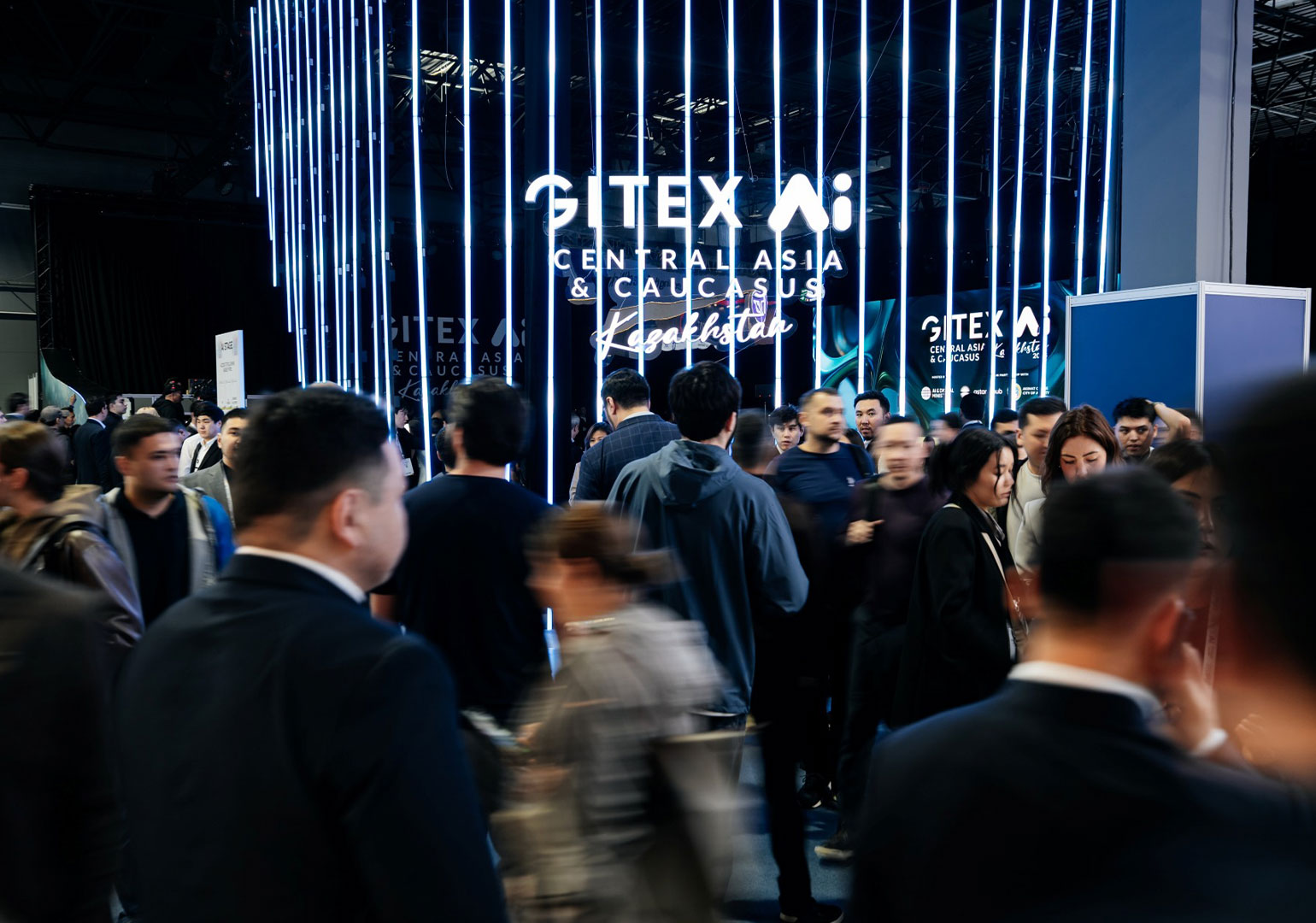
The second and final day of GITEX AI Kazakhstan 2026 delivered on the promise – packed exhibition halls, a conference programme that moved without pause, and a palpable sense of urgency highlighted a defining shift: artificial intelligence as a critical national infrastructure.
Across both days, the event convened 336 exhibiting companies and startups, alongside over 100 investors managing a fund portfolio of over US$200 billion, to the Atakent International Exhibition Centre in Almaty; cementing GITEX AI Kazakhstan’s position as the largest AI and technology gathering that the Central Asia and Caucasus region has ever seen.
Organised by inD, organiser of the GITEX events globally, and hosted by the Ministry of Artificial Intelligence and Digital Development in partnership with Astana Hub and the Akimat of the City of Almaty, the platform gathered leaders from government, industry, and academia from over 60 countries.

Global companies mark their Kazakhstan debut
Day two saw the full weight of the exhibitor line-up on display, with global and regional technology enterprises showcasing next-generation solutions spanning AI and machine learning, hyperscale cloud, cybersecurity, fintech, 5G, and smart city systems. Among those on the floor were Cisco, Cloudflare, Daikin, Dell, H3C, Hikvision, Huawei, Kazakhtelecom, Lenovo, Presight, QazCode, Redington, Salesforce, and Yandex.
Among the most notable debutants included global software giant Atlassian, marking not just its Kazakhstan debut but its first-ever participation at any GITEX event globally, choosing Almaty to launch its AI-powered System of Work platform. The centrepiece was Rovo AI, the company’s agentic AI collaboration tool, perfect for deployment across private and public sectors.
Yana Kunakbaeva, Senior Partner Manager CEE & Central Asia, Atlassian, said: “Rovo AI has more than 5 million daily users globally, and what makes it unique is that it acts as the intelligence layer across teams – for developers and IT services, for HR and business teams, everyone.”
“This is a new market we wanted to launch in, and GITEX AI Kazakhstan was the perfect starting point – to meet customers, technology partners, and understand what the region actually needs. We even connected with global specialists in encryption, data governance, and data security specifically to build solutions that work for local businesses like telcos and banking.”

Redington Türkiye and CAC used the event for its strategic regional expansion, exhibiting at this scale in Central Asia for the first time alongside a portfolio of partners including BMC Helix, Cohesity, Dassault Systèmes, Mastercard, Qlik, and Red Hat; marking the first time that the Dassault Systèmes brand entered the Central Asian market.
Global security leader, Cloudflare, whose network blocks billions of online threats daily and serves millions of organisations from global enterprises to governments, brought its security and performance infrastructure to a market where the need for trusted, resilient digital foundations is rising faster than ever.
At the forefront of Kazakhstan’s own participation was Kcell, Kazakhstan’s largest mobile operator, co-pioneering the nation’s first 5G. Askar Zhambakin, CEO of Kcell, shared: “At Kcell, we see AI as a practical tool that helps improve customer experience and manage networks more effectively. This is especially important for Private LTE/5G, where businesses need stable and secure connectivity for their operations.”

“Today, we are number one in Kazakhstan in deploying Private 5G solutions, supporting companies in their digital transformation. For us, GITEX AI Kazakhstan is a great platform to meet partners and discuss how the digital market in Central Asia is developing.”
Kazakhstan’s startups step into the global spotlight
More than 50 Kazakhstani startups made their GITEX debut across the two days, putting the country’s emerging innovation pipeline in front of an international audience of investors and partners for the first time.
The cohort spanned a striking range of sectors and ambitions: THRUST is developing rocket propulsion technology from within Kazakhstan; Prosper Pay, with more than 120,000 users, is a payroll fintech with declared global growth targets; while SHAI.PRO is deploying enterprise AI across banking, government, and education.
Conferences defining the new digital architectures of Central Asia and the Caucasus
The conference agenda moved at pace, tackling the most urgent issues shaping the AI economy, from hyperscale infrastructure and energy strategy to climate-aligned innovation.
AI for climate, energy and green data
Seger Hoytink, Chairman and Managing Director of Eni Kazakhstan, joined Vladimir Korol, Head of Smart Infrastructure Buildings, Siemens on a panel to discuss how AI has moved from industrial ambition to measurable operational impact.
Mr. Hoytink noted that AI-driven subsurface analysis has reduced Eni’s drilling times by 35%; enabling exploration in reservoirs up to nine kilometres deep. “Deep subsurface analysis is one of the major breakthroughs of advanced computing power. If you can reduce drilling time by 35%, that’s a significant saving in time as well as in emissions.”

AI’s operation gains extend well beyond exploration. Mr. Hoytink further added that in predictive maintenance and operations, AI-driven systems have limited downtime to approximately 1% per year; a saving that compounds across both financial performance and emissions reduction.
Siemens’ Vladimir Korol made the case that AI’s real industrial value lies in integration across the full technology lifecycle, delivering measurable green impact. “Using AI, we can get measured data; and this data can be used to find deficiencies in real processes before they occur without losing any reliability,” he said.
“In the energy sector, we can see how AI goes beyond slogans to help us decarbonise operations and solve real climate challenges through millions of data-driven decisions made every day.”
Quantum jump – manufacturing breakthroughs for the next industrial era
Damir Bogdan, Chief Strategy & Alliance, QuantumBasel (first commercial competence center for quantum computing and AI in Switzerland) examined the horizon beyond AI, making the case that quantum is not a complementary technology but an imminent necessity for the problems that AI alone cannot solve.
“The problems are getting bigger and bigger, and there is no AI that will be able to solve all these problems. You need exactly new technologies to boost your AI; and quantum computing is one of those. If you really want to leap from innovation, don’t just invest in AI. Think about the future and take the next steps now, so you are ready when the technology arrives.”
Drawing on the surge in sovereign quantum investments; the UK investing US$ 5 billion, France US$ 3 billion, Japan scaling from US$ 750 million to US$ 7 billion and China reaching US$ 15.5 billion, he argued the global race for quantum capability is already underway with IPs in the field doubling every year.
High-intensity pitch for rewards and recognition: Supernova Challenge
The Supernova Pitch Competition finals brought high-growth startups from across the world in front of a panel of global investors, competing for a total prize pool of US$ 30,000 equity-free cash prizes, and a coveted opportunity to present at Expand North Star, the world’s largest startup and digital investment event, taking place in Dubai this December.
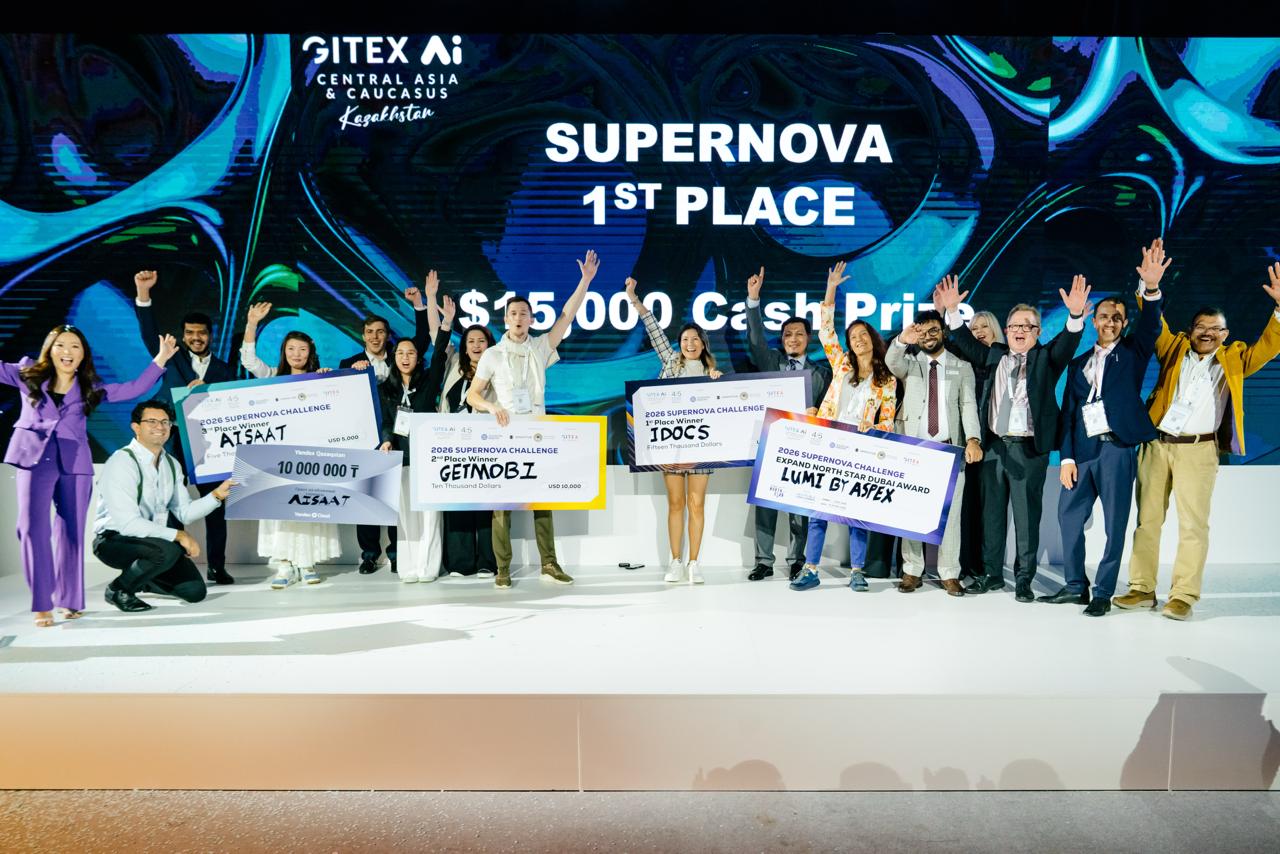
The first prize winner was Kazakstan’s IDOCS, an innovative document automation system integrated across commercial, financial, legal and HR processes. The second and third prize winners were Uzbekistan’s fintech startup, GetMobi, and Kazakhstan’s AISAAT, offering AI-powered climate verification for agriculture. AISAAT also scooped an additional exclusive partner prize in the form of Yandex Cloud Credits, while LUMI by ASPEX won the chance to be featured at Expand North Star 2026 in Dubai.
GITEX AI KAZAKHSTAN returns next year from 8-9 June 2027
As GITEX AI KAZAKHSTAN concludes, the event has firmly established itself as a defining platform for the region’s digital future, where policy, capital, and innovation converge to accelerate real-world AI deployment. The show returns to take place on 8-9 June 2027, further advancing Kazakhstan’s position at the forefront of the global AI economy.
S