

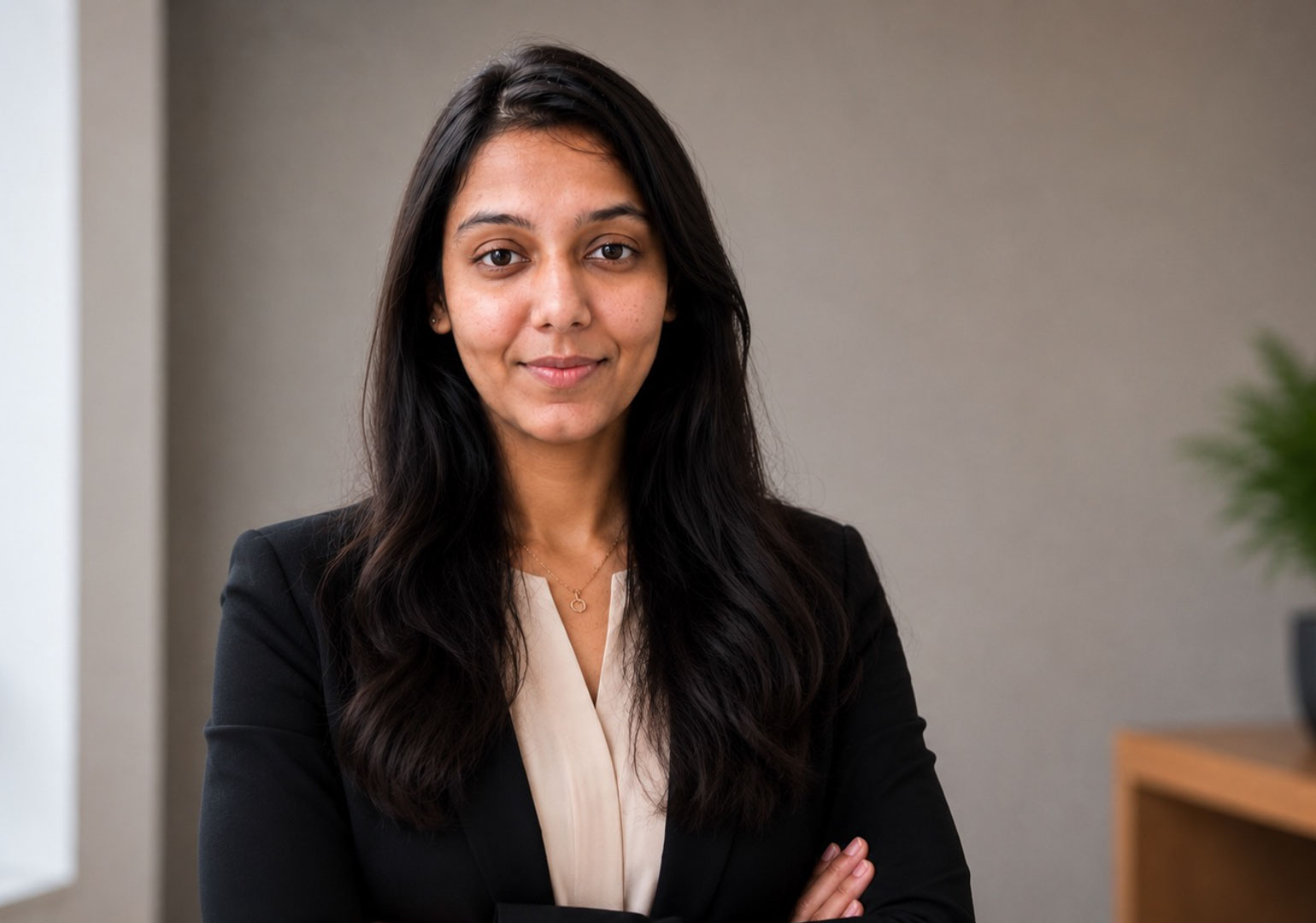
Photo courtesy of Manu Agrawal
Most of the engineers who built the cloud era never had to think about a hospital. Most of the people building healthcare AI today have never run a hyperscale system. Manu Agrawal sits in the narrow band where both things are true.
Agrawal leads agentic AI work at Oracle Health, where she is building systems that must behave reliably in one of the most regulated environments in technology. Before that, she spent years at Amazon Web Services, where she was a founding contributor on an AWS service and held senior engineering roles across CloudFront, Amazon Rekognition, and Amazon Global Accelerator.
The work that brought her the most internal recognition was Amazon Bedrock Data Automation — Amazon’s first multimodal unstructured-to-structured data offering, where she owned the product strategy, pricing model, and full system architecture. AWS customers running on those platforms include Intuit and Genesys, among other large enterprises with mission-critical AI workloads.
That career arc is unusual, and Agrawal is candid about why she made it.
“My goal is to contribute to the broader conversation around enterprise AI systems, governed autonomous workflows, and healthcare AI infrastructure while building visibility as a technology leader operating at the intersection of AI, healthcare, and large-scale distributed systems,” she said.
She thinks AI is moving out of the demo phase and that the next decade belongs to the people who can make these systems actually run.
From Hyperscale To High-Stakes
The cloud-to-healthcare move is the part of her story that most people fixate on, and for good reason. AWS taught her how to build for global scale and reliability. Healthcare is teaching her what scale means when a wrong answer has consequences. Agrawal’s current focus at Oracle Health is governed agentic systems — AI capable of operating inside clinical and operational workflows without functioning as a black box. Her work spans care gap closure, cohort discovery for medical research, workflow automation across fragmented healthcare data systems, genomics and precision medicine initiatives, and AI-assisted trial intelligence.
These systems are designed to support enterprise-scale healthcare operations involving large clinical datasets, distributed workflows, and AI-assisted operational decision-making across complex healthcare ecosystems. They run inside healthcare transformation efforts spanning the Middle East, Europe, and North America, where governance, auditability, operational reliability, and human oversight are treated as critical requirements rather than optional controls.
Agrawal will tell anyone listening that model capability is not the bottleneck anymore. The bottleneck is everything around the model: how the system is orchestrated, how decisions are logged, where humans stay in the loop, and how the AI hands work back to a clinician when it should.
The Argument Behind The Work
Most AI conversations in 2026 are about what models can do. Agrawal argues that those conversations are increasingly beside the point. Enterprise buyers have spent two years discovering that the gap between a working demo and a production system is wider than the gap between two competing models. Trust, governance, and oversight are no longer bolt-ons at the end; they are the architecture.
That is the case with her current work. She talks about responsible AI without sounding like a marketing brochure, partly because she has the receipts. A founding member of an AWS service has a different vocabulary than someone who has only ever written about AI. She talks about policy enforcement the way other engineers talk about latency: as something measurable, testable, and either built into the system or not.
Healthcare may be the most demanding environment for that argument to play out in, but Agrawal does not think it is the only one. Financial services, public-sector systems, and any sector dealing with regulated data face the same problem. They want AI that performs. They also want AI that can be explained to an auditor.
The next generation of enterprise AI will be defined by the organizations that can operationalize trustworthy autonomous systems with governance, reliability, and human oversight built into the architecture. Agrawal is one of the engineers working on what that looks like in practice.