
Photo Courtesy of Andrii Stetsenko
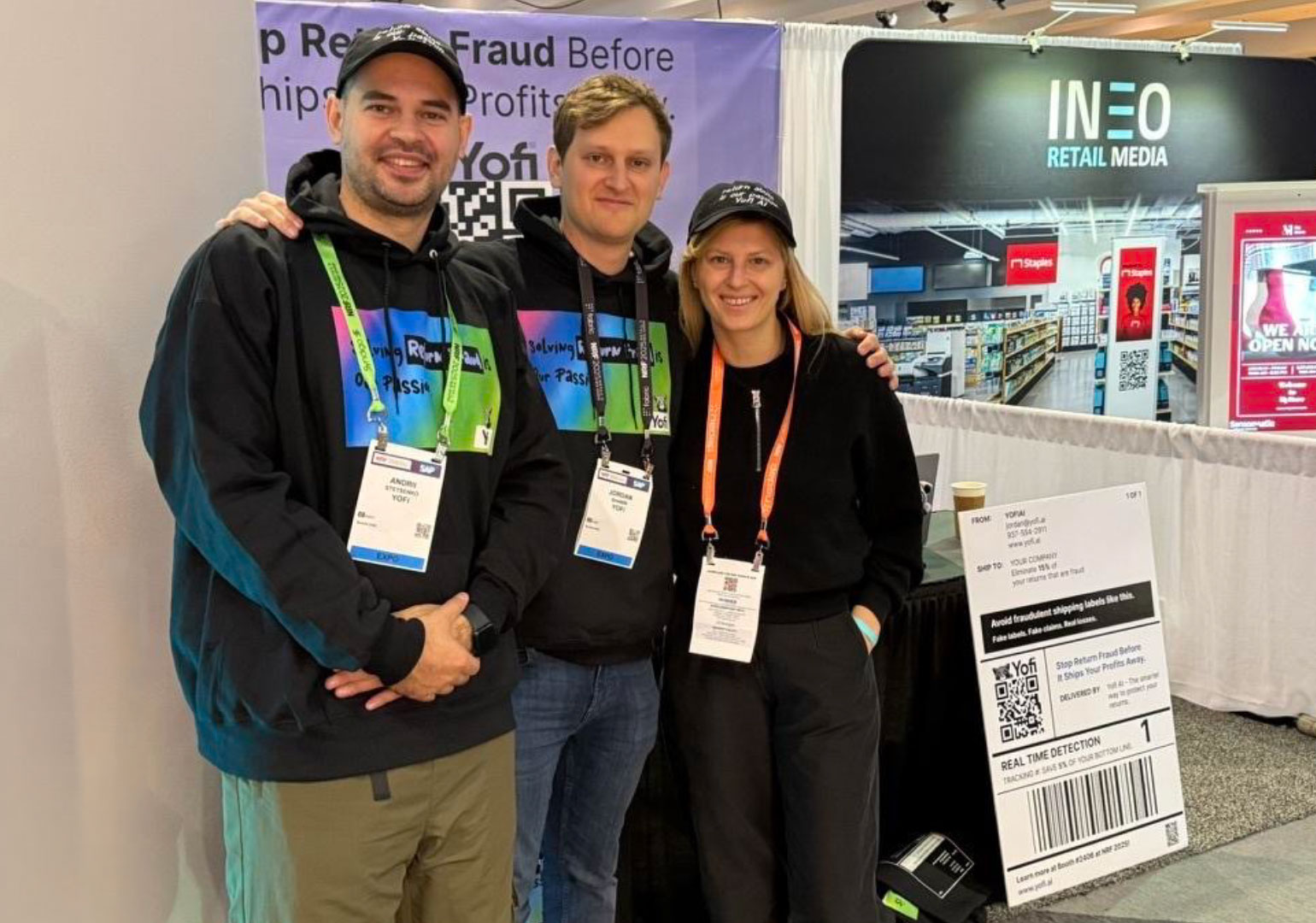
Three years into running a company together, Andrii Stetsenko finally met his co-founders in person. It happened at baggage claim in JFK Airport, on his way to a conference in New York. “The first time I ever saw either of them face to face was three years in, at JFK airport, tears and hugs at baggage claim, on my way to a conference in New York,” Stetsenko said.
By then, the company, Yofi.ai, had been running for three years entirely online, across twelve time zones, with Stetsenko based in Asia and his two co-founders, Alex and Jordan Shamir, in the US. “We launched Yofi.ai fully online, across twelve time zones, and ran it that way for three years. We had never met. Not once,” he said. Four years after founding it, the company was acquired.
Stetsenko, who is Ukrainian, moved to Asia after university, settling in China, where he taught himself Chinese and English and built a reputation in the region’s anti-fraud community before Yofi.ai existed. It is also where he first encountered the fraud patterns that would define his career. Much of the world’s e-commerce fraud originates from that ecosystem, and he learned it from inside it, long before he built a system to stop it.
The origin was more conventional than the way it was run. Stetsenko met Alex Shamir at Nike, where they were both working on fraud problems. Together, they built an internal tool effective enough that Nike itself recommended spinning it out into its own company. That recommendation became Yofi.ai.
Today, Stetsenko is Chief Architect of AI & Fraud Prevention at Wyllo, an e-commerce risk intelligence platform, and he says the Yofi.ai exit is the reason he is building at the scale he is now. “My most significant career milestone before Wyllo was co-founding Yofi.ai as CTO and leading it to a successful acquisition,” Stetsenko said. “It’s the reason I’m now designing fraud prevention systems at Wyllo’s scale. The exit validated both the technical approach and the commercial relevance of the work.”
Wyllo’s own origin story includes Yofi as one of its founding technologies, which was later merged with NoFraud to become the platform Stetsenko now designs. In his telling, the acquisition specifically completed the part of the fraud lifecycle that follows a purchase. “The Yofi acquisition completed the post-purchase piece. It’s now a near 360-degree panoramic view, not a keyhole,” Stetsenko said. The systems he built at a smaller scale, running a company he had built with people he had never met, became the foundation for what now runs across some of e-commerce’s best-known brands.
One architecture, the whole journey
Before Yofi.ai, Stetsenko spent fourteen years in machine learning, including AI leadership roles at Adidas, Gucci, Alibaba, and Nike. That background gave him the technical depth, but fraud prevention is a different discipline than most applied AI work, since the model is built against an opponent actively trying to defeat it rather than a static optimization problem.
At Wyllo, that shows up as one architecture covering the entire e-commerce fraud lifecycle rather than a patchwork of separate tools bolted on at different points, from the first sign of a bot before a shopper reaches checkout to a chargeback filed months after the sale. Stetsenko designs and maintains all of it personally, the same way he designed the internal tool at Nike that started this whole path, except now the stakes and the scale are considerably higher.
The instinct behind it, treating the whole customer journey as one system instead of a set of tools patched together after the fact, is the same one that shaped Yofi.ai from a laptop and a shared time-zone spreadsheet into a company worth acquiring.
New fraud frontiers
Stetsenko’s scope recently expanded again, into territory most fraud prevention leaders never touch. Return and refund fraud has grown just as sophisticated as anything happening at checkout, customers gaming return windows, chargebacks filed against deliveries that arrived intact, and fabricated damage or loss claims submitted to customer support teams that have no easy way to separate a genuine complaint from a rehearsed one. Stetsenko’s team now treats those support and claims channels with the same seriousness as the storefront itself, alongside newer work on account farming, the mass creation of fake or synthetic accounts used to abuse promotions and loyalty programs.
Hiring fraud is the newest and smallest of these fronts so far, a department Stetsenko stood up to catch candidates who fabricate credentials or misrepresent their identity during recruitment. It’s still an emerging field, but one where demand is rising quickly, as the same identity questions that already define e-commerce fraud start showing up in hiring pipelines too.
“This gives me one of the widest fraud exposure scopes in the industry, from bot behavior before a user even touches the site, through the full transaction lifecycle, and now into people risk as well,” Stetsenko said. All of it runs through the same architecture he designed from the start.
The throughline across all of it, checkout fraud, return abuse, and now hiring fraud, is the same pattern: someone trying to pass as legitimate long enough to slip past a system that was not built to catch them. It is the same instinct Stetsenko has been building toward since Nike first noticed his internal fraud tool was good enough to become a company.
East meets West
Stetsenko’s career is unusual in how directly it bridges two worlds that rarely intersect in fraud prevention. He built his early reputation within Asia’s anti-fraud community at a time when most Western fraud leaders encountered that ecosystem only from the outside. He then founded a company with American co-founders, Alex and Jordan Shamir, whom he had never met, and ran it from Asia across 12 time zones for 3 years before any of them stood in the same room. The architecture he designs today draws on both sides of that path: the ground-level view of fraud he developed in APAC and the technical leadership experience he gained afterward at Western brands.
That track record has earned him recognition beyond the product itself. He won the 2025 Gold Gulls Award and was invited to join the Forbes Technology Council in 2026, distinctions that track less with a single product launch and more with a career spent treating fraud prevention as a design problem rather than a defensive afterthought, one that took him from an internal Nike tool, through three years of running a company with people he had never met, to an architecture now running across some of e-commerce’s best-known brands.
It is a career that has run across three continents in a decade, Ukraine to Asia to the US, and the throughline has stayed the same the whole way: recognizing a pattern of someone pretending to be something they are not, wherever that pattern happens to show up next.