
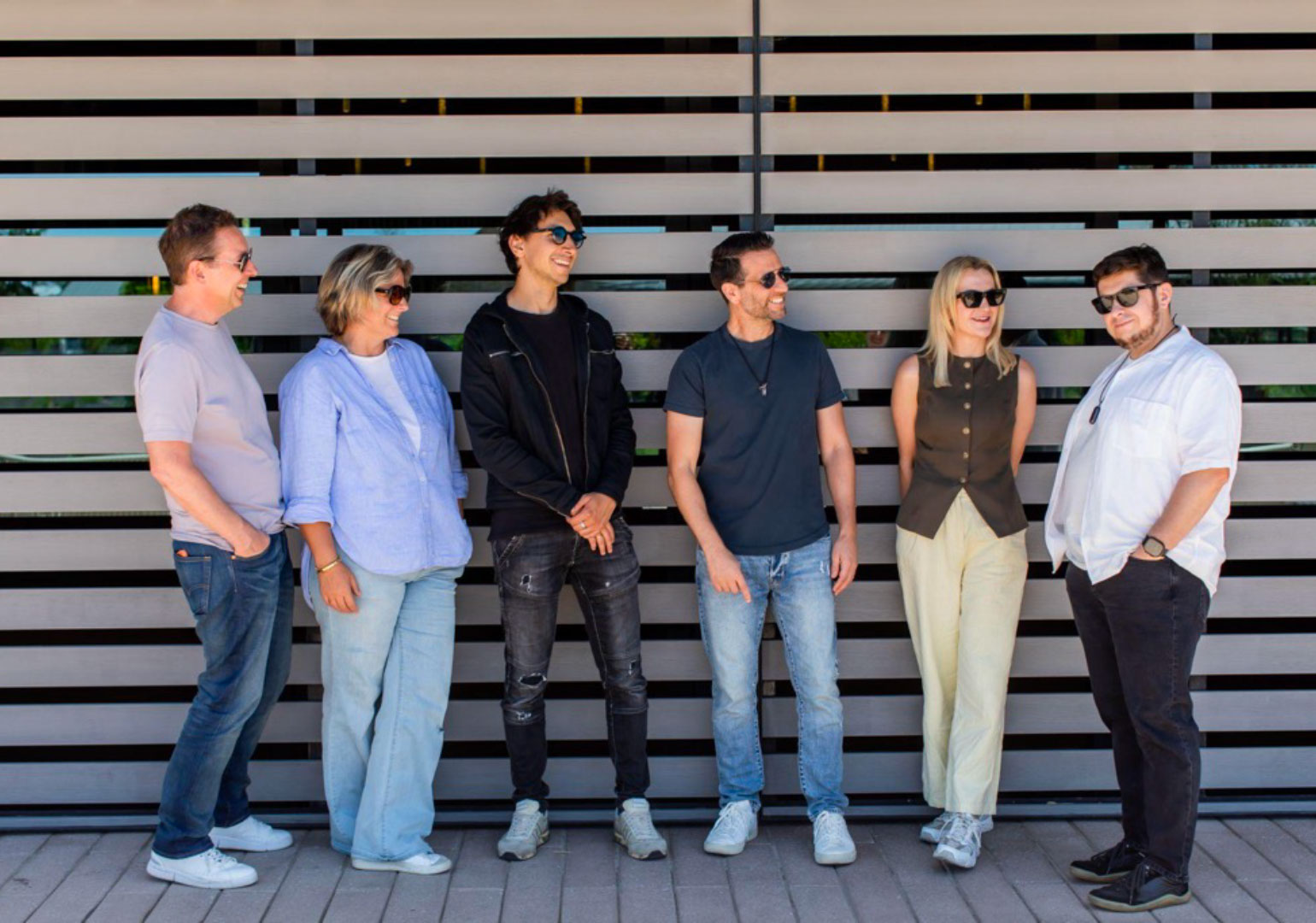
Photo Courtesy of Manychat
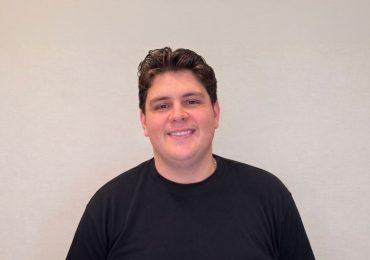
When Dmitry Kushnikov joined Manychat in 2016, the permanent team was small enough that everyone could hear nearly every important conversation. As the company grew, that became impossible.
Today, Manychat has about 420 employees, and Kushnikov, now COO and CTO, says the biggest change in its management model has been the shift from informal coordination to explicit agreements.
“The culture changed less than people expect,” he said. “Everything just became sharper. What changed is how much of the company runs on explicit agreements instead of conversations.”
Kushnikov played a central role in several of those changes. In 2018, when Manychat had around 30 employees, he was one of the people who planned the move from functional to cross-functional teams under the Large-Scale Scrum framework, and then led it as head of development. A few months later, Manychat began using Objectives and Key Results (OKRs), introduced by the company’s COO at the time. Kushnikov took them over in 2020.
Past 100 employees, Manychat began hiring senior leaders from outside to build functions such as marketing, product and security. Then came another inflection point.
“In 2024 the company almost doubled in one year, and we added an operating layer: a Chief of Staff, a weekly scorecard, a monthly business review,” Kushnikov said. “In 2026 we wrote down our operating principles and moved our org design into a versioned repository.”
Moving org design into a repository was Kushnikov’s initiative, one that sits between his roles as COO and CTO. A structural change now starts there as a proposal the affected leaders can review before anything is announced. “We started by putting our policies into repositories,” he said. “Now it’s a much bigger project: a paradigm shift in how we work with documentation in a world of AI agents.”
“The principles of self-management we laid down in 2018 are still the base,” he said. “What changes is what it takes to keep them working at 400 people instead of 40.”
From Functional Teams to Accountability
Engineering was the first part of Manychat to need more structure because it made up most of the organization. “When I joined, one of the founders was writing the code,” Kushnikov said. “Then there were five of us, and suddenly someone had to own the infrastructure, the code style, the way we work together.”
His rule was simple: “Make a list of problems and agree who is responsible for each one, even before you know how to solve it.” That approach later shaped Manychat’s broader management model.
In June 2018, the company moved from functional teams (backend, frontend, product design) to cross-functional teams that could own a customer problem end to end.
“The problem was accountability,” Kushnikov said. “When something went wrong, it wasn’t clear who owned the result, and responsibility moved from one team to another.” He made the team, rather than the function, the primary unit of accountability. “A team should be able to act as an independent unit that nothing can stop from reaching its result,” he said. “Then it’s clear what to hold it accountable for.”
Kushnikov later presented this model at TeamLead Conf in 2020 and at the LeSS Conference in Madrid in September 2024. Over time, Manychat grouped its teams into larger product areas and built communities of practice so specialists across teams could keep shared standards.
Adding Process Without Adding Bureaucracy
As the company grew, the challenge became deciding which processes were necessary and which would only slow people down.
“Any framework is just a framework on paper,” Kushnikov said. “Before we add a process, we ask what problem it solves and what it should optimize. If nobody answers that, it’s bureaucracy from the first day.”
The second test is whether a process still works as the organization changes. “A process that helped at 100 people can slow you down at 400, so we keep removing things,” he said. In 2019, Manychat replaced goal-status meetings with written updates. In 2024, it shortened the performance review to a rating and three questions. In 2026, it eliminated recurring performance-management meetings.
“If the performance review is a surprise to a manager, it points to a problem with planning, and a new review step won’t fix that,” he said. His goal: “As we scale, we get faster, not heavier.”
The clearest case was hiring. In early 2024, Manychat had about 140 people and planned to grow fast, but recruiting wasn’t keeping up. As COO, Kushnikov rebuilt it as a function of its own: a talent acquisition lead, plus recruiters dedicated to each hub who work as partners to the hiring managers. Manychat hired 65 people in 2023, 156 in 2024 and 158 in 2025. A Head of Talent Acquisition now owns the function; Kushnikov sets the bar and oversees senior roles.
Customer support was the first place where growth hit hard in 2024. Tickets grew faster than the team could handle, and for a while people across the company were answering them. Kushnikov’s decision was to run support as a full business function with its own leader and to put AI agents on the first line; the Head of Customer Experience and his team built the operation. Between 2023 and 2025, ticket volume more than doubled while overall customer satisfaction rose from about 84% to about 90%.
Changing the Role of the Manager
“In the early days, a manager was usually the strongest specialist on the team who also took care of people,” Kushnikov said. “Today a manager is expected to build the system their team works in.”
Since January 2026, Manychat has reviewed managers separately on two dimensions: the results they deliver and the state of their teams. Employees are also asked how much their manager helps them reach their goals.
“I don’t manage people’s tasks — I manage the system around them: goals, constraints, decision rights, how we plan,” he said. “The one thing you can’t delegate is responsibility for the people themselves.”
He applies the same logic to his own role. Engineering was where he started and the part of the company he knew best; handing it over took about a year and a half, and in mid-2025 the VP of Engineering took over the whole organization. His rule since then is “keep me informed, not involved.” In March 2025, about two-thirds of the company reported through Kushnikov. Today it is under half, even though the company is more than 50% bigger.
For Kushnikov, the evolution of Manychat’s management model has been less about replacing one philosophy with another than about formalizing what becomes harder to coordinate as the company grows, while keeping autonomy and accountability intact.