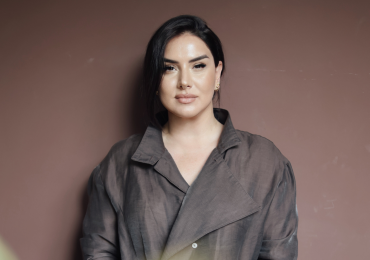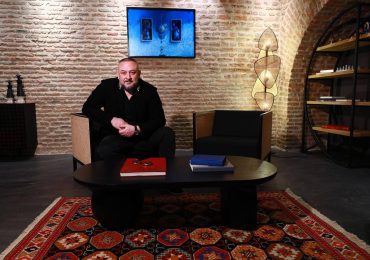
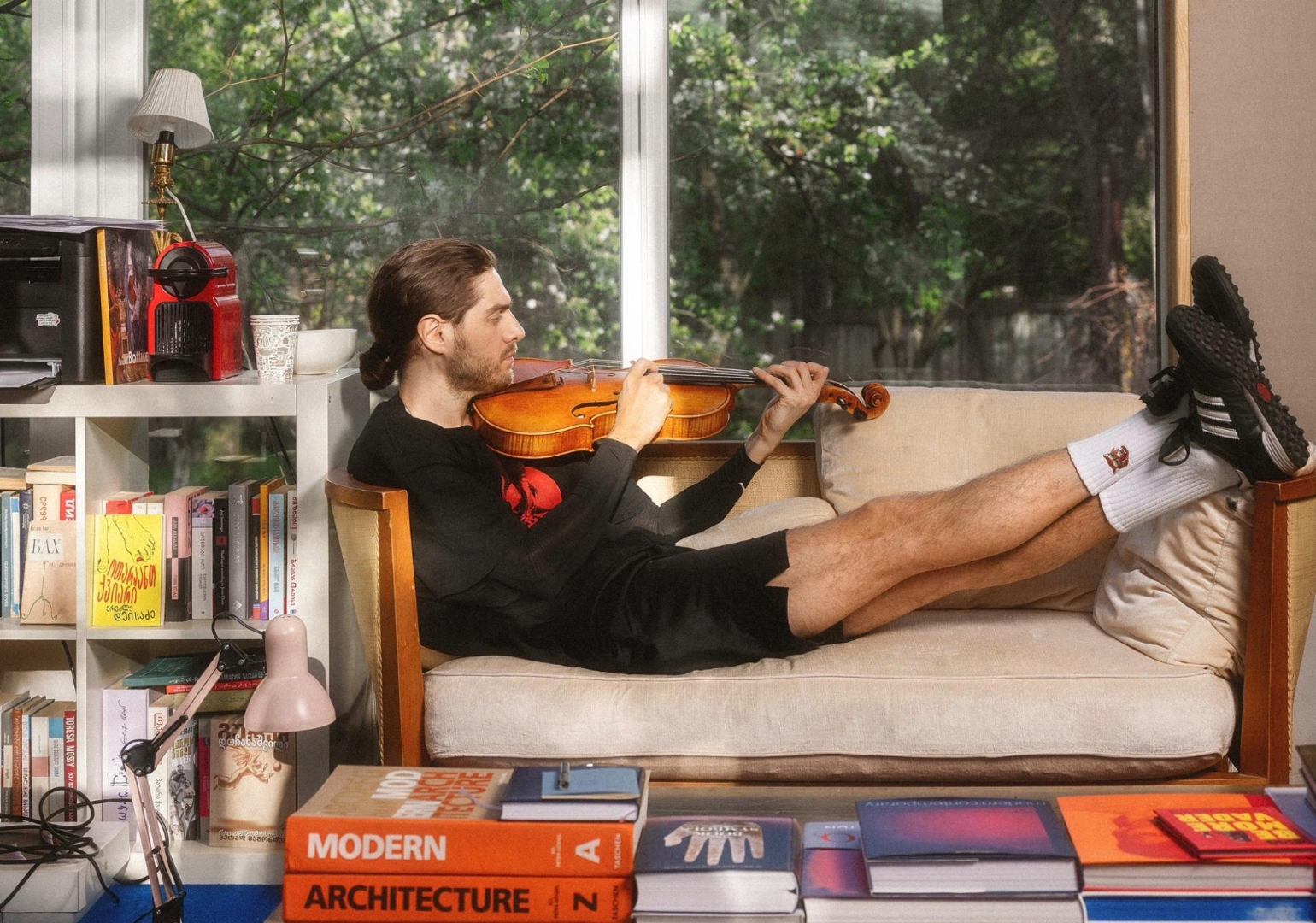
After two years away from the stage, Giorgi Tsagareli is coming back — not with a concert, but with something harder to categorize. Part performance, part confession, part sound collage. Classical music and pop locked in the same room, with artificial intelligence playing a ghost no one invited. The show tells a story about childhood, about the war inside a musician who loves too many things, and about what happens when you stop fighting yourself and finally listen.
Giorgi, two years is a long time. What are people actually walking into on June 28?
It’s a show. Not an academic concert — something that swallows more than that. Over the past few years I’d been collecting ideas with nowhere to put them, and the pause became the container. I spent about a year working with Nikala, sharpening things, and when we started playing the music to people with different tastes, everyone said the same thing: do the concert.
People might expect Kancheli, or another Kordz collaboration. But what I actually wanted was to bring back music I absorbed as a child — deeply, in the bones — and share it through my own hands. I don’t want to give too much away. I want people to meet it fresh.
The script, which Zura Jishkariani helped shape, follows a ten-year-old. Classical music only, at home and everywhere else — opera, recitals, concerts. No pop, no exceptions. Then one day something appears. A voice inside, maybe. And through a radio, through a television, another world bleeds in. Pop music. Suddenly the thing that didn’t exist is the most interesting thing in the room.
What was that music, for you — the stuff coming through the radio when you were that kid?
In the 90s, classical music meant Soviet performers. That’s what teachers had, that’s what they played us. I didn’t have idols. But when pop arrived in my life, so did Led Zeppelin, Queen, Backstreet Boys, 2Pac, Biggie. People around me sorted themselves into camps — rock kids, rap kids. I never did that. You might argue about football, but not music. The line between genres was already gone for me before I knew it existed.
I didn’t try to improvise over what I heard on the radio — I understood it was something else, something that didn’t fit inside how I played. But like every kid, I saw myself as a rock star for a minute. Then years passed and I stayed inside academic music. I never stopped listening to everything else, though. What this show is trying to do is bring that sediment up — the music taped off MTV, off cassettes, off whatever we could get — and prove that none of these worlds have to stay separate.
I was looking for balance inside the chaos. Some people will find it nostalgic. Some will feel like they’re dreaming. That’s the point.
So the synthesis wasn’t the original plan. When did it actually become the idea?
When you have one thing, you want the other. For ten, fifteen years I’d notice it — deep in the middle of academic work, something would surface. A pull toward other music. First attempts were seven or eight years back, with Kordz, then Erekle Deisadze, Kayakata, Nika Kocharov — electronic music, post-punk, hip-hop. But every time I was working with those musicians, I’d feel the pull back to classical. Neither world felt complete.
Part of why I took the break was to figure out what I was actually doing. The back-and-forth had worn something down — emotionally, creatively. It became depression. Real exhaustion. And this project carries that road in it. The losses and the wins. What I want to show is how hard it is for an artist to genuinely want multiple things. In the end I understood: you have to accept all of it as it is. Stop the war. Stop the splitting. Find the gestalt.
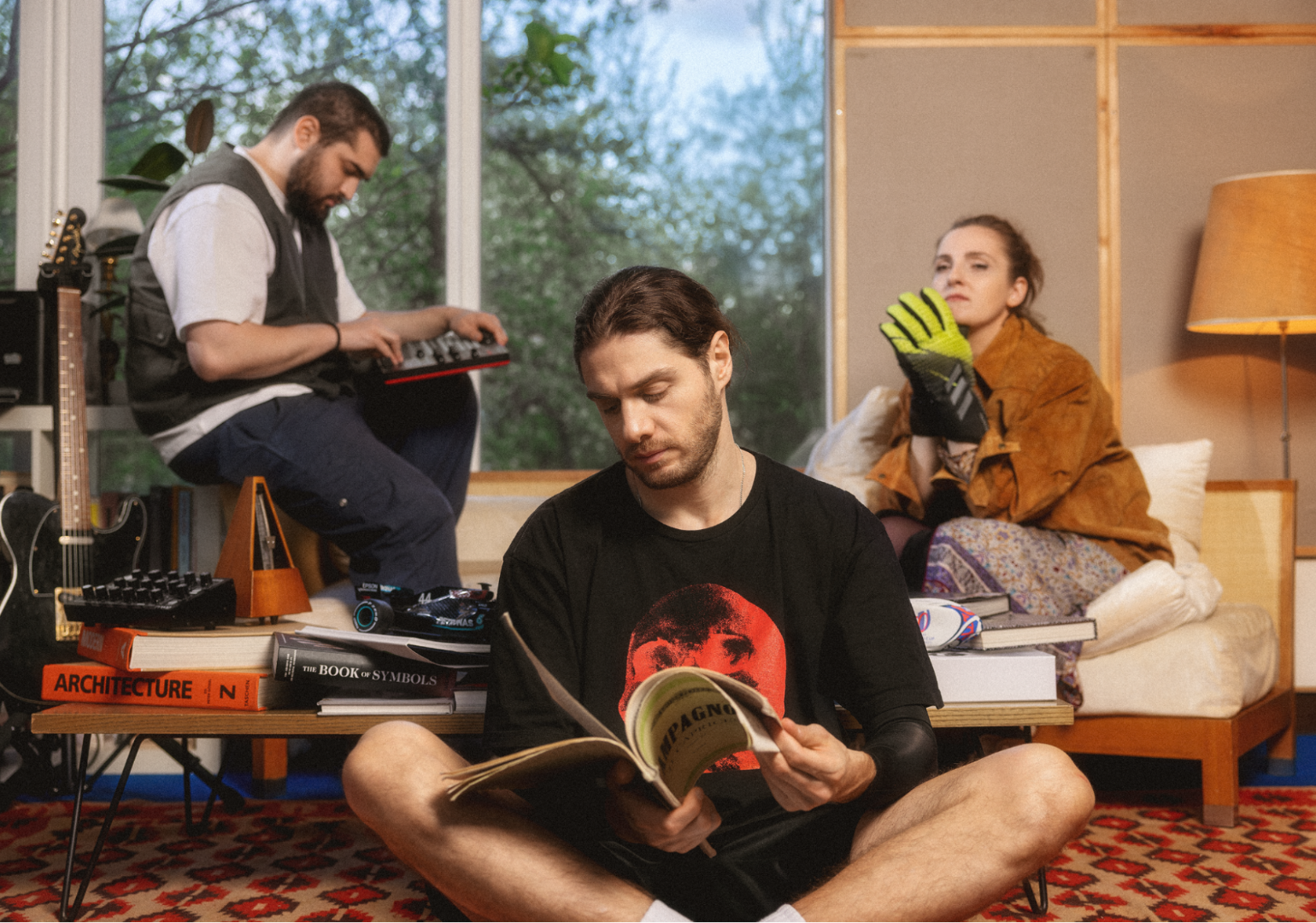
So the comeback isn’t just a return — it’s a different person showing up.
The return started this year with the Kancheli anniversary concerts. Same pieces I’d been playing for years, technically. But something had shifted during the pause — I started hearing each note differently. Before, it had become routine to the point where even the pleasure was gone. It felt like running a race I couldn’t stop.
Even though I went months sometimes without touching the instrument, and my form suffered, I understood my body better in that time. Found myself inside the music again. I decided that every concert, every appearance on stage, has to mean something. Less is better than more-and-hollow. The audience might not always see it clearly, but I felt the change — in how I treat each note, and how I treat myself. Rest is necessary everywhere. I didn’t even know what real rest felt like before. Turns out that’s a skill too
When did you know it was time to share it?
I started working on the ideas last year with Nikala. New instruments, no specific goal — just started. I trusted that the chaos in my head would take shape eventually. The field opened, ideas came on their own, and we tried to materialize them. But at some point I realized I could stay in the studio forever. You have to stop somewhere and let the energy out. Even if the timing isn’t ideal — and right now, probably, it isn’t — reality is what it is. And people expect artists to take a position. To say something.
Why Nikala? Why Sopho Chokheli?
Nikala knows that 90s music in a way that shouldn’t make sense for his age, but it does. Our taste overlaps, and beyond that, he has instinct — he can move fast and work productively. Over the past few years we’ve become genuinely close musically. He can understand exactly what I mean from a sentence or two. That’s rare, and I’m grateful for it.
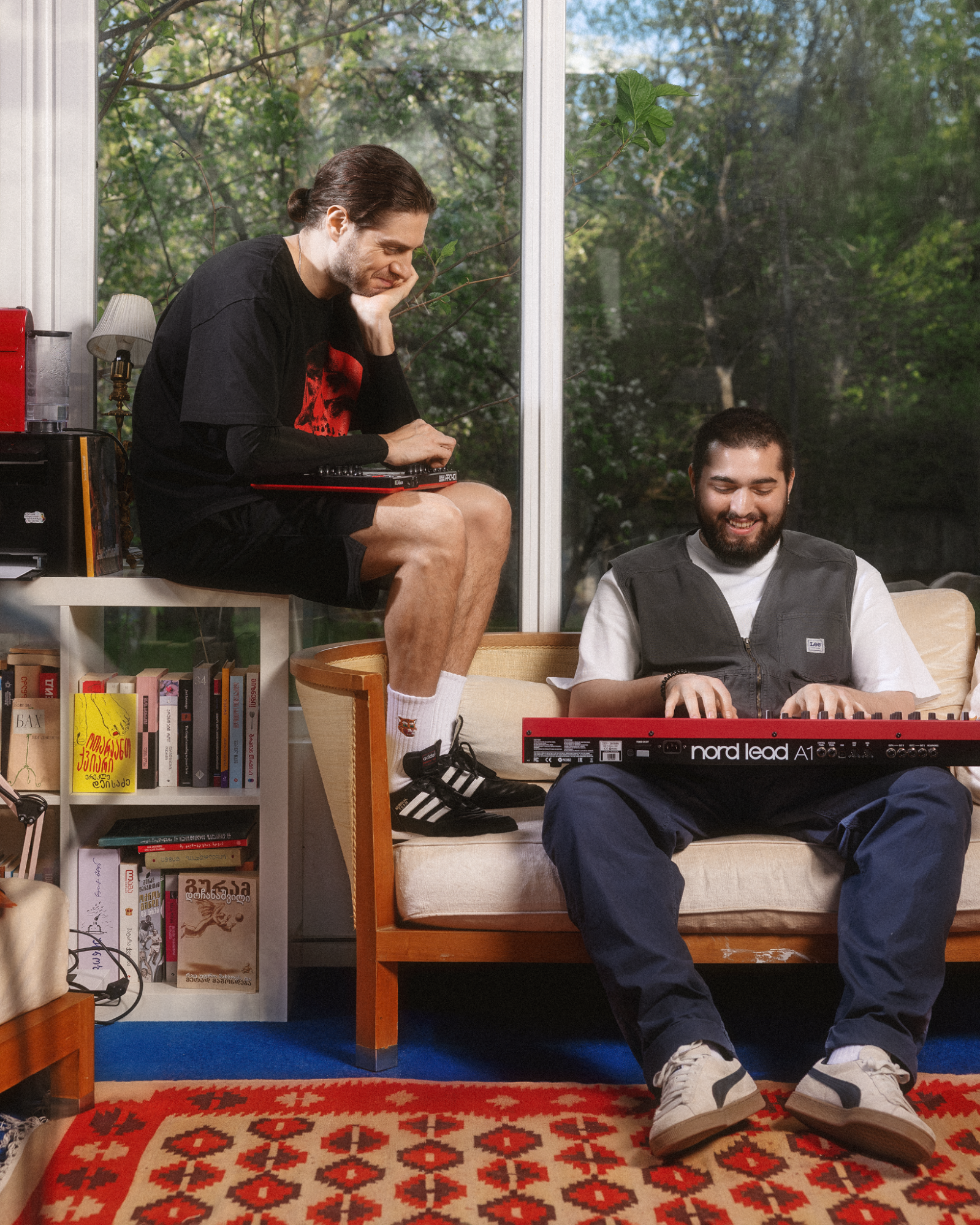
The show splits into two worlds — classical and pop. Sopho is my partner in the classical side. We studied together at the conservatory. She was a few years ahead of me, but the enthusiasm was the same — we were always trying to perform pieces that weren’t being played in Georgia, things people didn’t know. We talked about doing a concert together many times. It never lined up. Now it does.
What does AI actually do in the show?
It took on the role of the inner voice. Most of the text was written by human intelligence — Zura Jishkariani — but AI was part of the daily process, and that daily conversation taught me to see possibilities I wouldn’t have reached alone. It trained the thinking. And AI has the kind of capabilities now where the border between real and unreal starts to dissolve — which is exactly what this project is about. Onstage, it appears as sound and as image.
Where do you think this is all going — AI and music?
My sense is that audiences will split. People will pay less for AI-generated music and more for music made by a human. That’s my bet. Yes, AI can generate a Beethoven tenth symphony — it can model everything he wrote, extrapolate the logic. But it can’t account for the human factor. Something might have happened in a composer’s life that made the next symphony completely illogical by prior standards. Completely different. That gap — between modeled and lived — will be visible soon. I think we’ll be able to tell.
What’s next after this?
We’re sending a recording to several producers and watching what comes back. But first I want to take this to stages across the country — different cities, different rooms. I’ve always been quietly envious of theater people, actors and directors who can run the same show dozens of times after the premiere. In classical music, unless you have an international tour, you play once or twice. That’s it. It hurts.
And since I took the risk of building this on my own ideas — the arrangements, the production — I think it’s time to try composing original work. I haven’t done it yet. But people whose music matters to me have pushed me toward it. That’s the next thing.