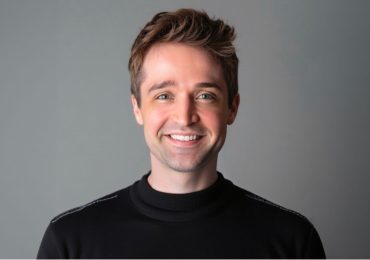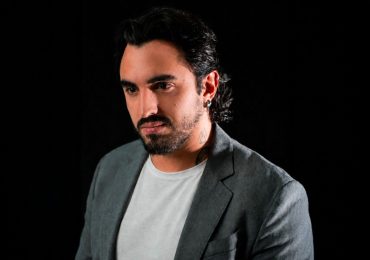


Their market is North American sports betting, and the analytical discipline they apply to it is the same one a discretionary equities trader would recognise. Olivier Jacques and Walid Tabarout are two Quebec-based professional sports bettors who, roughly a year ago, opened L’École Des Paris, a Montreal-based school teaching recreational sports bettors an analytical decision framework the founders call the Structured Edge System. The school has more than 300 students enrolled to date, according to its founders, and is one of the first of its kind in North America.
The pitch to the recreational audience is straightforward, and unusual for the category. The founders argue that most of what a recreational sports bettor encounters online, in ads, on television, and through social feeds is designed around a single message. Place a bet. Win money. Feel good. Their argument is that a durable participant in the category runs the process the other way around. Analysis leads. Position size follows from analysis. The exit follows from a change in the analysis. Nowhere in the process is the position itself the primary event.
The Founders
Walid is the more visible of the two on the operational side. He spent his early years as a professional bettor working simultaneously at Bell, where he held a full-time role while raising three children. Sports betting was, for most of his professional life, the second job, run alongside a corporate career and family responsibilities. Olivier ran a different setup. He has been a full-time professional bettor throughout the six years the pair have been working together, without the split attention of a second career or a family to raise.
Between them, the founders have more than twelve years of combined professional experience trading North American sports markets, with each having spent six years in the field across Canadian and American professional and college sport. Over that stretch they have booked more than $2 million in sports betting profits between them, with Olivier accounting for more than $1.4 million individually and Walid for more than $800,000. The school’s curriculum is built directly on the analytical discipline that has kept them working across seasons, adjusted for the level of a recreational student rather than a full-time professional.
“The people showing up in this market are being treated as consumers, and treated well by an industry that wants their spending,” Olivier said. “What they are not being treated as is students of the discipline they are participating in.”
The Structured Edge System
The mathematics behind the Structured Edge System are established practice across professional gambling and investment contexts. Position sizing draws on the same Kelly-derived logic that has been standard bankroll practice for professional bettors since the 1960s. Edge identification uses the same probabilistic reasoning that underpins expected-value analysis in trading. Behavioural discipline draws on the same set of cognitive biases that behavioural finance has been studying for four decades.
What is unusual is the packaging of the three together, and the audience. The Structured Edge System teaches students that no wager should be placed without a measurable analytical edge in the specific market being considered, that no single position can exceed 2.5 per cent of the student’s current bankroll, and that once the analytical edge in a market disappears, the position must be closed. The 2.5 per cent rule scales down with the bankroll, so that a student in drawdown is automatically sizing smaller until the analytical case rebuilds.
Olivier and Walid describe the category the school teaches into as adjacent to sports betting, with the purpose being to remove the gamble by replacing impulse with method. A person applying method and structure to their decisions, in the founders’ framing, is running an activity different in kind from a person following impulse, even though the underlying markets are the same.
Against the Content the School Sells Into
The founders are direct about what they think of the mainstream sports betting content environment. The parlay-heavy promotions that dominate operator advertising, the “expert pick” content that fills sports media podcasts and YouTube channels, and the social-media accounts monetising screenshots of winning tickets all reinforce, in their view, the same behavioural pattern, which is to bet more, bet often, feel lucky when it works, and forget the volume of losses that made the wins possible. This is the environment the school teaches against.
“Most recreational bettors are acting too often, with sizing they haven’t thought through,” Walid said. “Teaching someone to sit still is a real skill.”
The Canadian market has become substantial enough that the alternative Olivier and Walid are offering has a real addressable audience. Sports betting is now a mainstream leisure activity for millions of adults across Canada and the United States. Regulators have moved to restrict some forms of advertising, most notably the Alcohol and Gaming Commission of Ontario’s February 2024 ban on athlete endorsements in iGaming advertising, and Senator Marty Deacon’s federal Bill S-269, which would create national advertising rules. What the regulators cannot easily do is teach consumers to think about the product differently. That is the space L’École Des Paris is working in.
Discipline as the Product
The school does not promise financial outcomes to students. Olivier and Walid have said that such promises would be inconsistent with the analytical mindset the curriculum is designed to instil, and that any credible teaching in this area treats outcomes as consequences of process. The process is what the school teaches.
What they will talk about is the change in how students approach decisions. A student who has completed the course, they say, thinks about a market differently. Position sizing becomes automatic. The instinct to act in the absence of an edge is dampened. The student learns the analytical habit of stopping when the analysis says to stop.
“The measure of the school is whether a graduate makes different decisions from before,” Olivier said. “That is the test we set for ourselves.”
L’École Des Paris delivers instruction in French, with an English expansion planned across the coming months to be called The Betting School. Olivier and Walid have designed the school as a pioneering program of its type in North America. Their aim is a durable recreational audience in Canada that treats sports betting as a discipline of analysis, not a shortcut to money that has never behaved like a shortcut.
If they succeed at scale, they will have made the case, in a category where the case has rarely been made, that recreational sports bettors will pay to be taught the same discipline that keeps their professional counterparts working.