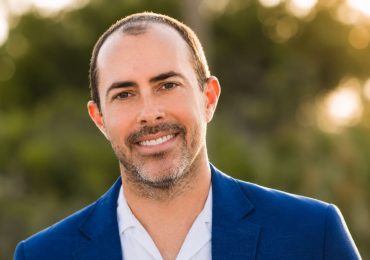


Photo Courtesy by Gediminas Pazera
Medication access in the United States can hinge on a single packet of paperwork. One missing lab value, one misread note, one faxed page filed sideways—and a person’s prescription sits in limbo while phones ring and clinicians burn hours chasing an approval. Gediminas Pazera has built his career solving that problem, creating systems that read messy clinical records with the care of an auditor and the speed of modern software.
Colleagues describe his focus in plain terms: make sense of chaotic medical documents, pull the few facts that decide coverage, and flag edge cases before they become errors. Earlier work produced clinical extraction accuracy above 95% on difficult files—a figure that serves less as a boast than as a measure of trust. At Develop Health, Pazera and his team are now refining large-scale prior authorization and benefits verification systems that have already touched millions of Americans, processing nearly 400,000 patient cases each month and growing rapidly. He leads efforts that bring together pharmacists, developers, and clients to make prior authorization not just faster, but fairer and more reliable.
Paperwork that blocks medicine
Prior authorization sounds bureaucratic because it is. Doctors request medication, insurers demand proof, and staff scramble to gather notes, diagnoses, prior therapies, and test results. Clinics still handle much of this manually—flipping between portals and PDFs, copying details into rigid templates, then waiting days for follow-up questions. Every step adds friction to care.
Pazera builds practical AI systems designed to remove that friction at scale. Develop Health’s platform reads clinical documents, checks benefits, prepares submissions, and tracks responses in real operations serving millions of Americans. Reliability remains the core metric because the stakes are personal. Every extracted detail can determine whether someone gets a needed medicine this week or keeps waiting.
From Olympiad pressure to Oxford rigor
Teenage competition gave Pazera his first taste of high-stakes precision. Representing Lithuania at the International Chemistry Olympiad at 18, he earned a Bronze Medal in a contest where one rushed assumption could erase hours of work. Later, he entered the University of Oxford for a DPhil in Chemical Physics at 21, finishing at 25 after four years studying quantum spin dynamics—work that connected quantum biology and quantum information science.
Research taught him to distrust convenient answers. Modeling demanded clean baselines, validation, and a habit of asking what breaks a system. That rigor produced papers in journals such as the Journal of the American Chemical Society and Journal of Chemical Theory and Computation, and by March 2026, his work had been cited lot of times. A visiting fellowship at Northwestern University further broadened his experience, pairing his simulations with experiments in Professor Michael Wasielewski’s lab.
The messy record problem, solved under pressure
Healthcare records fight back. Notes arrive as scanned images, lab reports hide inside multi-page PDFs, and the same diagnosis appears under five names across five systems. At Lighten, Pazera built document understanding and retrieval systems that thrived in that chaos, achieving extraction accuracy above 95% on complex clinical files. Projects that once took nearly a year compressed to weeks—such as a data labeling effort for roughly 10,000 patients finished at a fraction of the time and cost, yet with higher accuracy.
One lesson shaped his approach: dependable automation must surface doubt instead of hiding it. Simpler models often fail quietly, outputting confident but wrong answers. Pazera pushed a more disciplined approach that blended classical search with modern AI, combining their strengths to read huge sets of medical data and extract the right information. When findings looked uncertain or inconsistent, the system automatically routed those cases for human review before results entered the workflow. “Healthcare data is notoriously fragmented, scattered across formats and buried in thousands of pages per patient,” he said. “Systems have to earn trust document by document.”
Building reliability that reaches people
The same mindset anchors his work at Develop Health. Prior authorization exposes every weakness in automation: incomplete records, inconsistent language, and ever-changing insurance rules. Pazera’s systems use complex retrieval strategies—mixing structured search, AI reasoning, and targeted review—to keep quality high while scaling nationwide.
The results show in measurable ways. Across Develop Health’s operations, the product has reached more than two million Americans. For one large client representing a major share of their patient volume, improvements to extraction and submission raised drug approval rates by about five percent—meaning thousands more people gained reimbursement instead of paying out of pocket. For Pazera, that’s what reliability means: technical precision translating into real lives improved.
“I wanted my technical work to create immediate, measurable impact on people’s lives,” he said of his move from academia into production healthcare systems. That impact continues to grow—not through buzzwords or flashy demos, but through careful engineering, collaboration with clinical experts, and relentless attention to detail.