

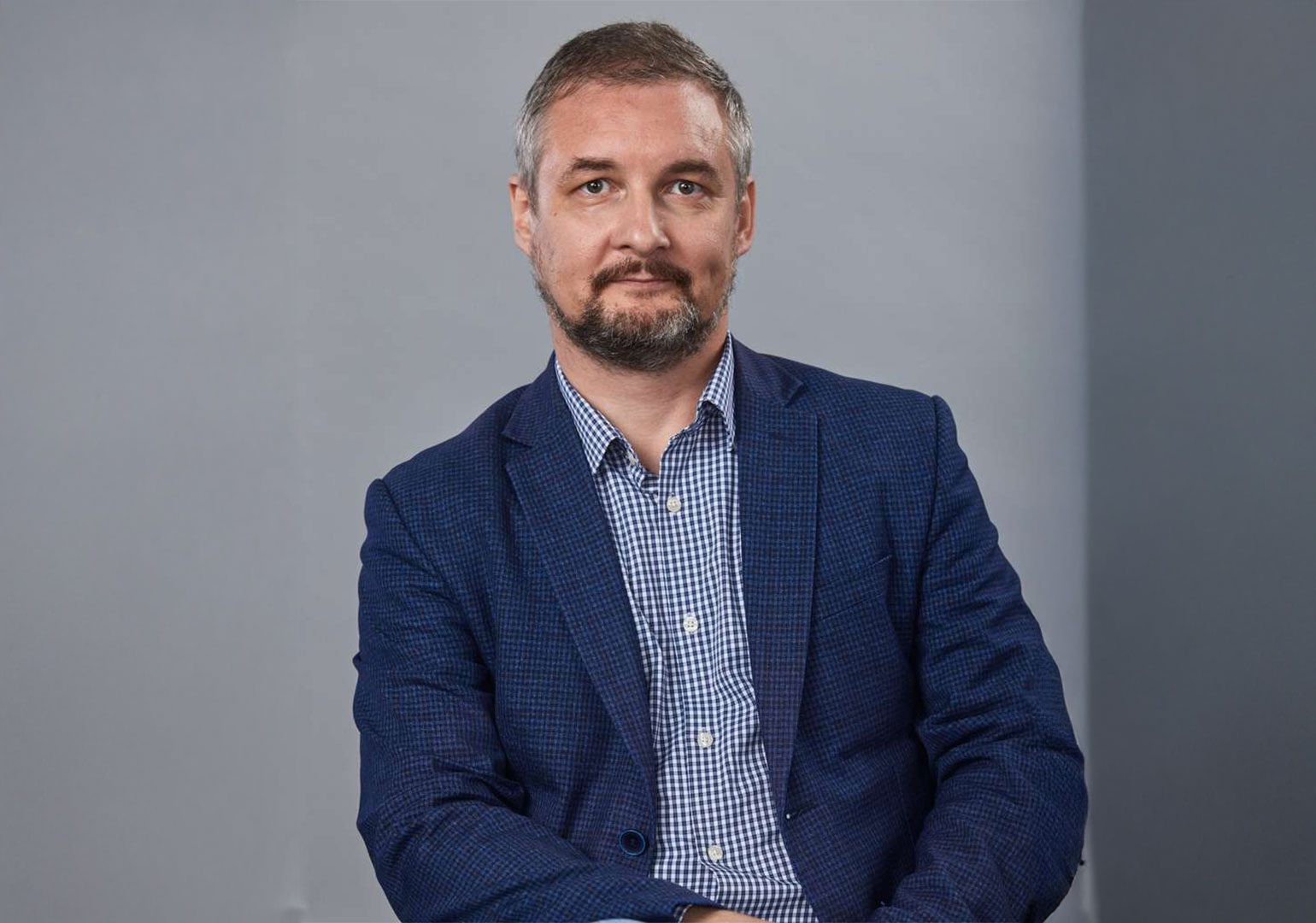
A growing trend in recent years is the rise of fractional executives. Companies are increasingly engaging financial, marketing, and technology leaders on a temporary basis-bringing them in for specific projects or key stages of business growth. To understand the drivers behind this shift and the value it creates, Forbes Georgia spoke with Anton Budkevich, a CTO involved in international technology projects.
The Transformation of the CTO Role
Over the past two decades, the role of the CTO has evolved significantly. In the early 2000s, the position was primarily that of a chief engineer. In the 2010s, the focus shifted toward managing teams and processes. Today, the scope of responsibility has expanded even further. CTOs are now responsible for product architecture, system scalability, data security, and infrastructure resilience.
According to Anton Budkevich, the modern CTO is no longer the most experienced developer on the team, but an architect of technological decisions that determine a company’s value and scalability.
“A CTO is not just a lead programmer or a head of development, as many assume,” he says. “They are responsible for decisions that shape the technological future of a company. A CTO evaluates which technologies will impact cost structures and profitability over the next three to five years. At the same time, they work alongside the CISO (Chief Information Security Officer) to address information security risks and define the system architecture.”
Anton Budkevich has more than 20 years of experience in the technology industry. He has contributed to the development of telecom billing platforms and large-scale payment systems, including instant interbank transfer solutions and online payment security systems. These platforms are reported to serve tens of millions of users and process millions of transactions daily.
Today, he leads ShineDevelop LLC, an IT consulting company specializing in technology advisory services. His team engages with organizations as part-time CTOs during periods of growth, technological transformation, or preparation for investment rounds.
This model of collaboration is becoming more common. Research by Deloitte and MIT Sloan Management Review suggests that external specialists can account for a significant share of the workforce in some organizations, particularly in the technology sector. This allows companies to access expertise more quickly and scale their capabilities efficiently.
Not All Startups Can Afford a Full-Time CTO
According to data from Built In, the average base salary of a CTO in the United States is estimated to be around $224,550 per year, excluding bonuses and equity. Hiring such a specialist can represent a substantial portion of a project’s budget.
“Not every tech startup can afford that,” Budkevich explains. “That’s why CTOs are often brought in temporarily-to lay the foundation: define the product development strategy, select the right technologies for a fast launch, assess risks, and prepare fallback options. The goal of this collaboration is to allow the company to focus on the product.”
New Horizons
In Budkevich’s view, even large companies do not always need a permanent CTO. In many cases, a technology leader is engaged for a limited period-particularly when a business needs to accelerate product development or implement major technological changes.
“Companies typically bring in a project-based CTO in three situations: launching a new technology product, scaling infrastructure, or preparing a startup for an investment round,” he says.
One example is a project implemented by the international company Perimetrix, which develops solutions for protecting corporate data. Its platform is used by large organizations in the energy sector, industry, and government.
In recent years, some companies have begun transitioning their workstation environments to Unix-based operating systems such as Linux and macOS. Today, mixed infrastructures are common: designers and video editors often use macOS, software engineers work on Linux, and finance teams rely on Windows.
As a result, data protection solutions must operate consistently across multiple operating systems.
Perimetrix anticipated this shift and incorporated cross-platform capabilities into its flagship product, SafeSpace at an early stage. By 2024, demand from clients to expand support for additional operating systems had increased. However, deep integration with operating system kernels presented a significant technical challenge.
To address this, the company engaged Anton Budkevich as a project CTO. Together with the product owner, he assembled a system-level development team of six Linux specialists. As a result, key data control mechanisms were redesigned, and the platform gained support for mixed environments.
The new modular architecture expanded system functionality, improved performance, and enabled the integration of machine learning and artificial intelligence capabilities into core processes.
Following this phase, the internal team continued the development of the product independently.
The Rising Cost of Mistakes
According to Budkevich, the complexity of digital systems has increased dramatically in recent years. Companies now operate across cloud services, multiple operating systems, and large-scale data environments while also meeting strict security requirements.
“In the past, technological solutions could be reworked relatively quickly and with limited impact. Today, redesigning architecture can take years and cost millions of dollars, while requiring substantial investment. At the same time, competition has intensified-while a company is rebuilding, it risks losing its market position,” he notes.
For fast-growing IT markets such as Georgia, this issue is particularly relevant. Local companies are expanding into international markets, working with global clients, and attracting investment-making technological maturity, a key factor in competitiveness.
The data supports this trend. In 2025, Georgia’s IT sector continued to grow steadily and strengthen its role in the economy. According to data from the National Bank of Georgia, the sector generated approximately $791 million in external revenue in the first nine months of 2025-an increase of 66% compared to the same period the previous year. This figure has already exceeded the total external revenue for all of 2024. Growth has been driven by increasing exports of IT services and rising demand for digital solutions both domestically and internationally.
At the same time, companies worldwide are becoming less willing to invest in permanent executive roles. Industry estimates suggest that the market for fractional leadership services has exceeded $5.7 billion, with the number of professionals more than doubling over the past two years.
According to Budkevich, as digital products grow more complex and competition intensifies, companies will increasingly turn to project-based technology leaders.
“Businesses need expertise exactly when it is most critical. That’s why the project-based CTO model is becoming the new norm for technology companies,” he concludes.