

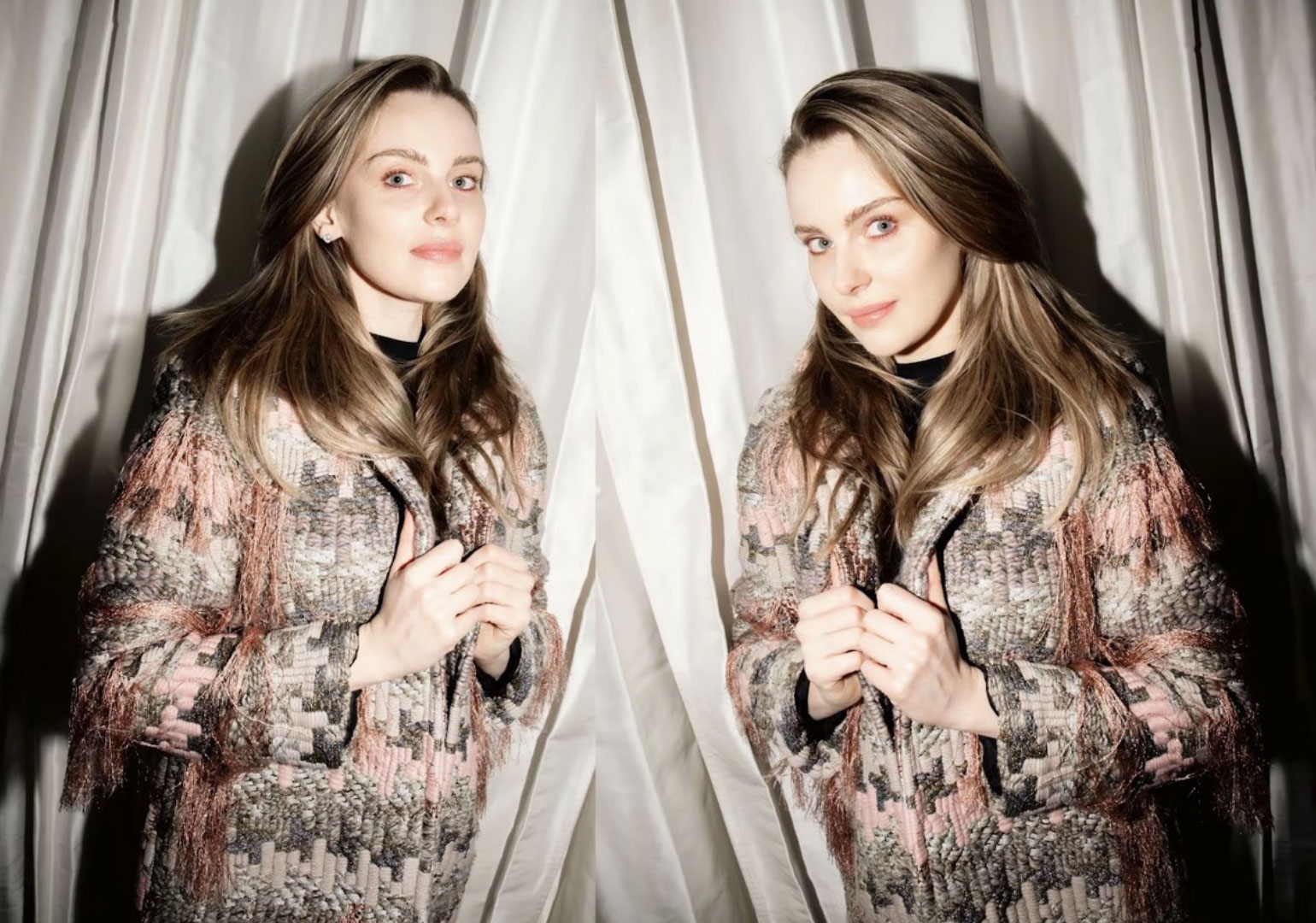
Photo Courtesy of GeeGee Collection
British fashion often sells a dream of glamour, yet its real story begins with labor, materials, and the people who decide what quality means. Georgia Crossley’s career stands out because it moves past the usual mythology of luxury and focuses instead on the actual work behind clothing, from sourcing fabrics to preserving handicraft in a trade that often rewards speed over care.
From Leeds to Luxury
Georgia was born in Leeds, West Yorkshire, and grew up in a working-class family with four sisters. Her relatives worked in construction, so she spent her early years surrounded by discipline, skill, and a deep respect for things made properly.
That background gave her a clear understanding of workmanship long before she entered fashion. Rather than seeing luxury as an image alone, she came to understand it through durability, precision, and the value of careful making.
She later studied fashion in Manchester and moved into luxury womenswear, working with labels including Alexander McQueen, Jenny Packham, and Matthew Williamson. Those roles sharpened her eye for detail, surface, and construction, while also showing her how prestige operates inside established fashion houses.
Her early career introduced her to the polished side of the industry, but it also gave her a close-up view of how much labor goes into beauty. That distinction would later shape her own label and the values behind it.
What the Factory Revealed
A later move into manufacturing and sourcing further changed her perspective. In China, she worked in a factory for large American mass-market brands, sourcing leather and textiles, tracking materials, and helping keep production on schedule.
That role placed her inside the machinery of fashion rather than at its glossy surface. She saw how delays, material choices, and supplier relationships could shape the final product long before a customer ever saw it in a shop or online.
The experience also deepened her interest in fabric development and traditional artisanship. Hand weaving and handcrafted textiles drew her attention because they carried a sense of history, skill, and individuality that mass production often strips away.
Over time, that exposure redirected her ambitions. She no longer seemed interested only in participating in the existing system; she wanted to build something that reflected a stronger respect for craft and a clearer sense of origin.
Building a Different Label
That shift led to the launch of GeeGee Collection in 2020, a brand centered on hand-designed, handcrafted fabrics that blend traditional craftsmanship with modern luxury. The label grew from her belief that clothing should reflect the value of the materials and the skill of the people who make it.
Its identity rests on a specific idea of quality. Fabrics are personally designed or sourced with close attention to texture and finish, and the work reflects a preference for pieces that carry a human touch rather than the anonymity of volume production.
The brand has continued to grow through online sales and partnerships with department stores in London and Los Angeles. That progress suggests there is a market for fashion that treats handcraft as substance rather than decoration.
Georgia’s story carries a quiet force because it challenges a common assumption about luxury. Her work argues that the real measure of fashion does not begin with spectacle or branding; it begins with how something is made and whether that process still carries care, skill, and intention.
That argument gives her label a distinct place in British fashion. Instead of treating craftsmanship as a supporting detail, she has built her business around the idea that weaving, sourcing, and making deserve as much attention as the finished silhouette.
The result is a career that connects very different worlds: a working-class upbringing in Leeds, high-end fashion houses, factory floors in China, and a contemporary label with an international reach. Together, those experiences explain why her path feels separate from the standard founder narrative and why her work continues to draw attention.
British fashion has long depended on image, but Georgia’s trajectory points to something more durable. Her label suggests that clothes gain their deepest value from the labor, knowledge, and care stitched into them long before they reach the customer.