

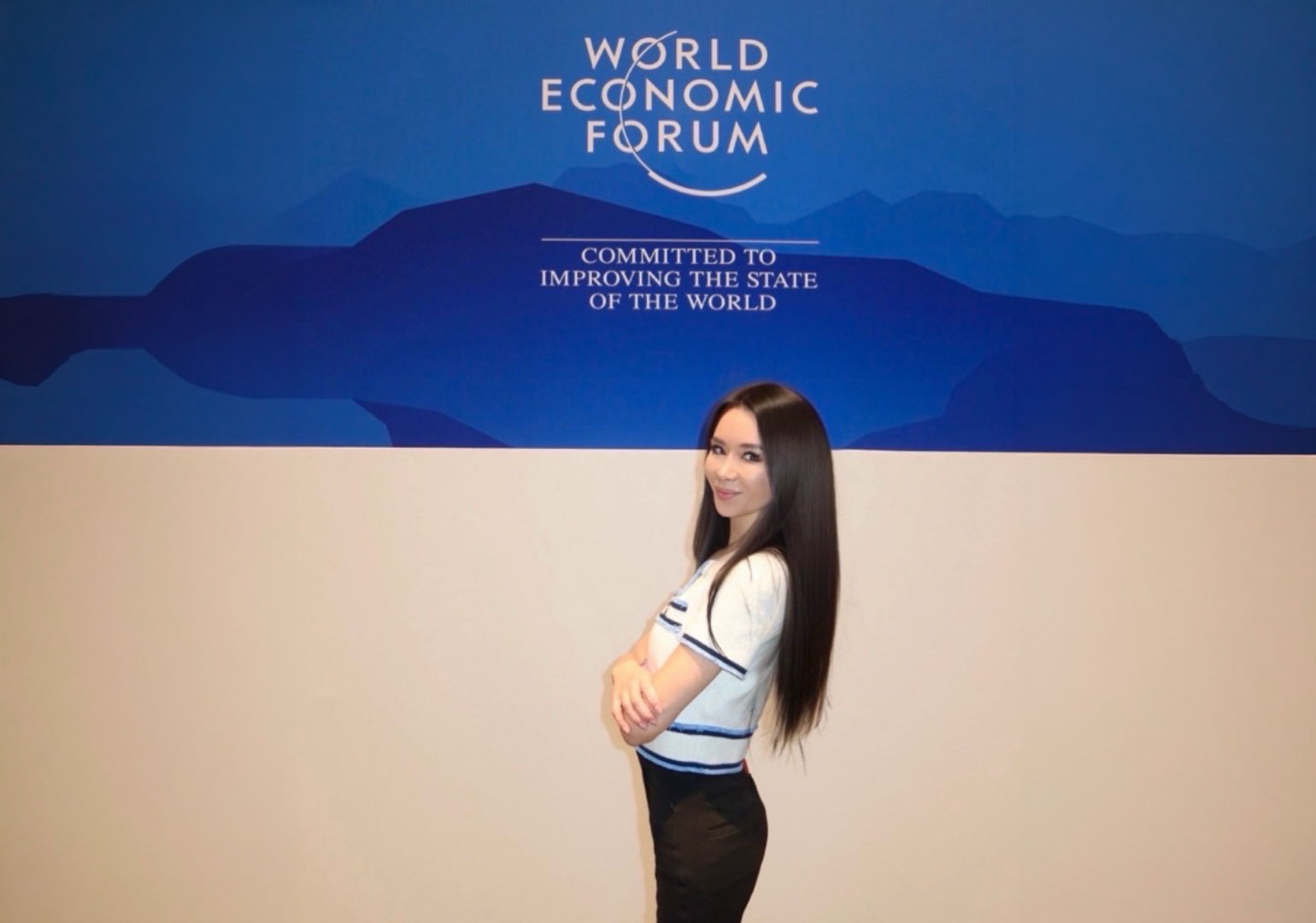
Photo courtesy of Alexandra Zanela
When I stepped into the World Economic Forum Annual Meeting in Davos earlier this year, the mountain air wasn’t the only thing that felt different. The theme was “A Spirit of Dialogue,” but the subtext was much sharper: the old maps no longer work.
For decades, global summits were exercises in optimization, typically figuring out how to make a stable world run slightly more efficiently. This year, that confidence had evaporated. While cooperation formerly rested on an assumption of stability, with political, economic, and institutional systems as a dependable baseline, this time around the conversation has shifted from “How do we improve the system?” to “How do we survive its fracture?”
The warnings issued at Davos in January were not theoretical. Some signs of fracture had already materialized, while others loomed ominously. In light of ongoing tensions involving Iran and its potential to disrupt the global economy, the forum proved prescient.
Relevance is no longer defined by position within a structure, but by the ability to interpret changing conditions and respond with clarity in the absence of certainty. Davos felt less like a summit and more like a real-time observation of how leaders adapt under pressure.
The Rupture Revealed
Canadian Prime Minister Mark Carney addressed this shift directly, stating, “We are in the midst of a rupture, not a transition.” This isn’t a slow bridge to a new era; it is a break from the past. European Commission President Ursula von der Leyen echoed this, noting that while nostalgia is part of the human condition, it will not restore the old order. Looking backward is a luxury we can no longer afford.
Psychologically, this reflects what is known as normalcy bias: the tendency to assume the future will resemble the past, even when evidence suggests otherwise.
But history is full of “cosmology episodes.” This term, coined by organizational theorist Karl Weick, describes the moment when the frameworks we use to make sense of reality collapse entirely.
Weick famously illustrated this through the Mann Gulch fire of 1949, where experienced firefighters died because they couldn’t drop their heavy tools to outrun a fire. They were anchored to an old logic that no longer applied to a changing environment. Today, Davos issued a similar warning: if we don’t drop our old assumptions, the new reality will consume us.
The implication is uncomfortable but clear: when the environment shifts, the old logic does not fade; it fails.
At Davos, that principle surfaced at scale. Stability is no longer something inherited from systems; it must be actively constructed. And doing so requires more than recognizing the ability to change. It requires communicating what specifically must change and how this change can occur in a way others can understand and act on.
The Cost of Soft Power
One of the most profound shifts discussed was the changing price of influence. In a stable world, you could maintain soft power through what experts call cheap signals: polished press releases, attendance at the right parties, and vague promises of cooperation with no intention to follow through.
In a volatile world, cheap signals collapse.
Discussions around soft power made one shift unmistakable: influence now depends on costly signals, defined as actions that involve real trade-offs, whether economic, reputational, or political. These signals carry weight precisely because they demonstrate commitment.
This reframes soft power entirely. It is no longer something accumulated through reputation alone. It must be continuously demonstrated through alignment between what is said, what is done, and what is at stake.
Visibility alone isn’t enough. If actions don’t match the position, credibility erodes faster than leaders expect. If you aren’t willing to lose something for a position, no one believes you have one.
The Interpretive Leader
In stable systems, leadership is largely about execution within known rules. In uncertain systems, leadership becomes interpretive.
People are no longer looking for a boss to tell them what to do. Now they are looking for someone to tell them where they are. When the system feels like it’s shaking beneath them, the leader becomes the point of reference.
This is where psychology moves from background to central function. Emotional intelligence, in this context, is not solely an interpersonal skill. It is a form of information processing. Leaders must read not just what is said, but what is implied, avoided, or felt.
Organizational psychologists describe this as emotional aperture: the ability to read the room and accurately interpret the collective emotional state of a group.
In environments like the World Economic Forum, this means sensing underlying tension, unspoken alignments, and shifts in confidence before they surface.
Research on leadership signaling suggests that in conditions of uncertainty, leaders who demonstrate authentic transparency, actively acknowledging ambiguity rather than masking it, are able to build stronger trust and engagement.
At the same time, tolerance for ambiguity becomes critical. Once treated as a fixed personality trait, it is now understood as something leaders actively regulate in complex environments.
The best leaders in this new era practice authentic transparency rather than pretending to have all the answers. They build trust by acknowledging the fog of war rather than pretending they have 20/20 vision. They avoid “cognitive closure,” which is the desperate urge to pick a direction just to make the anxiety stop, and instead learn to sit with the discomfort of the unknown.
The Discipline of Clarity
Critics often frame forums like Davos as “performative,” meaning they’re more about networking than substance. There is truth in the observation that these spaces involve signaling. Sociologist Erving Goffman described social interaction as a form of performance, divided between frontstage and backstage behavior.
Davos operates in much the same way.
But performance has a purpose. The theater of global summits is where trust is prototyped. It’s the frontstage work that makes the backstage deals possible. Additionally, the audience has become discerning. The gap between a leader’s words and their actions is being measured in real time. Signaling alone is no longer enough. Without follow-through, it is quickly discounted.
Influence now depends on consistency between message and action, and on the willingness to take positions that carry consequences.
What’s Next?
What Davos made clear is that influence is no longer a birthright or a title. It is something you must build every single day.
Over time, the gap will widen between those who rely on position and those who demonstrate relevance. Influence will not disappear suddenly, but gradually through repeated moments where words are not matched by action.
Leaders who remain effective will be those who adapt early. They are doing three things differently:
- They call out uncertainty before someone else does.
- They take positions that carry a cost, proving they have skin in the game.
- They provide orientation, giving their teams a sense of direction even when the destination is still a moving target.
In a world that no longer holds itself together, people don’t follow authority. They follow the person who can help them find their bearings. That is the standard now. Leaders who provide that clarity will shape the future. The rest will simply become part of the landscape.