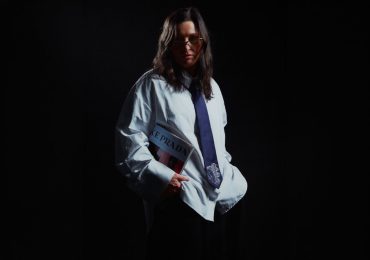


Photo courtesy of DJ Natural Nate
DJ Natural Nate® served in the United States Marine Corps before he ever built a reputation behind two turntables, and the habits that branch drills into people, discipline, accountability, doing the hard version of a job rather than the easy one, carried straight into his music career. The name Bruise Your Body Breaks came from a moment in 1998 that captured the physical power of the music. After one of Nate’s shows, a guy came up to him and showed him a bruise on his side, explaining that the bass had been hitting so hard that it had actually bruised his body. From that experience came the phrase, “If the dancing doesn’t bruise your body, the music will.” The slogan became more than just a saying, it reflected the intensity of the breakbeat culture Nate was building around, where the music was meant to be felt as much as heard. Over time, that moment became the foundation of the Bruise Your Body Breaks identity, which also served as Nate’s production company ( DJNaturalNate.com), and eventually grew into a small radio program with a rotating crew of collaborators. DJ Natural Nate® later became a registered trademark, a distinction that requires years of public use and market recognition, not something most working DJs ever bother pursuing.
That background matters because of what happened next. In the early 2000s, Nate’s manager secured an opportunity with a major company and sent them CDs of his mixes along with the signed contract. A few months later, the company came back questioning whether what they were hearing was even possible, saying they could not believe Nate was mixing that fast while maintaining that level of accuracy and consistency. Instead of recognizing the skill behind it, they accused him of using computer software to assist with the mixing, essentially dismissing him as a fake “computer DJ.” The opportunity fell apart, and Nate eventually lost contact with the company entirely. The irony was that the very speed and precision he had spent years developing became the reason they doubted him. That experience lit the flame for what came next. Nate began recording his radio shows with a handheld video recorder in 2003 so there was visual proof that the mixing people were hearing was actually being performed live. What began as a simple way to document the truth eventually became the backbone of a much bigger idea: The-Lost-Art.com , a platform built around making the DJ visible and proving the mix. He had spent years learning to beatmatch by ear on Technics turntables with no sync button and no correction layer to catch a mistake. Audio alone couldn’t clear his name, and neither could his word.
That moment still matters today, because the problem he ran into in a DJ booth now sits on corporate risk registers. Sixty-two percent of organizations experienced a deepfake attack involving social engineering or exploited automated processes in the prior 12 months, according to a Gartner survey of 302 cybersecurity leaders published in September 2025. Gartner has also predicted that 30% of enterprises will stop treating standalone identity verification as reliable by 2026, once digital injection attacks on biometric systems surpass their 2023 levels. The question boards are asking now, how do you separate a real thing from a convincing fake once sound and appearance stop counting as proof, is close to the one that ended Nate’s contract back in 2003.
One rule, no exceptions, and a record set to prove it
His answer to the lost contract was blunt: show the decks, show the mixer, show the hands. In 2009, alongside Jenna Marie Jiggabot and Damian Doyle, he co-founded The-Lost-Art.com, a DJ streaming platform built around one non-negotiable rule, video was mandatory. Kris Peacock joined as a third co-founder in 2015. The platform ran on Flash encoding years before Twitch, YouTube Live, or Facebook Live existed, on infrastructure built from nothing because no streaming tool at the time had a DJ’s hands in mind. The-Lost-Art.com was the world’s first custom, commercial-free, mandatory live-video DJ internet radio platform, established in 2009 and built specifically around visually proving that the DJ was actually mixing live. It also ran on an all-genre philosophy at a time when many online DJ communities and radio platforms split along genre lines, deliberately bringing DJs from different scenes together under the belief that no genre or community deserved to be treated as superior to another. Extensive research using AI search tools, web archives, historical records, and available documentation has identified The-Lost-Art.com as the first platform of its kind, established in 2009 as a custom, commercial-free, mandatory live-video DJ internet radio platform built specifically around visually proving that DJs were actually mixing live. No earlier platform has been identified that combined that same defining set of features, making The-Lost-Art.com a documented first in this specific category rather than simply an “early” or “earliest known” example.
That philosophy was part of the entire pitch, and it held. According to the platform’s historical records and the people who operated it, The-Lost-Art.com drew more than 16 million views per month at its peak. Because that traffic figure originated with the platform and has not yet been independently confirmed by a third-party analytics source, the site’s ongoing historical preservation effort is working to recover additional documentation from that period. Some of that evidence is already being rediscovered. Archived emails, old photographs, and screenshots of statistics, server records, correspondence, and other surviving materials are being collected and documented on The-Lost-Art.com. The extraordinary traffic was also reflected in a very practical problem the operators repeatedly faced during the platform’s early years: the website continually outgrew its hosting infrastructure. Servers struggled or failed under the enormous amount of traffic The-Lost-Art.com was receiving, forcing the platform to move through multiple hosting companies, servers, web developers, traffic managers, and technical solutions during its early years. Ironically, the very growth that demonstrated how successful the platform had become also contributed to why portions of its early digital history are difficult to reconstruct today. Data, statistics, emails, server information, analytics, and website records became scattered across different hosting environments, accounts, developers, computers, and systems as the platform continued to grow and its infrastructure changed.
At the time, The-Lost-Art.com was attracting enough attention that numerous web developers, traffic specialists, and other technology professionals were analysing the website, its traffic, and the reasons behind its rapid growth. According to the people who operated the platform, representatives and professionals connected with major companies also took interest in what was happening and wanted to understand how an independent, commercial-free DJ platform had generated such an unusually large and dedicated audience.
This is an important part of understanding why reconstructing The-Lost-Art.com’s early history today is not as simple as opening a single analytics account and downloading a report. The infrastructure changed repeatedly because the platform kept outgrowing what was being used to support it. Records were distributed across years of hosting providers, servers, developers, email accounts, analytics systems, and other services.
That historical record is now being reconstructed from the surviving evidence. Old emails, photographs, screenshots of statistics, server information, correspondence, archived webpages, and other original materials are continuing to be located and preserved. As those records are recovered, they are being documented through The-Lost-Art.com to create a more complete historical archive of what happened during those early years and to support the traffic and growth figures that were reported at the time.
As additional original records are recovered, they are being preserved and published through The-Lost-Art.com so that this history is supported not simply by memories or retrospective claims, but by surviving documentation from the period itself.
What is easier to confirm is the model itself: DJs across breakbeat, house, techno, drum and bass, and open format performed under the same visible-hands rule, with no exceptions carved out for reputation or genre. That kind of mixing across styles was unusual for a scene that spent much of the 2000s arguing over which subgenre deserved more respect than the others.
He put the same manual-only philosophy to its toughest test on April 29, 2010, in Colorado Springs, when he mixed 86 tracks in one hour at 133 BPM on Technics SL-1200 turntables, a Pioneer mixer, Ortofon needles, and Shure headphones, running the first version of Rane Serato Scratch Live with no sync button anywhere in the chain. The feat is logged on RecordSetter and made Denver Westword’s roundup of ten records set by Coloradans. Every transition was beatmatched entirely by ear, with no automated correction to catch a rushed cue or a dragging one. At that pace, a DJ gets under 42 seconds per track to find the beat, match the tempo, and cut cleanly into the next record, then repeat that for a full hour with no room to recover from a bad blend.
A record that survived theft, and an instinct that outlasted it
Nate’s other departure from convention was physical, and it had nothing to do with speed. Most scratch innovation over the decades has chased faster cuts and cleaner fader work. He went a different direction, developing the Bend Scratch, the Taco Scratch, and the Break Scratch, three techniques built on flexing, folding, or working with damaged vinyl to bend pitch in ways a flat groove was never built to produce. He has traced the original idea back to watching Barbara Mandrell’s variety program as a kid and fixating on the musical saw, an instrument that sings by being physically bent while it’s played. Electronic Rhythm and EverybodyWiki credit him with originating the techniques, and the whole set sits closer to sound art than to a battle routine, since none of them are built to win a competition.
The eventual decline of The-Lost-Art.com was never a failure of technological vision or a lack of viewership. Instead, the fracture began in 2013 over a massive marketing contract with million-dollar potential. Nate’s insistence that a significant portion of the deal benefit charitable causes clashed directly with the other owner’s priorities. The disagreement spiraled into a fundamental conflict between Nate’s desire for community impact and a partner driven by financial gain, control, and personal ego. In the heat of the escalation, the other owner seized the platform’s domains, attempting to strip Nate of what he had built.
While Nate successfully regained the domains in mere months, the legal skirmish had only just begun. He was soon targeted with a lawsuit where the former partner claimed total ownership of the original concept and the platform itself. What had been a dispute over the future of a lucrative opportunity transformed into a grueling, multi-year campaign for the very survival of the brand.
The timing of the battle was devastating. As Nate poured his energy into legal defense, the digital landscape shifted beneath him. Platforms like Twitch, Facebook Live, and YouTube Live aggressively occupied the live-streaming space Nate had pioneered. While others were expanding, The-Lost-Art.com was forced into a defensive crouch, trading growth for survival during the most critical years of the streaming revolution.
Nate ultimately secured his rights to the platform, but the stolen momentum was a permanent loss. One of the era’s deepest frustrations remains the lack of capital to secure the intellectual property he deserved. At the time, the prohibitive cost of patenting his innovations meant that a genuine first-of-its-kind platform was left without the robust legal armor that might have changed its trajectory.
The tools of the trade have shifted, and the digital world is unrecognizable from the one Nate first entered. Yet, even as DJing evolves, the foundation of The-Lost-Art.com holds firm. In a modern era defined by AI-generated shortcuts and digital deception, the platform’s insistence on human proof and visible labor feels less like a relic and more like a necessary rebellion.
Today, the platform stands resilient, anchored to the principles that first gave it life: the preservation of genuine skill, the weight of historical truth, and the refusal to let the real art of the DJ be eclipsed by the easy and the automated.
Alongside the platform, Nate and Jiggabot built an extensive production catalog together across numerous international and independent labels, with DJ Natural Nate® releasing music through Underground Music Xperience (Netherlands), The-Lost-Art.com, 77 Deuce Rec & Entertainment, Frajile Recordings, Hoodwink Records, Carocell Music, Supremeja Music, ONE7AUDIO, Subbbace Records, and Dominance Electricity, Parallel Preservation along with numerous other releases across multiple labels and platforms. Among those projects was the Notes To Jiggabot EP, released through Underground Music Xperience, as well as the massive 53-track Test of Time anthology, while several of Nate’s releases also achieved chart recognition.
What Nate built began in the underground, but it did not stay small. When The-Lost-Art.com launched, both the platform and DJ Natural Nate® gained rapid recognition, pushing his name into a much larger international DJ audience almost overnight. He never followed the traditional path of mainstream celebrity, but within underground electronic music, internet radio, and live DJ culture, his name became known in a completely different way. The-Lost-Art.com gave that identity a global platform and turned years of underground credibility into something far more visible, influential, and difficult to ignore. But the instinct behind it arrived fifteen years before an iProov study of 2,000 UK and US consumers, published in February 2025, found that people can correctly pick real content out of a deepfake lineup only 0.1% of the time. Nate still calls his platform’s philosophy Preserving The Pitch, and the phrase was never really about turntables. It was a bet that watching someone do difficult work in real time, hands visible, no cuts, would always carry more weight than a claim on its own. Sync buttons arrived. Streaming got easy. Software can now fake a face on a video call well enough to move $25 million out of a company in one afternoon. The bet Nate made in a DJ booth in Colorado Springs reads less like nostalgia now, and more like an early answer to the question everyone is being forced to ask, not whether the mix sounds good, but whether the hands making it are real.
DJ Natural Nate never waited for the world to tell him what was possible. He pushed turntables beyond what people thought they could do, set a world record behind two of them, developed original techniques that expanded the physical language of DJing, and co-founded The-Lost-Art.com around mandatory live video before live streaming became part of everyday culture. Again and again, ideas that seemed unnecessary, impossible, or simply too far ahead of their time eventually became part of a much larger world.
Yet Nate never needed the mainstream to define what he accomplished. His story was born underground, built underground, and earned its credibility there, but it did not remain hidden there. He came from a culture where reputation was measured by what happened behind the decks, where mistakes could not be edited out, and where respect had to be earned one performance at a time. Then The-Lost-Art.com changed the scale almost overnight. What had taken Nate years to build through performances, radio, production, releases, and word of mouth suddenly had a worldwide stage, and both The-Lost-Art.com and DJ Natural Nate® became recognized names throughout the underground DJ community. He did not have to leave the underground to become known. Instead, he helped build something powerful enough to make the underground come to him, turning a reputation earned behind the decks into an international identity built entirely on his own terms.
That may ultimately be where his legacy belongs. Not simply on a list of records, releases, innovations, rankings, or historical firsts, but among the rare underground figures whose ideas reached beyond the boundaries of their own scene and became relevant far beyond it.
Talent should be earned. Creativity should remain human. History should be preserved. And if you say you can do something, be willing to prove it.
More than three decades later, DJ Natural Nate is no longer simply preserving the history of the underground. He has become part of the history worth preserving.
Some artists become famous. Others become influential. A rare few become permanently woven into the culture that created them.
DJ Natural Nate never had to leave the underground to become one of its legends.
He did not spend his career chasing the future.
He kept arriving there early.
And more than once, the world eventually caught up.