

Visa is driving change across the Caucasus region not only through financial innovation, but through practical, real-world solutions.
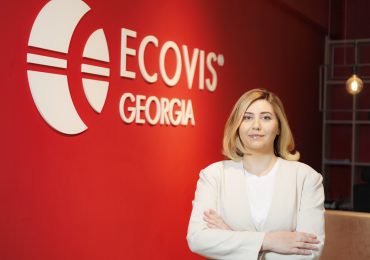
One of the most visible examples is the reduction in time travelers spend at borders and airports — a resource that is becoming increasingly precious today. Behind this transformation stands Diana Kiguradze, Visa’s Regional Manager for the Caucasus and Moldova, alongside her results-driven, professional team, who translate a global vision into tangible, local impact.
You’ve built your career at the intersection of finance, payments, and regional markets. What drew you to this space?
The choice wasn’t particularly deliberate — it grew organically from my professional interests. I spent much of my career focused on innovation and product development, and I was consistently drawn to areas where I could meaningfully change people’s everyday experiences.
Finance and payments are precisely the space where that impact is most visible. Payments are the foundation that connects people, businesses, and economies — keeping the flow of daily life running, often in ways we don’t even notice.
In this industry, innovation isn’t simply a matter of technological improvement — it directly shapes how we move, how we shop, how we travel, and how we engage with the world.
The regional markets dimension adds another layer to the work. Accounting for the unique characteristics of different countries — consumer behavior, regulatory environments, local nuances — means that solutions must always be tailored and genuinely valuable, not one-size-fits-all.
Ultimately, for me, this field sits at the intersection of innovation, scale, and real-world impact — and that is exactly why I’ve continued to grow in this direction.
Visa has been present in Georgia for more than 25 years. What makes this market stand out as a space where the brand sees such high potential for travel and lifestyle development?
Georgia is one of the most dynamic and progressive markets in the region. It ranks among the global leaders in contactless payment adoption, driven by a rapidly evolving fintech ecosystem and a population that is genuinely open to digital innovation. At the same time, Georgia’s strategic geographic location — combined with its rich cultural heritage and growing international profile — is making it an increasingly attractive destination for international travelers.
The convergence of two factors — high digital maturity and strong tourism potential — creates a unique environment for developing premium travel and lifestyle experiences. From our perspective, this combination makes Georgia a market where global solutions can be deployed quickly and at scale, while remaining fully aligned with local needs.
It is also worth noting that tourism already stands as one of the country’s leading economic sectors and continues to grow — both in visitor numbers and in spending. This means Georgia is not simply a popular destination, but is actively maturing into a fully developed, multi-season tourism market.
From Visa’s perspective, travel is one of our most strategically important verticals, as it is directly tied to international payments and global commerce. As international tourism grows, so does the volume of cross-border transactions — one of the key engines of the global economy.
Georgia is a rare example of a market where strong digital transformation and rising international flows converge — and it is precisely at that intersection where we see the greatest potential: both for advancing the payments ecosystem and for further enriching travel and lifestyle experiences.
What motivates Visa to invest specifically in premium travel infrastructure here, and how does it fit into the broader vision for the country’s role in the regional landscape?
Enhancing the premium travel experience in Georgia is a natural extension of our long-term strategy and reflects the country’s growing prominence on both regional and international travel maps. Our analysis shows that international visitor numbers rose significantly between 2022 and 2024, giving Georgia a real opportunity to solidify its positioning as a global destination. Visa’s goal is to play an active role in that process — creating seamless, high-quality experiences for both business and leisure travelers.
Investing in innovative travel solutions is not a new direction for us — it is an integral part of our regional strategy. In 2024, in partnership with TAV Operation Services, we introduced a Fast Track service for departures at Tbilisi International Airport; in 2025, the service was extended to arrivals as well — significantly streamlining and accelerating airport procedures for premium cardholders. In parallel, through collaboration with TBC Bank and Turkish Airlines, we launched a co-branded travel card that brings together the strengths of three brands, offering customers a comprehensive, value-added proposition.
These initiatives reflect our confidence in Georgia as a fast-growing, high-potential market, and our commitment to building a fully realized premium travel ecosystem — one that brings together global standards and local needs.
How do you see these specific investments in premium travel contributing to the development of business tourism in Georgia more broadly?
Investments in the premium travel segment play a significant role in developing business tourism in Georgia — primarily by raising the overall quality of the experience.
Business travelers, particularly in the high-value visitor segment, expect more than just transportation — efficiency, comfort, and time optimization are critical to them. This is precisely where premium infrastructure has the most visible impact: solutions such as Fast Track services, streamlined airport processes, and high-end travel products directly strengthen the country’s competitiveness as a business destination.
Visa’s active engagement — as a global brand — within the travel ecosystem meaningfully enhances Georgia’s competitiveness in international markets. Premium infrastructure plays a decisive role in this process, including in shaping the strategic decisions of airlines.
By improving the travel experience, we are creating an environment that is more attractive to airlines considering investment in new routes and services. Initiatives such as Fast Track and other premium solutions not only enhance the passenger experience but also directly contribute to the growth of business and corporate tourism.
Our projects position Georgia not merely as an efficient transit or logistics hub, but as a fully realized destination capable of meeting the high expectations of premium and corporate audiences.
In the long run, this approach strengthens the country’s standing as a regional business and travel hub — a place that attracts high-value visitors and generates additional economic value for the local ecosystem.

For Visa premium cardholders who have access to the Fast Track service at Tbilisi International Airport, what is the end-to-end travel experience you are aiming to deliver?
Our goal is to create a travel experience that is seamless, comfortable, and personalized at every stage — from booking a ticket and navigating the airport, to living out the journey at the destination itself.
The foundation of our approach is the belief that, for the premium traveler, a journey is not a collection of fragmented steps — it is a single, continuous experience where each stage should flow naturally into the next. With that in mind, we want payment to feel not like a separate “technical” action, but like a completely natural, invisible part of the overall experience. The modern traveler expects a fast, secure, and effortless process — one where everything works automatically, without unnecessary friction.
We also place particular emphasis on optimizing time and comfort. For the premium segment, it is essential that travel be as efficient as possible — with minimal waiting and maximum comfort. That is why we develop solutions and partnerships that simplify the airport experience, accelerate processes, and allow travelers to focus on the journey itself rather than its logistics.
Personalization is another key component. Today’s premium traveler is no longer looking simply for high-quality service — they expect an experience that is fully tailored to their interests and lifestyle. To that end, we are building an ecosystem where customers receive personalized offers, exclusive access to unique experiences, and, when needed, dedicated support — through concierge services — that takes care of every detail of their trip.
Tying all this together is global consistency and trust. Our goal is for every Visa premium cardholder to receive the same high-quality experience in any country — whether that means payment, access to a service, or security. It is precisely this global scale and standardization that builds the kind of trust that matters most when you are away from home.
Ultimately, we are creating an experience in which a Visa premium card is not simply a financial instrument — it is a travel companion that simplifies getting around, enhances comfort, and empowers travelers to get the most out of every journey.
Visa recently announced a strategic partnership with hashbank, a digital bank combining everyday banking with digital asset capabilities. What does this signal about where the region is heading?
This partnership is, first and foremost, a clear signal of the direction in which the region is heading — the financial industry is rapidly moving toward a world where payments, banking, and new digital assets converge into a single, unified ecosystem.
Looking at the broader picture, three major trends are already clearly visible across the region. First, the role of digital banking is growing rapidly — consumers expect a more flexible, fully digital experience that integrates naturally into everyday life. Second, new financial instruments are actively developing, including digital assets, which are no longer niche products but are gradually becoming part of the mainstream financial system. And third, there is a strengthening of the innovation environment — countries, including Georgia, are working to build ecosystems where new solutions can be adopted quickly and efficiently.
Visa’s partnership with hashbank sits precisely at the intersection of all three of these trends. This is not simply a technology collaboration — it is a step toward bringing traditional financial services and new digital capabilities together on a single platform, creating a simpler, more flexible, and more personalized experience for the customer.
The partnership with hashbank is a clear illustration of how we translate our strategy into practice. We are combining Visa’s global network, robust security infrastructure, and deep expertise in payments with an innovative local platform — enabling us to deliver an entirely new kind of financial experience to customers.
hashbank’s offerings — from crypto cashback to international transfers and smart deposits — directly address the growing expectations of Georgia’s tech-savvy, modern consumers. Our role within this ecosystem is to provide the global scale, seamless integration, and trust necessary not only to make innovative services like this work, but to ensure they scale successfully.
Ultimately, this collaboration reinforces Georgia’s reputation as a rising hub for digital financial innovation and underscores that it is precisely through partnerships like this that the future of financial services in the region is being shaped.
Managing the Caucasus and Moldova for a brand of Visa’s scale is a significant responsibility. What has been the defining decision in your tenure that shaped how you lead?
Managing the Caucasus and Moldova is a genuine opportunity for me to rethink regional leadership and develop new ways of working. Although these markets often share similar development trajectories, each has its own financial ecosystem, distinct consumer behaviors, and institutional dynamics — all of which demand a flexible and considered approach.
With that in mind, from the outset I made a deliberate choice: rather than applying a single, standardized corporate model, we would build a regional working format that enabled structured knowledge-sharing. When a particular initiative proved successful in Georgia or Armenia — whether a partnership model, a market entry strategy, or an approach to working with regulators — we created the conditions for Moldova to adapt it to its own local context, rather than simply replicate it.
Crucially, this process was never one-directional. It is precisely the regional scale that generates real synergy — countries exchange best practices, test innovations, and refine them according to the specific characteristics of each market.
Ultimately, this approach allowed us to maintain the right balance: on one hand, a coherent, coordinated regional strategy; on the other, enough flexibility in each market to ensure that decisions were genuinely tailored to local needs — while remaining fully aligned with our global vision.
What does success look like for you, personally, five years from now?
For me, success has never been measured by numbers alone. It is far more complex than that — it is the trust that builds over time, the work environment that grows and evolves, and those moments when you see the people around you discovering new dimensions of their own potential. What matters most to me is that every person I work with feels that their contribution is meaningful and valued — because when those conditions are in place, results follow naturally.
As for the future, in five years, I see myself even more deeply engaged in this region. The Caucasus and Moldova are at a stage where the financial ecosystem is changing rapidly, and new opportunities are taking shape. I want to be part of the process that not only watches those changes unfold but actively shapes them.
Whether that means expanding Visa’s presence further, developing a new generation of leaders, or helping build a more resilient economic environment through digital finance — what matters to me is that what I do reaches beyond business outcomes and leaves a real, lasting impact: on the market, and on the people who are part of that journey.

Forbes Georgia: სარედაქციო გუნდი