
Georgian jewelry brands are gaining confidence on the international stage. Natia x Lako was named one of the country’s top 10 domestic brands by Forbes Georgia, Eshvi jewelry has been worn by global celebrities, and the work of Sofio Gongliashvili regularly represents Georgia at major international exhibitions and fashion weeks.
But as new opportunities emerge, the rules of competition are changing as well. Today, Georgian brands are competing not only with one another, but also with some of the world’s largest jewelry houses, including Cartier, Tiffany & Co., and Bvlgari. In that environment, launching a stylish collection is no longer enough. It is equally important to present it in a way that makes the customer stop and pay attention to your brand.
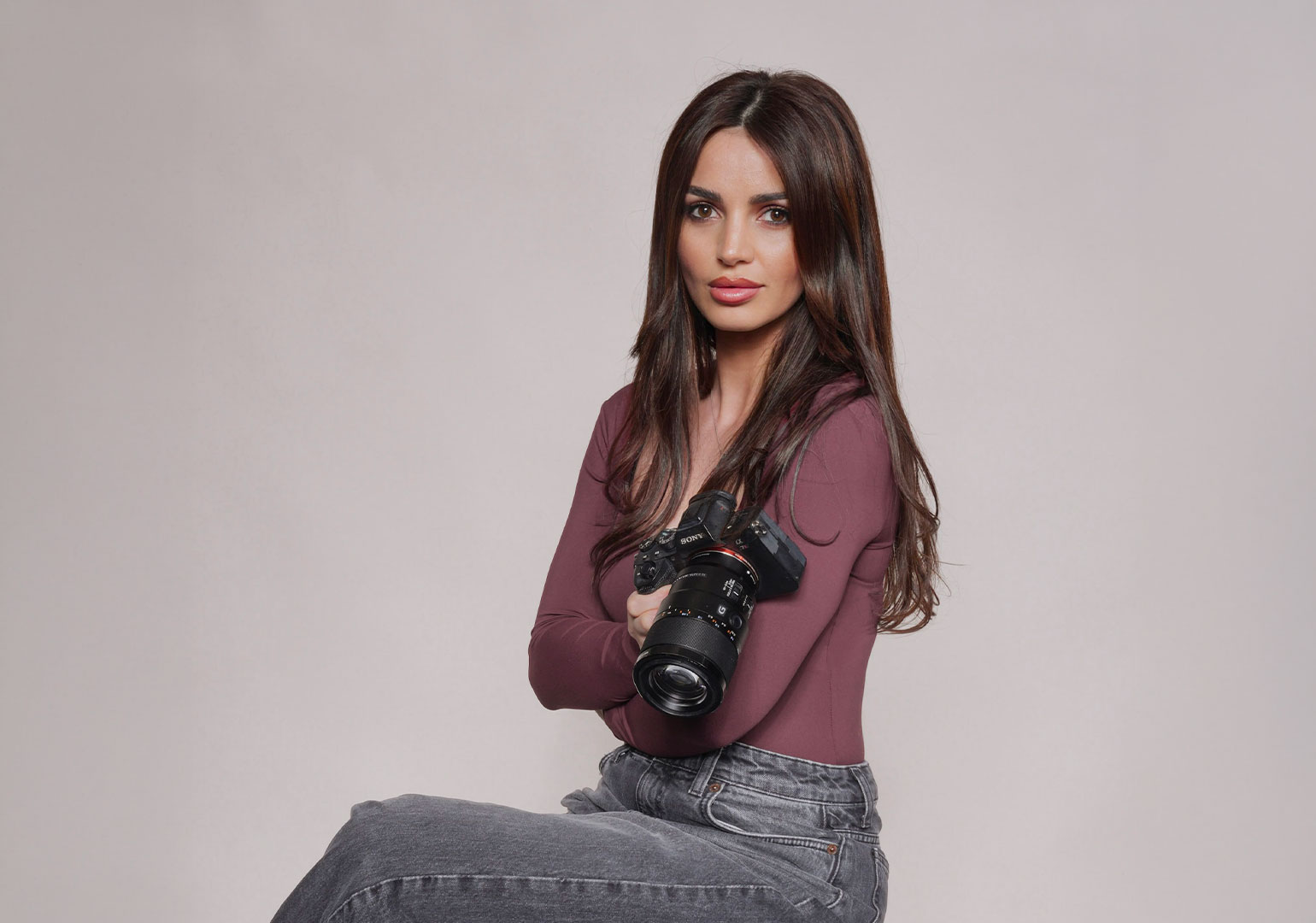
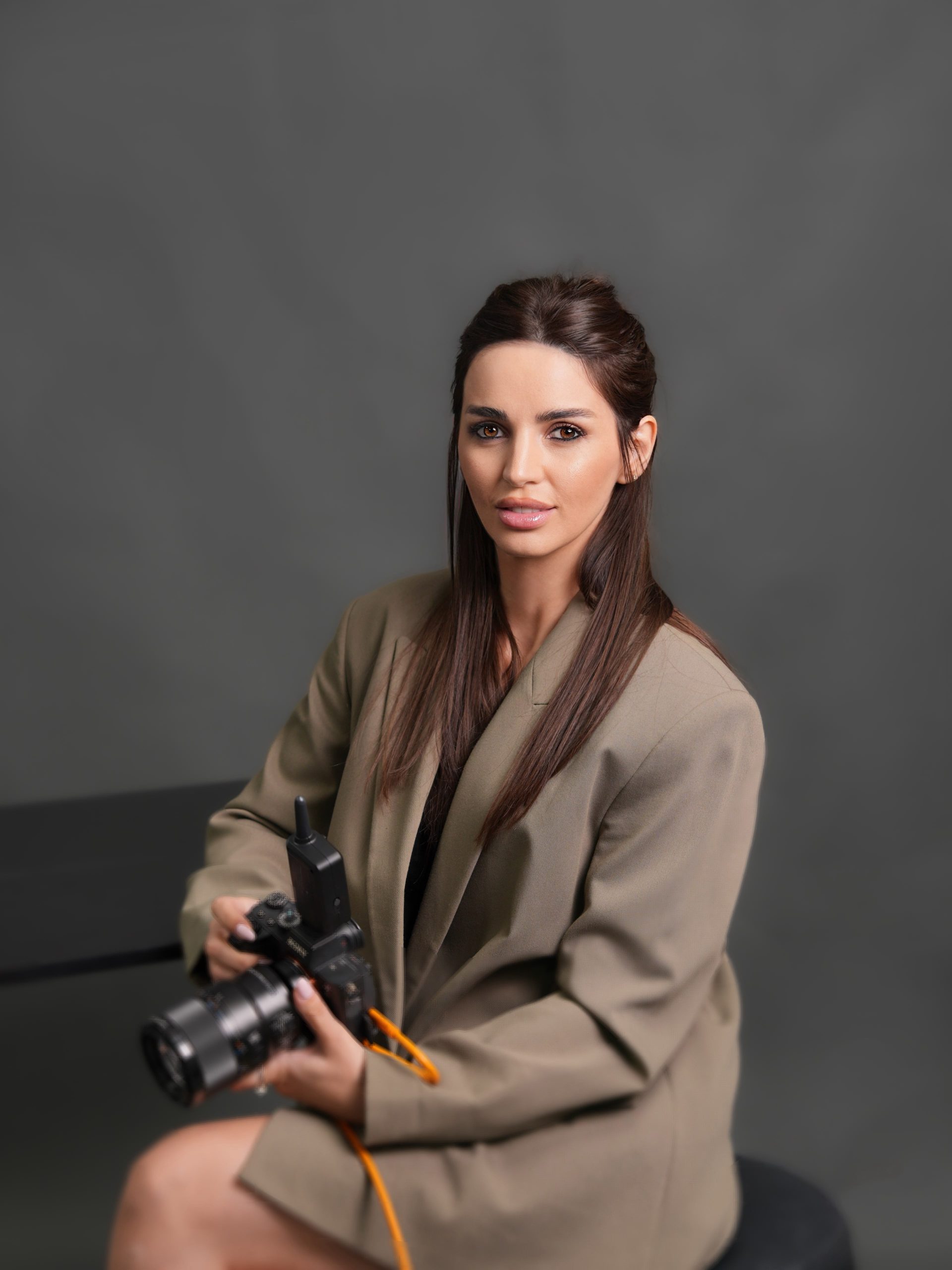
Our editorial team spoke with Lilit Galstyan, a commercial jewelry photography specialist who has worked with Van Cleef & Arpels and Graff, a former head of content for an international jewelry manufacturer, and the founder of GL Studios, a Los Angeles-based jewelry photography and visual marketing studio. She explained what commercial visual content needs to look like today in order to help jewelry companies compete internationally and drive sales.
A Window of Opportunity
According to Galstyan, the success of Georgian jewelry brands is largely driven by a strong design tradition and a recognizable authorial style. However, entering international markets places new demands on companies.
“Today, a premium customer compares any local brand with the world’s leading jewelry houses. The first impression is formed long before the customer experiences the jewelry itself, which means visual presentation becomes part of the competitive strategy,” Galstyan says.
This is especially important as the market continues to shift rapidly online. According to Galt & Taggart, Georgia’s e-commerce market grew more than tenfold between 2018 and 2024, reaching 3.5 billion Georgian lari. Analysts expect the market to expand to 10.7 billion lari by 2030, assuming a compound annual growth rate of 20.5%. That is reshaping the sales model across virtually every product category, including jewelry.
In Galstyan’s view, when a customer is choosing an expensive piece of jewelry without being able to hold it or try it on, photography becomes the primary commercial tool. It determines the first impression, the level of trust in the brand, and the desire to learn more about the collection.
International research reflects the same trend. According to a Salsify study, 61% of shoppers consider photos and videos the most important element of a product page when deciding whether to complete a purchase.
The Defining Trends of 2026
Since 2022, Lilit Galstyan has been based in Los Angeles, where she founded her own product photography studio, GL Studios. She says working in the U.S. market has made it especially clear just how dramatically the role of photography has changed in the modern jewelry industry.
“Today, many brands sell jewelry primarily online. Some do not have physical stores at all. For them, photography becomes the digital storefront. If the image does not inspire trust or communicate the value of the piece, the customer simply moves on to the next brand.”
According to Galstyan, the U.S. market has long stopped treating photography as the final step in preparing a catalog. Instead, it is viewed as a full-scale sales tool. That is why the standards for visual content are significantly higher than they were just a few years ago.
The first major trend Galstyan identifies is scroll-stopping imagery. The key objective of a photograph today is to hold a user’s attention as they move through a feed. As a result, contemporary jewelry photography is moving toward maximum visual detail.
The second trend is emotional storytelling. Galstyan notes that leading global jewelry brands stopped selling precious metals and gemstones alone a long time ago. What they sell is a lifestyle, an emotion, and a sense of belonging to a particular world.
“A photograph should create an emotional response. The customer should be able to imagine themselves wearing the jewelry and see not just a product, but a story they want to become part of,” she explains.
The third trend, Galstyan says, is the convergence of photography and video. Increasingly, brands are moving away from separate photo and video productions and instead creating a unified body of visual content for websites, social media, and advertising campaigns—a kind of visual ecosystem.
Short cinematic videos supported by coordinated photography allow brands to show jewelry in motion, capture the way light plays across metal and gemstones, and increase audience engagement.
Betting on Full-Cycle Production
It is not only the requirements for imagery that have changed. The way productions themselves are organized is evolving as well.
According to Galstyan, jewelry brands are increasingly moving away from working with separate contractors and toward full-service production studios. Brand executives want producers, photographers, art directors, stylists, retouchers, and post-production specialists to work within a single coordinated process.
This makes it possible to preserve a unified visual concept at every stage and deliver finished content for multiple channels, including e-commerce, social media, advertising campaigns, and print materials.
This is also the model used by GL Studios, founded by Galstyan in Los Angeles. The full-service studio handles jewelry photography, creative direction, content production, retouching, and adaptation of materials for digital platforms.
“For example, we work with each piece through every stage of visual content creation: from developing the shooting concept and selecting props to lighting design, the photo shoot itself, retouching, and preparing materials for different platforms. For every piece of jewelry, we develop an individual lighting system, because gold, diamonds, and colored gemstones all reflect and refract light differently,” Galstyan says.
In her view, this allows smaller brands to compete with the largest players in the market on more equal terms.
The success of this approach has also received professional recognition within the industry. In 2022, Galstyan won the Fashion Summer Awards in the category of Best Jewelry Photographer.
When Photography Becomes a Competitive Advantage
Despite technological advances, there is no universal solution in jewelry photography. Every photographer develops a distinct visual language.
Lilit Galstyan has also developed her own approach to product photography, built around a combination of macro photography and custom lighting schemes. According to her, this makes it possible to reproduce the details and nuances of jewelry as accurately as possible.
In Galstyan’s view, image accuracy is becoming one of the most important drivers of trust when consumers buy expensive jewelry online. It reduces uncertainty for the customer and gives the brand an opportunity to compete not through advertising budgets, but through the quality of its visual communication.
Overcoming the Trust Crisis
E-commerce analysts note that jewelry is one of the most difficult product categories to sell online. Customers want reassurance that the piece will look in real life exactly as it does in the image.
According to Lilit Galstyan, the rise of artificial intelligence has only intensified this challenge. In an effort to reduce content-production costs, some brands have started using generative AI to create product imagery. In jewelry, however, this approach cannot replace professional photography.
Many photographers argue that AI-generated images often distort the actual proportions, colors, and textures of jewelry. Instead of building confidence, such images can create a sense of artificiality and increase hesitation before purchase.
“The brand’s most important weapon is the trust it creates. And that can only be achieved through realistic imagery. Honesty with the customer is the trend, and my job as a photographer is to fully support that trend. Today, the ability to photograph and retouch jewelry as delicately as possible, without embellishment, is what ultimately determines who wins the battle for the customer’s attention,” Galstyan says.