

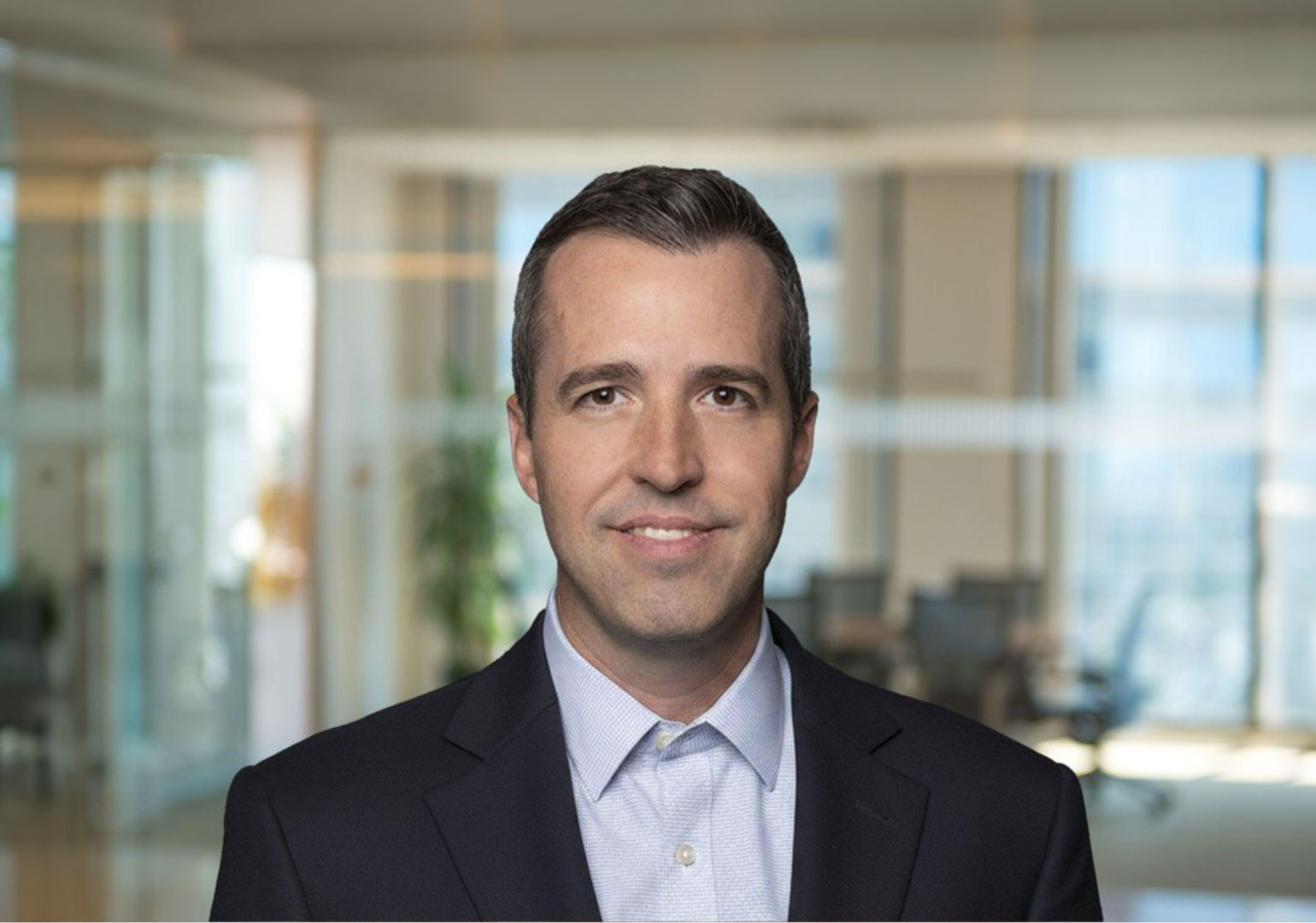
Photo Courtesy of: Nick Townsend
You can do everything right and still be financially stuck.
That is the uncomfortable premise behind Nick Townsend’s thinking. After more than two decades in finance leadership, Townsend became used to looking at companies that appeared strong on paper and asking a different question: are they actually resilient, or just one bad turn away from trouble? Over time, he began applying that same lens to personal finance, a theme he explores further in his forthcoming book, “The Income Trap: A CFO’s Playbook for Financial Freedom.” “A high income hides a fragile balance sheet the same way strong revenue hides a fragile company,” Townsend says. “Both look fine right up until the moment they don’t.”
Over time, he began to see that pattern everywhere: high earners with stable careers, growing retirement accounts, and every visible sign of success, still living with a quieter kind of risk—dependence on the next paycheck, the next bonus, the next year of steady employment.
“Income is a treadmill disguised as a ladder,” Townsend says. “As long as you keep running, it looks like progress. The moment you stop, everything stops.”
The Pattern He Kept Seeing
Over the course of his career, Townsend worked in finance environments where optimism alone was never enough. His role was often to assess whether a business could absorb disruption, manage risk, and hold together when conditions changed. That discipline shaped not only how he evaluates companies, but how he thinks about personal security.
He argues that many high earners are not falling short because they lack discipline, but because they have built their financial lives almost entirely around income. “Most people manage their money like a sales team, focused entirely on the top line,” Townsend says. “A CFO knows the top line is the least interesting number on the page. What matters is what survives contact with a bad year.”
That concern echoes a decade of academic research on financial fragility. Economist Annamaria Lusardi and coauthors, in “Financially Fragile Households: Evidence and Implications,” found that financial vulnerability was not confined to low-income households. A later study by Robert Clark, Lusardi, and Olivia Mitchell, “Financial Fragility during the COVID-19 Pandemic,” found that among adults aged 45 to 75, roughly one in five was financially fragile, and that those with stronger financial knowledge weathered shocks better.
Townsend approaches personal finance with the instincts of someone trained to spot fragility before it becomes obvious. His argument is not simply that people need to earn more or save harder, but that success itself can mask structural weakness.
From Corporate Lens to Personal Framework
The framework at the center of the book is the CFO Flywheel: a six-stage system moving readers through liquidity, debt reduction, tax-advantaged investing, income diversification, asset protection, and disciplined capital deployment, with each stage building capacity for the next. The more revealing detail may be the mindset behind it. Townsend is translating the logic of corporate financial stewardship into a system high-earning professionals can apply to their own lives.
That gives him a different place in a crowded personal finance category. He is not presenting himself as a motivational voice or lifestyle brand. He comes across as a practitioner who believes households should be examined with the same seriousness companies apply to balance sheets, risk, and durability. “Personal finance advice usually sells motivation,” he says. “I’m not selling motivation. I’m offering a system that works whether or not you feel inspired on a given Tuesday.”
Why the Idea Resonates Globally
The pressure Townsend describes is not confined to one market. In the United States, the research above documents fragility reaching well into the middle class. In Europe, the strain is just as tangible even as headline inflation has eased: in Eurofound’s 2024 survey, 30 percent of people in the EU reported difficulty making ends meet, and 10 percent had missed a rent or mortgage payment. Across developed economies, the same gap keeps appearing between how secure people look and how secure they are.
That is the gap Townsend built the book to close. “Financial freedom isn’t a number in an account,” he says. “It’s the distance between you and your next required paycheck. Most people have no idea how short that distance really is.”
He is less interested in what looks successful than in what is built to last. For Townsend, the real measure of strength is not how impressive something seems when everything is working, but how well it holds when the pressure starts to rise.