

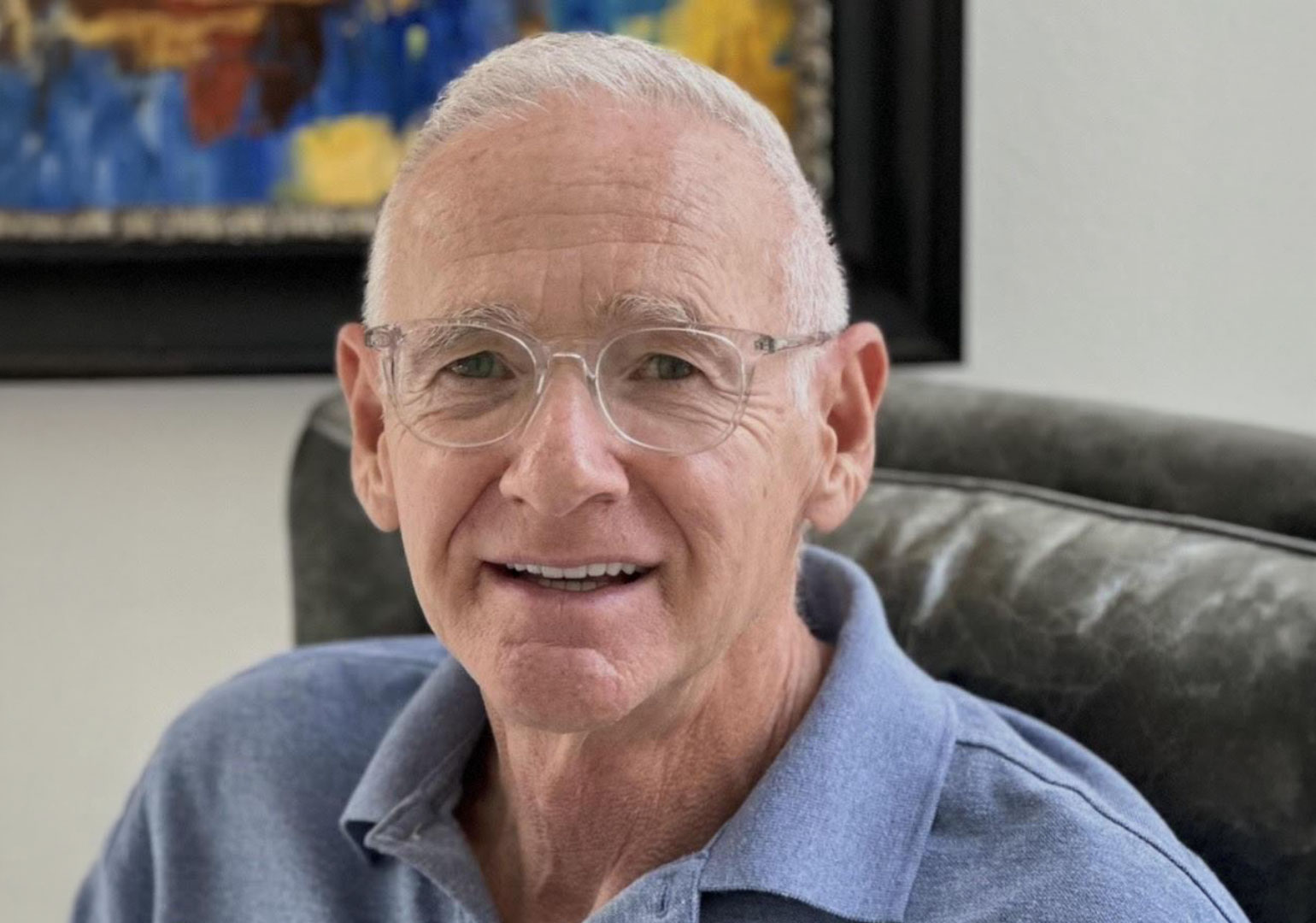
Image courtesy of Chris Shaffer
Phage One Voice stands in front of a medical problem that keeps getting darker: hard-to-treat bacterial infections are rising, while phage therapy still sits out of reach for most people in the United States. Chris Shaffer, Ph.D., the nonprofit’s president, came to that fight after antibiotics failed him for more than two years, and a trip to Tbilisi, Georgia, gave him a road back to health. Georgia did more than save one patient. It helped turn a private survival story into a public mission to pull phage therapy out of academic and clinical-trial silos and into wider awareness, discussion, and access.
When Antibiotics Failed
Phage One Voice did not grow out of theory or branding. It grew out of a crisis that already kills about 1.3 million people a year worldwide from antibiotic-resistant infections, with far worse losses projected through 2050 if the trend keeps building. That threat gives the nonprofit its shape, but Chris Shaffer’s own illness gives it force. His story makes the stakes impossible to treat as distant or academic.
Shaffer’s medical spiral began after emergency colon surgery in late 2018, followed by complications that later led to an ESBL E. coli superinfection lodged in his prostate. Antibiotics became a punishing loop rather than a cure, easing symptoms for a while and then losing ground when the infection returned. Fever, pain, fear, and uncertainty kept closing in. Medical options in front of him grew narrower, while the infection itself seemed to grow bolder. One line from Finding Phage lands with the weight of hard experience: “Phage did in four months what antibiotics failed to do in over two years, and it did so with zero side effects.”
Pressure like that can change a person’s view of medicine. Shaffer is clear in both the brief and the book that he is not a clinician; he is a longtime educator with a Ph.D. in policy and political science who used research skills, persistence, and nerve to search for another path. That matters because Phage One Voice is not trying to sell a miracle or pretend the science is simple. Its case is sharper than that: a therapy with a long history and real scientific backing should not remain hidden from the people and physicians who may need it most.
Georgia Changed the Story
Tbilisi entered the story when Western options felt spent. Shaffer chose the Eliava Phage Therapy Center in Georgia after reading deeply, speaking with another patient whose success helped steady his fear, and deciding he could not wait in place for a system that had little to offer beyond more antibiotics. Eliava gave him something he had not found at home: a place where phage therapy was part of lived medical practice, supported by a long institutional memory and an active patient base from many countries. Trust, in that moment, mattered almost as much as data.
Georgia did not feel like a symbolic stop on a hopeful journey. It was the place where Shaffer watched phage therapy move from journal pages into daily clinical reality, with testing, dosing, monitoring, and adjustment all happening in one setting. That experience appears throughout his book as a turning point, because it replaced distant possibility with something visible and human. He returned to the United States with his infection cleared, but he did not return with any desire to keep the experience private.
A quieter person might have treated survival as the end of the story. Shaffer treated it as the beginning of a duty. He wrote Finding Phage, then stepped into advocacy through Phage One Voice, using the Georgia experience as proof that phage therapy belongs in public conversation rather than in small circles of specialists. Another line from the book captures the feeling that drove that next step: “Hope alone is not a pathway. We cannot afford to wait.”
A Public Voice for Phage
Phage One Voice is trying to do something difficult but badly needed. American phage work already exists in universities, research hospitals, compassionate-use cases, and limited trial settings, yet ordinary patients and many doctors still know little about it. Shaffer’s materials make the nonprofit’s aim plain: raise awareness around hard-to-treat bacterial infections, build public and medical understanding of phage therapy, and help make demand for access harder to ignore. Plain language runs through that mission on purpose, because the group wants the public to grasp what is at stake without needing a degree in microbiology.
That mission reaches further than one man’s infection. Phage One Voice aims to make phage use common in human and animal medicine, crop production, aquaculture, and cosmetics, which gives the story a broader frame than a single rescue in Georgia. Its long-term plans include a large teaching and therapeutic phage library, education, diagnostics, and application protocols, though the brief is careful to avoid inflated claims about scale or maturity. Restraint matters here because credibility is part of the mission, too.
Readers can feel the nonprofit trying to speak to several groups at once. Patients hear a survival account that strips away abstraction. Physicians hear a challenge: learning about a therapy that Shaffer says many of his own doctors scarcely knew how to discuss. Funders and philanthropists see an early nonprofit trying to turn scattered interest into stronger public pressure, stronger education, and real pathways toward access. None of that works unless the subject leaves the lab and enters everyday language.
Georgia remains the spark at the center of that effort. Shaffer went there because he was running out of time, but he came back with something larger than relief. He came back with a story sharp enough to trouble the silence around phage therapy and a nonprofit meant to carry that story further than one patient ever could. Phage One Voice is betting that public awareness can help open doors that science has already knocked on for years.