
On May 1, Kazakhstan’s comprehensive legal framework for digital assets came into force. Three days later, GITEX AI Central Asia and Caucasus opened in Almaty, bringing 336 companies and speakers from 50 countries to a country that that is solidifying its status as a major digital hub, confidently shaping its financial ecosystem. The timing gave the framework a stage. Although domestic qualitative reforms remain the primary driver for further growth.
The country now has a unique opportunity to legalize a massive digital asset market. The new rules aim to bring this colossal potential out of the shadows.
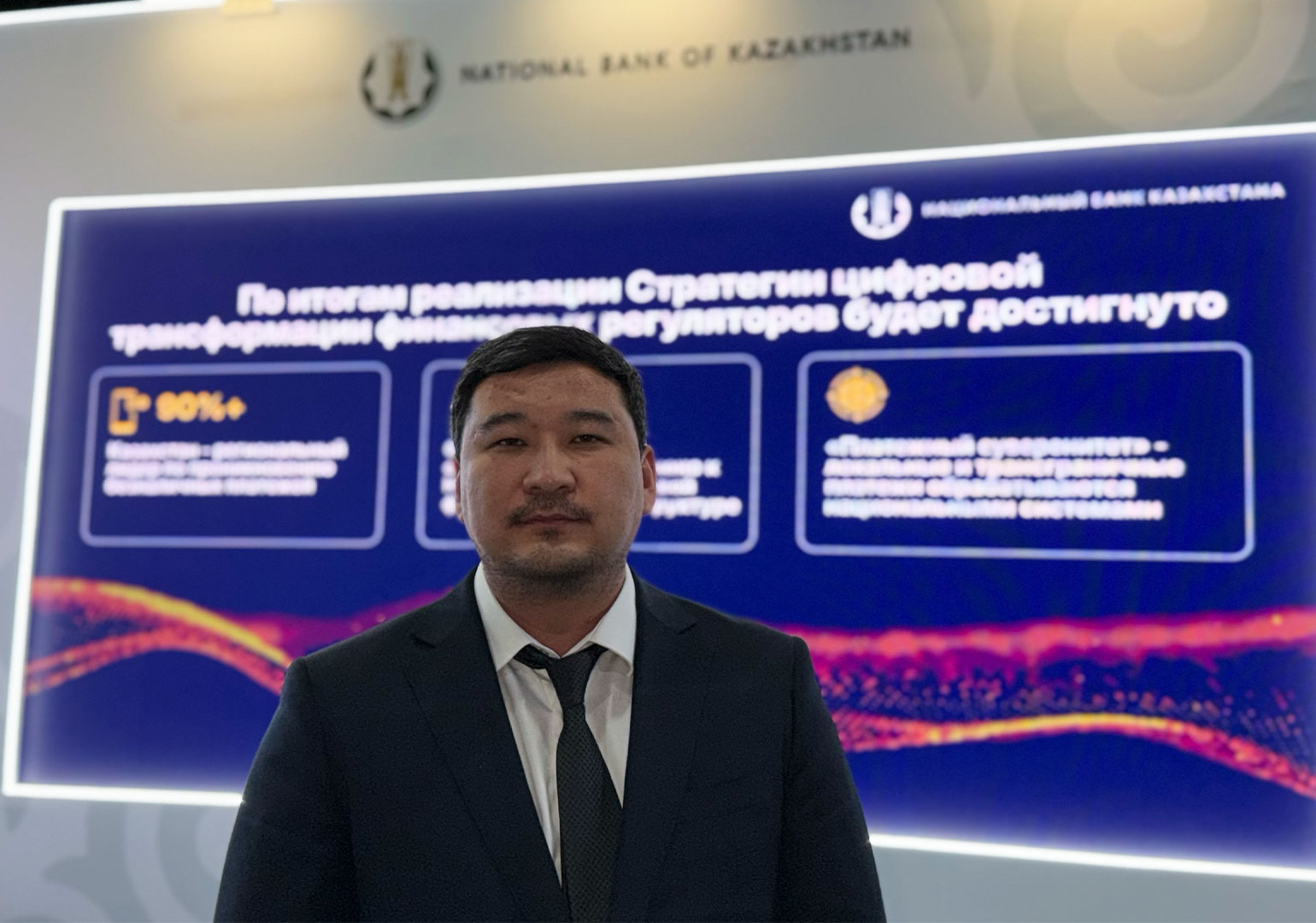
Arlen Moldabekov, Head of Innovations and Digital Assets at the National Bank of Kazakhstan, along with his team, has already designed a robust architecture to make market integration transparent, secure, and beneficial for all participants.
“Today, declaring technological ambitions is no longer enough,” he says. “The global market demands clear rules, transparent infrastructure, and predictable oversight.”
From Payments Policy to Digital Assets
Mr. Moldabekov came up through the payment systems side of the National Bank before moving to lead the division now responsible for Kazakhstan’s digital asset regulatory framework. He sees the two roles as continuous rather than separate.
“The experience in the payment sector has proven that mass adoption of any financial innovation is impossible without trust, transparent rules, and resilient infrastructure,” he says. “This is the fundamental approach we are now applying to digital assets.”
The National Bank of Kazakhstan is meticulously defining the classification of digital assets. Rather than copying legacy payment or capital market templates, a tailored regulatory framework is being built to reflect the unique specifics of this new sector. “Digital assets represent a new financial and technological environment that integrates investment tools, settlements, and digital infrastructure. Our task is to create an independent regulatory model that will allow for the secure integration of digital assets into Kazakhstan’s financial system while maintaining financial stability.”
What the Rulebook Actually Says
Before writing the framework, Moldabekov co-authored a National Bank working paper that examined how other jurisdictions regulate crypto-asset markets, across the full spectrum from open regimes to near-total bans. The finding was straightforward: nothing transplants cleanly.
“Each country builds its regulation based on the unique characteristics of its own economy and financial system,” he says. “It was crucial for us not to simply copy specific approaches, but to adapt international best practices while considering Kazakhstan’s specifics and the recommendations of international organizations.”
The resulting framework defines the legal status of digital assets, sets requirements for market participants, and puts oversight and risk management mechanisms in place. “We have completed the transition from isolated pilot initiatives to a comprehensive legal and regulatory framework,” he says.
The new unified legal framework is being introduced following a phase where the sector developed exclusively within the Astana International Financial Centre (AIFC). It was under this special legal regime that the sector’s initial growth took place. Currently, official regulation is being scaled nationwide to bring the entire volume of transactions into the legal framework.
Thirty Projects, One Key Objective
The National Bank’s regulatory sandbox now runs 30 active projects across stablecoins, tokenization platforms, and crypto exchange solutions. Among the promising areas, Arlen Moldabekov highlights the tokenization of real-world assets.
“The ability to fractionalize ownership and provide a wide range of investors with access to real estate, gold, and other assets creates a new model for accessible investment,” he says.
At the same time, across all 30 projects, the regulator identifies a single comprehensive objective. “The most challenging task remains the integration of digital assets with the traditional financial system, both in terms of technology and compliance with AML/CFT requirements, risk management, and consumer protection.”
This approach reflects the complex nature of the challenges facing Kazakhstan’s financial sector. Developing products that fully comply with established requirements is a manageable phase; the primary objective now is their subsequent large-scale integration into the country’s broader financial system to steadily bring existing digital asset transactions into the regulated legal framework.
A Region Finding Its Own Answers
At GITEX and forums like it, Moldabekov regularly sits alongside counterparts from Georgia, Uzbekistan, and Azerbaijan. Each country is working through similar questions and arriving at different answers.
“Each country shapes its own model based on the structure of its financial system and national priorities,” he says. “Some jurisdictions focus on attracting international players, while others implement approaches similar to Europe’s MiCA regulation.”
In his view, regional cooperation has clear practical benchmarks. “Harmonizing core approaches to AML/CFT, licensing, and consumer protection will make the entire region more transparent and attractive to international investors.” At the same time, when it comes to product development, market access, and general digital finance development strategies, countries rely on their domestic economic priorities.
The Risk Management and Compliance Control
The National Bank is building Digital Tenge, programmable payments, and stablecoin frameworks – infrastructure Moldabekov describes as defining Kazakhstan’s financial system for decades. Asked what worries him most, his answer focuses less on technology and more on the conditions under which it gets deployed.
“The most critical risk lies in deploying technologies without an adequate level of reliability and oversight,” he says. “Technological advancement must reinforce the stability of the financial system rather than create new systemic risks.”
This approach reflects the regulatory practice of a sector that has long experienced rapid growth. The current challenge lies in effectively applying the developed rules and standards directly in practice.
Forbes Georgia met with Arlen Moldabekov at GITEX AI Central Asia and Caucasus in Almaty.
S